




Can rail tensors have variable dimensions?
 Sep 01, 2025|
 Can rail tensors have variable dimensions?
As a supplier of rail tensors, I've often been asked whether these essential tools can have variable dimensions. Rail tensors play a crucial role in the railway industry, mainly used for stretching rails and adjusting rail gaps. They are indispensable for ensuring the safety and stability of railway tracks. To understand whether rail tensors can have variable dimensions, we first need to delve into their functions and design principles.
Rail tensors work based on hydraulic or mechanical principles to generate the force required to stretch or adjust rails. They are typically designed to fit specific rail types and sizes. The standard dimensions of a rail tensor are determined by the common specifications of railway tracks. For example, different countries and regions may have different rail gauges, such as the standard gauge of 1435 mm, broad gauges, and narrow gauges. Rail tensors need to be compatible with these different gauges to perform their functions effectively.
In general, most rail tensors on the market are designed with fixed dimensions to ensure precision and reliability. Fixed - dimension rail tensors are engineered to provide consistent performance under specific working conditions. They are calibrated to exert the right amount of force on the rails of a particular size. For instance, if a rail tensor is designed for a specific rail profile with a certain height and width, it will be optimized to grip and stretch that type of rail accurately. This fixed - dimension design also simplifies the manufacturing process, reduces costs, and ensures interchangeability of parts.
However, there are indeed situations where variable - dimension rail tensors would be highly beneficial. In some railway construction or maintenance projects, engineers may encounter a variety of rail types and sizes in a single project. For example, in a railway network that is being upgraded or expanded, there may be sections of old - style rails with non - standard dimensions coexisting with new, standard - gauge rails. In such cases, a rail tensor with variable dimensions could save time and resources. Instead of using multiple fixed - dimension rail tensors for different rail sizes, a single variable - dimension rail tensor could adapt to various rail profiles.
From a technical perspective, creating a rail tensor with variable dimensions is a challenging task. The main difficulty lies in ensuring that the tensor can maintain its gripping force and stability across different rail sizes. The gripping mechanism of a rail tensor needs to be able to adjust itself to the height, width, and shape of the rail. Additionally, the force - exerting system must be able to adapt its output according to the requirements of different rail sizes. For example, a wider rail may require more force to stretch compared to a narrower one.
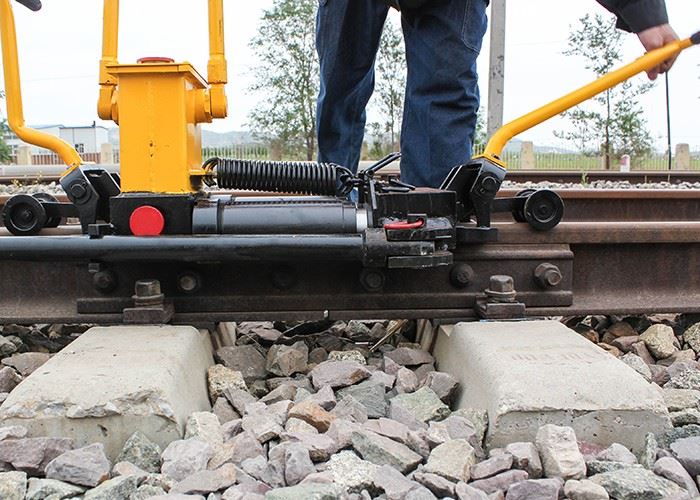
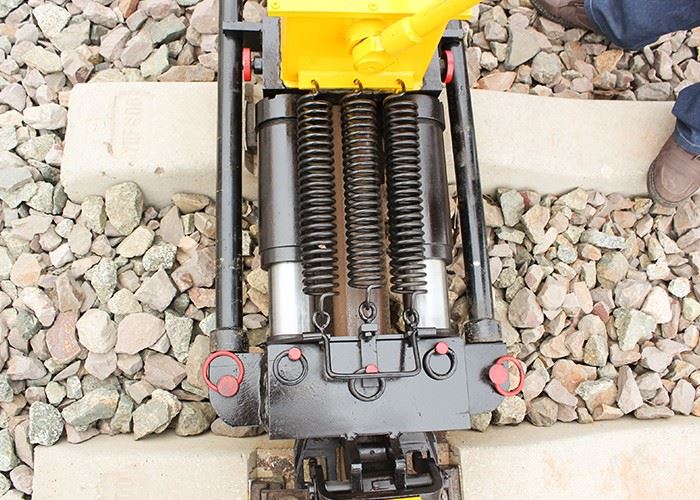
Despite the challenges, some innovative solutions are being explored in the industry. One approach is to use adjustable gripping jaws. These jaws can be adjusted in width and height to fit different rail profiles. The adjustment can be manual, where the operator uses tools to change the position of the jaws, or it can be automated, using hydraulic or electric actuators. Another aspect is the development of smart control systems for rail tensors. These systems can sense the dimensions of the rail and automatically adjust the force - exerting parameters to ensure optimal performance.
At our company, we are constantly researching and developing new technologies to address the need for variable - dimension rail tensors. We understand that the railway industry is evolving, and there is a growing demand for more flexible and adaptable tools. Our R & D team is working on prototypes of rail tensors with adjustable gripping mechanisms and intelligent control systems. We aim to provide a solution that can meet the diverse needs of our customers in different railway projects.
In addition to the variable - dimension issue, our company also offers a wide range of high - quality rail tensors and related products. Our Rail Tensor is designed to provide reliable performance in various working conditions. We also have the YTF 250 Hydraulic Rail Gap Adjuster and YTF - 400II Hydraulic Rail Gap Adjuster. These products are known for their durability, efficiency, and precision.
If you are involved in railway construction, maintenance, or any related projects, we invite you to contact us for further information. Whether you are looking for a standard fixed - dimension rail tensor or interested in our research on variable - dimension rail tensors, we are here to assist you. Our team of experts can provide you with detailed product information, technical support, and help you choose the most suitable solution for your project. We believe that by working together, we can contribute to the development and safety of the railway industry.
In conclusion, while most rail tensors currently have fixed dimensions due to the advantages of precision and reliability, the concept of variable - dimension rail tensors is a promising area of development. With the continuous progress of technology, we expect to see more innovative solutions in this field. Our company is committed to leading the way in this innovation, providing high - quality products and services to meet the changing needs of the railway industry.
References
- Railway Engineering Handbook, Second Edition. Editors: John W. Armstrong, Mark W. Clift. This handbook provides comprehensive knowledge about railway construction and maintenance, including information on rail - related tools.
- Research papers on advanced railway construction equipment published in international engineering journals. These papers discuss the latest technological trends and challenges in the development of railway tools such as rail tensors.