




What are the emergency response procedures for a railway tamper failure?
 Nov 14, 2025|
 In the intricate web of railway infrastructure maintenance, railway tampers play a pivotal role. These machines are responsible for packing the ballast beneath the railway tracks, ensuring the tracks remain stable, level, and safe for train operations. However, like any complex machinery, railway tampers can experience failures. As a leading railway tamper supplier, we understand the criticality of having well - defined emergency response procedures in place. In this blog, we will delve into the emergency response procedures for a railway tamper failure.
Initial Assessment
The moment a railway tamper failure is detected, the first step is to conduct an initial assessment. The operator on - site should immediately halt the machine's operation to prevent any further damage or potential safety hazards. They need to assess the nature of the failure. Is it a mechanical issue, an electrical problem, or perhaps a hydraulic malfunction?
For example, if the tamper suddenly stops vibrating during the tamping process, it could indicate a mechanical failure in the vibrating mechanism. On the other hand, if the control panel shows error lights or malfunctions, it might be an electrical problem. Operators are trained to look for obvious signs such as loose connections, broken belts, or leaks in the hydraulic system.
During this assessment, the operator should also note down any error codes displayed on the machine's control panel. These error codes can provide valuable clues about the root cause of the failure. If the tamper is a Hydraulic Ballast Tamper Railway, specific error codes can point to issues within the hydraulic circuit, such as low pressure or a faulty pump.
Safety Measures
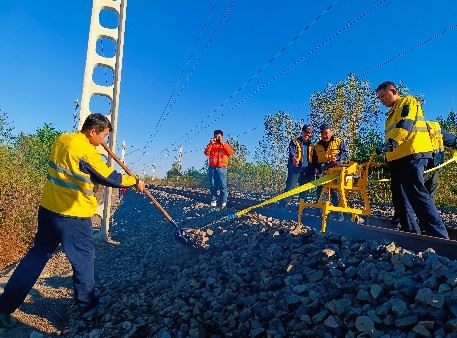
Safety is of utmost importance when dealing with a railway tamper failure. Once the initial assessment is complete, the operator must ensure that all safety measures are in place. This includes setting up warning signs around the tamper to alert other railway workers in the area. The tamper should be isolated from the power source to prevent any accidental startup.
If the failure occurs on an active railway track, the operator needs to inform the railway traffic control center immediately. This is crucial to prevent any trains from approaching the area while the tamper is being repaired. The traffic control center can then take appropriate measures such as diverting trains or stopping them at a safe distance until the situation is resolved.
Contacting the Supplier
As a railway tamper supplier, we encourage operators to contact us as soon as possible after a failure is detected. Our technical support team is available 24/7 to assist with troubleshooting. When contacting us, the operator should provide detailed information about the failure, including the error codes, the symptoms observed, and the machine's model and serial number.
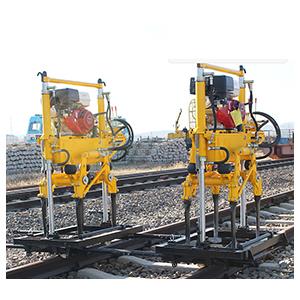
For instance, if the YD - 22III Automatic Remote Control Hydraulic Rail Tamping Machine experiences a failure, the operator should be able to tell us the exact model and provide details about how the machine was operating before the failure. Our technical experts can then analyze the information and offer initial guidance on whether the issue can be resolved on - site or if the machine needs to be transported to our service center.
On - Site Repairs
In many cases, minor failures can be repaired on - site. Our technical support team will guide the on - site operator through the repair process step by step. This may involve simple tasks such as replacing a fuse, tightening a loose bolt, or reconnecting a cable.
For more complex issues, our technicians may be dispatched to the site. They carry a comprehensive set of tools and spare parts to ensure that they can address a wide range of problems. Before starting the repair, our technicians will conduct a thorough inspection of the tamper to confirm the root cause of the failure.
If the failure is related to the hydraulic system of a Hydraulic Ballast Tamper Railway, our technicians will check the hydraulic fluid level, the condition of the hoses, and the functionality of the pumps and valves. They will then replace any faulty components and test the system to ensure it is working properly.
Transportation to the Service Center
If the failure cannot be repaired on - site, the railway tamper needs to be transported to our service center. Our team will arrange for the safe transportation of the machine, ensuring that it is properly secured to prevent any further damage during transit.
At the service center, our highly skilled technicians will conduct a detailed diagnostic test on the tamper. They will use advanced diagnostic equipment to identify the exact cause of the failure. Once the problem is identified, they will develop a repair plan. This may involve replacing major components such as the engine, the hydraulic pump, or the control system.
Testing and Quality Assurance
After the repair is completed, the railway tamper undergoes a rigorous testing process. Our technicians will test the machine under various operating conditions to ensure that it meets all the performance standards. They will check the tamping force, the vibration frequency, and the accuracy of the control system.
Quality assurance is a top priority for us. We follow strict quality control procedures to ensure that every repaired tamper is in perfect working condition before it is returned to the customer. This includes a final inspection by a quality control engineer who will verify that all the repairs have been carried out correctly and that the machine is safe to use.
Preventive Maintenance
To minimize the risk of future failures, we recommend a comprehensive preventive maintenance program. This includes regular inspections, lubrication, and replacement of worn - out parts. Our team can provide a detailed maintenance schedule based on the specific model of the railway tamper.
For example, for the Internal Combustion Slope Protection Shaping Machine, we recommend checking the engine oil level, the air filter, and the spark plug at regular intervals. By following a preventive maintenance program, customers can extend the lifespan of their railway tampers and reduce the likelihood of unexpected failures.
Conclusion
In conclusion, a well - defined emergency response procedure for railway tamper failures is essential to ensure the safety and efficiency of railway infrastructure maintenance. As a trusted railway tamper supplier, we are committed to providing our customers with the best possible support in the event of a failure. Our technical expertise, comprehensive spare parts inventory, and efficient repair and maintenance services ensure that our customers can minimize downtime and keep their railway operations running smoothly.
If you are facing any issues with your railway tamper or are interested in learning more about our products and services, we invite you to contact us for a detailed discussion. Our team is ready to assist you with all your railway tamper needs.
References
- Railway Maintenance Handbook, Third Edition, by John H. Zarembski
- Handbook of Railway Engineering, Second Edition, by George Demetrakopoulos