




What are the standards for railway vehicle safety?
 Aug 06, 2025|
 Railway vehicle safety is of paramount importance in the transportation industry. As a railway vehicle supplier, we understand the critical role that safety standards play in ensuring the well - being of passengers, crew, and the general public. In this blog, we will explore the various standards for railway vehicle safety and how our products meet and exceed these requirements.
Structural Integrity
One of the fundamental aspects of railway vehicle safety is the structural integrity of the carriages. Railway vehicles are subject to various forces during operation, including acceleration, deceleration, and lateral forces when turning. The structure must be designed to withstand these forces without compromising the safety of the occupants.
For example, the frames of our railway vehicles are constructed using high - strength steel alloys. These materials have excellent tensile strength and can resist deformation under heavy loads. The design also incorporates a modular structure, which allows for easy maintenance and replacement of damaged parts. Our engineers use advanced computer - aided design (CAD) and finite element analysis (FEA) techniques to simulate the behavior of the vehicle under different conditions. This ensures that the structure can withstand extreme forces, such as those encountered during a collision.
Braking Systems
A reliable braking system is essential for railway vehicle safety. It must be able to stop the vehicle quickly and safely in all operating conditions. Our railway vehicles are equipped with state - of - the - art braking systems that combine multiple braking technologies.
The primary braking system is usually a pneumatic or hydraulic system. Pneumatic brakes use compressed air to apply the braking force, while hydraulic brakes use a fluid. These systems are designed to provide a high level of braking power and are responsive to the driver's commands. In addition to the primary braking system, we also install an emergency braking system. This system can be activated automatically in case of an emergency, such as a sudden obstruction on the track.
We also implement anti - lock braking systems (ABS) on our vehicles. ABS prevents the wheels from locking up during braking, which helps to maintain steering control and reduces the stopping distance. This technology is especially important in wet or slippery conditions.
Fire Safety
Fire safety is another crucial aspect of railway vehicle safety. A fire on a train can spread quickly and cause significant damage and loss of life. Therefore, our railway vehicles are designed with multiple fire - safety features.
The interior materials of our carriages are made of fire - resistant materials. These materials have a low flammability rating and are designed to self - extinguish in case of a fire. We also install fire detection and suppression systems throughout the vehicle. Smoke detectors can detect the presence of smoke early, and automatic sprinkler systems can extinguish the fire before it spreads.
In addition, our vehicles are equipped with emergency exits that are clearly marked and easy to access. These exits are designed to be opened quickly in case of an emergency, allowing passengers and crew to evacuate the vehicle safely.
Electrical Safety
Electrical systems in railway vehicles are complex and can pose a significant safety risk if not properly designed and maintained. Our vehicles are designed with strict electrical safety standards in mind.
All electrical components are insulated to prevent electrical shocks. We use high - quality insulation materials that can withstand high voltages and temperatures. The electrical systems are also equipped with circuit breakers and fuses to protect against over - current and short - circuits.
Regular inspections and maintenance of the electrical systems are carried out to ensure their safety. Our technicians are trained to identify and repair any potential electrical problems before they become a hazard.
Crashworthiness
Crashworthiness refers to the ability of a railway vehicle to protect its occupants in the event of a collision. Our vehicles are designed with advanced crash - worthiness features to minimize the impact forces on the passengers and crew.
We use energy - absorbing structures in the front and rear of the vehicle. These structures are designed to deform in a controlled manner during a collision, absorbing the impact energy and reducing the force transferred to the passengers. The seats in our carriages are also designed to provide maximum protection. They are equipped with seat belts and are designed to withstand the forces generated during a collision.
Safety of Passenger Compartments
The safety of the passenger compartments is a top priority. We ensure that the interior of our carriages is designed to minimize the risk of injury to passengers.
The seats are arranged in a way that provides sufficient space for passengers to move around comfortably. The handrails and grab bars are installed at convenient locations to help passengers maintain their balance during the journey. The floors are non - slip to prevent passengers from slipping and falling.
We also pay attention to the ventilation and air - quality in the passenger compartments. Proper ventilation helps to remove pollutants and maintain a comfortable environment for the passengers.
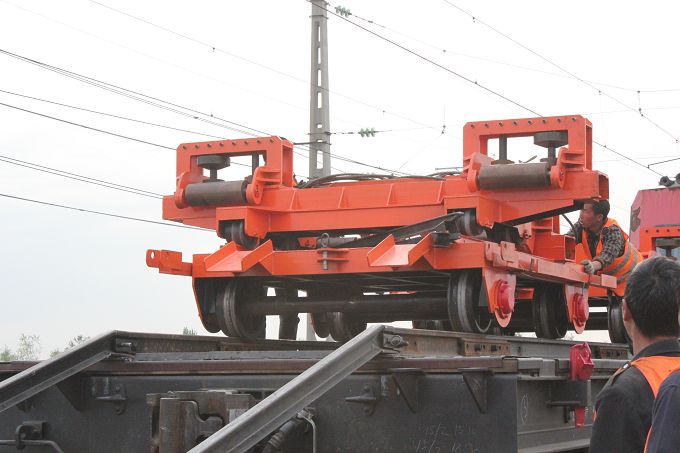

Our Product Range and Safety Compliance
As a railway vehicle supplier, we offer a wide range of products that comply with the highest safety standards. For example, our HGC Designed Top Quality Rail Exchanging Cars are designed with all the safety features mentioned above. These cars are used for track maintenance and exchange operations, and their safety is crucial for the workers on board.
Our ballast profiling machine railroad rail ballast regulator rail ballast regulating sweeping machine is another product that meets strict safety standards. This machine is used for ballast maintenance on the railway tracks, and its safe operation is essential for the stability of the tracks.
We also offer the 500kg insulated alloy Rail Trolley By Manual. Although it is a manual - operated vehicle, it is still designed with safety in mind. The insulated alloy structure provides protection against electrical hazards, and the braking system ensures safe stopping.
Conclusion
Railway vehicle safety is a multi - faceted issue that requires a comprehensive approach. As a railway vehicle supplier, we are committed to providing high - quality products that meet and exceed the safety standards. Our products are designed with advanced technologies and materials to ensure the safety of passengers, crew, and the general public.
If you are interested in our railway vehicle products and would like to discuss your specific requirements, we invite you to contact us for procurement and further negotiation. We look forward to working with you to provide the best railway vehicle solutions for your needs.
References
- International Union of Railways (UIC) safety regulations.
- Federal Railroad Administration (FRA) safety standards.
- European Union Agency for Railways (ERA) safety directives.