





Causes And Treatment Of Rail Joint Diseases
 Aug 09, 2021|
 In the maintenance, according to the theory and practice: the joint must meet the following requirements.
1. No matter whether the joint is of suspended type or pad type, the left and right over strand rail joints must be aligned with each other and located in the middle of the joint sleeper or the middle of the rail bearing groove (in order to prolong the service life of the sleeper, the pad type shall not be set in practice).
2. In the joint range, the steel rail should be able to bear the vertical force and transverse force acting on it when the train passes like other parts, that is, the shape and size of the steel rail deflection in the joint range are the same as other parts under the action of load.
3. During the thermal expansion and cold contraction of the rail of the frozen line, the rail end at the joint shall not produce displacement (or slight displacement).
4. During the thermal expansion and cold contraction of CWR rail, the weld joint is not allowed to move, and the rail end at the first joint in the buffer zone can make a certain displacement (the displacement shall not be too large and shall not exceed the structural rail joint).
The above requirements do not match the line maintenance and the rail itself, but contradict each other. Therefore, in the ordinary maintenance work, we should carefully and thoroughly analyze the causes of various joint diseases, and take practical and feasible corresponding measures to rectify the joint diseases of rail according to the analyzed causes, so as to prolong the service life of equipment as far as possible and ensure the smooth and uninterrupted operation of the train.
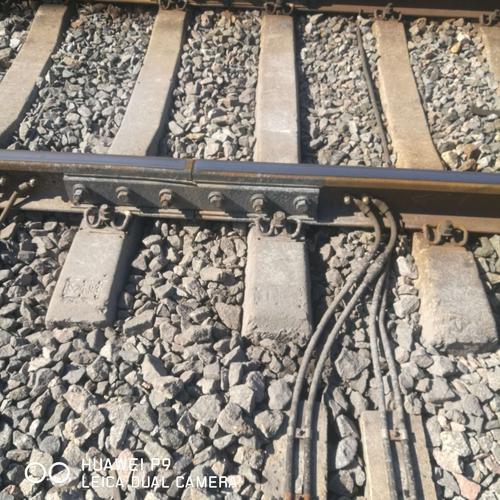
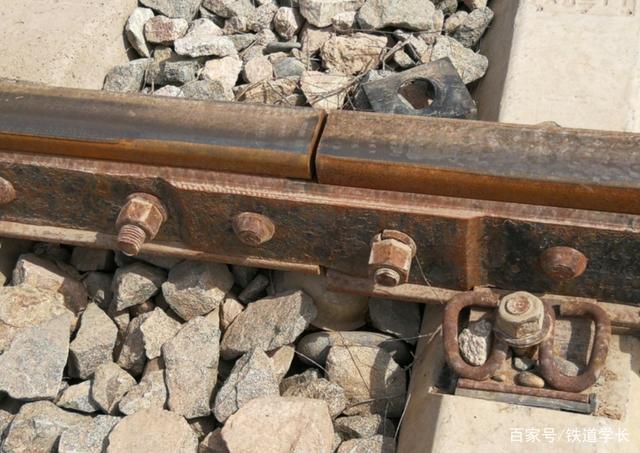
Treatment of low rail joint
1. Causes of low rail joint:
(1) When the rail is crushed, damaged, uncovered and saddle shaped, it will greatly increase the impact of the train, and the rolling of the low joint through the train wheel will increase the development of joint crushing, uncovered, damaged and saddle shaped. The two are mutually causal.
(2) . the joint is not tamped firmly, and there are empty hanging plates or concealed pits.
(3) The joint sleeper fails and the compressive capacity is weakened.
(4) The splint is bent up and down, and the rail head swings up and down when passing the vehicle.
(5) . low rail joint will be caused by line crawling, sleeper displacement, excessive rail joint and unequal height of rail head.
2. Measures for regulating low rail joints
(1) . grinding and welding repair shall be adopted for low-pressure joints; Sawing off the rail end can cure the low joint disease; However, saw rail treatment has greatly increased the cost and caused some unnecessary losses to the country, so we must deal with it in combination with the specific situation in our actual work.
(2) According to the degree of low joint, when the weather temperature is appropriate, pad different bamboo gaskets, no more than two, and the total thickness shall not exceed 10mm. When pad the rubber gasket, pay attention to the small waist empty plate. After several days of compaction, replace it with high elastic rubber gasket and height adjusting fastener. If the settlement of the joint is too large, take the high elastic rubber pad for eight side tamping, and then put on a thin rubber pad. When the settlement can put on the high elastic rubber pad, put on the high elastic rubber pad and adjust the height fastener. This continues until it is repaired.
(3) In case of sleeper failure or rail sinking groove crushing at the joint, the sleeper must be replaced in time. In case of wooden sleeper, two joints must be replaced at the same time.
(4) During operation, if the splint is bent, the splint must be replaced in time, and the joint tamping shall be strengthened after replacement. For the joint reinforced concrete sleeper, when the ballast is dirty or there are hidden pits, it shall be cleaned in time to replace the ballast to increase the elasticity of the ballast bed.
(5) Change the rails, and exchange the positions of low joint and non low joint rails, that is, put the rails without low joint together for use.
(6) Strengthen the maintenance work at ordinary times, so that the track lifting amount of the joint during maintenance and repair operations shall be 2 ~ 4mm ‰ higher, but it must be noted that the slope shall not be greater than 1 ‰.
(7) Set the height adjusting fastener, place the high elastic rubber pad and install the A-B type metal damping splint to increase the wheel rail contact area to reduce the wheel rail impact and rectify the low joint. The A-B type metal damping splint must be installed according to the technical standards( ① A0 is selected when the normal type outer side uses vertical wear of 0mm; Select A1 when the vertical wear is 0-1mm; A2 is selected when the vertical wear is 1-2mm; A3 is selected when the vertical wear is 2-3mm; Select A4 when the vertical wear is 3-4mm; ② A0 shall be selected when the vertical wear of the reinforced outer side is 0mm; Select A1 when the vertical wear is 0-1mm; A2 is selected when the vertical wear is 1-2mm; A3 is selected when the vertical wear is 2-3mm; When the vertical wear is 3-4mm, select A4).