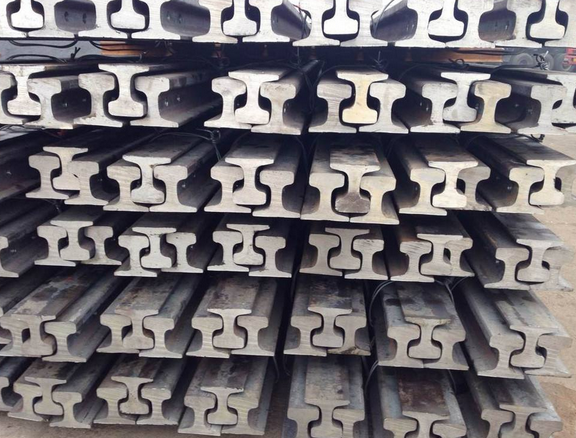
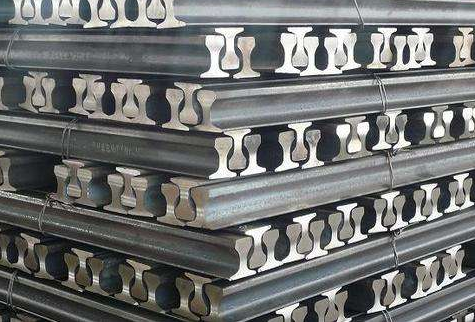
(1) Knowledge of heavy rail: rail with nominal weight greater than 30kg per meter. Both train rail and crane rail belong to heavy rail. Train rail: it is used for laying railway. It should bear the pressure, impact load and friction during train operation. It is required to have sufficient strength and certain toughness. The quality requirements are strict. In addition to ensuring its chemical composition, it is also required to inspect mechanical properties, drop weight test and acid leaching macrostructure. The production plants include WISCO, Angang, Baotou Steel and Panzhihua steel. Crane rail: i.e. crane rail, which is low in height and large in head width and waist thickness. Only chemical composition and tensile strength are required to be tested. Used for laying crane and trolley rails. Production plants include Angang and Pangang.
(2) Light rail knowledge: it refers to the rail with nominal weight less than or equal to 30kg per meter. The quality requirement of light rail is lower than that of rail, and only its chemical composition, tensile strength, hardness and drop weight test are required to be tested. Main uses: light rail is mainly used for laying temporary transportation lines and light locomotive lines in forest areas, mining areas, factories and construction sites.
Rail model:
(1) Light rail model, material: Q235, 55Q; Specifications: 30kg / m, 24kg / m, 22kg / m, 18kg / m, 15kg / m, 12kg / m, 8kg / m.
(2) Model and material of heavy rail: 45MN, 71mn; Specifications: 50kg / m, 43kg / m, 38kg / m, 33kg / M
(3) Model and material of lifting rail: U71Mn; Specifications: qu70 kg / m, QU80 kg / m, qu100 kg / m, qu120 kg / m. The above rail models are common rail models.
1、 Product storage:
1. The warehouse where the products are kept shall not be stacked with acid, alkali, salt, cement and other materials that are corrosive to steel. Different types of steel shall be stacked separately to prevent confusion and contact corrosion.
2. If the products are stacked indoors, ensure the ventilation of the indoor warehouse, and pay attention to waterproof and moisture-proof, so as not to affect the service life of the products; Try to avoid stacking in the open air. If it is necessary to stack outdoors due to site constraints, please cover it with waterproof cloth such as sewing cloth to avoid rust.
3. When pushing products, ensure that they are stacked according to varieties and specifications under the condition of stable and safe site, so as to prevent confusion and mutual corrosion.
2、 Product shipment:
1. The steel product itself is heavy, so the vehicle shall be equipped with skids during shipment, and pay attention to the safety of shipment.
2. During the transportation of steel, the loading shall be uniform and balanced, moisture-proof and moisture-proof to prevent corrosion. Oil cloth and other moisture-proof and moisture-proof tools shall be equipped.
3. During loading, the product shall be avoided from over height, over length and overload, and the goods shall be evenly distributed.
4. Protective measures shall be taken to prevent the surface of products from being damaged by anti-corrosion cloth or binding during delivery, and anti-corrosion measures shall be taken to prevent the products from being damaged before delivery.





 Mar 12, 2022|