




Can a rail bender be used for bending rails with different cross - sections?
 Jun 05, 2025|
 Can a rail bender be used for bending rails with different cross - sections?
As a supplier of rail benders, this is a question I often encounter from customers in the railway construction and maintenance industry. In this blog post, I'll delve into the capabilities of rail benders when it comes to bending rails with different cross - sections.
Understanding Rail Cross - Sections
Rails come in a variety of cross - sectional shapes and sizes. The most common types include the flat - bottomed rail, which is widely used in modern railways, and the bull - headed rail, which was more prevalent in the past. Each cross - section has its own unique geometric properties, such as height, base width, web thickness, and head dimensions. These properties affect the mechanical behavior of the rail during the bending process.
The flat - bottomed rail, for example, has a relatively wide base that provides stability when laid on the track. The web connects the base to the head, and the head is the part that comes into contact with the train wheels. The dimensions of these components can vary depending on the specific application, such as high - speed railways or heavy - haul railways.
On the other hand, the bull - headed rail has a large, rounded head and a smaller base. This design was originally intended to provide better wear resistance and load - carrying capacity. However, as railway technology evolved, flat - bottomed rails became more popular due to their ease of installation and maintenance.
The Working Principle of Rail Benders
Before discussing whether a rail bender can handle different cross - sections, it's important to understand how these machines work. There are several types of rail benders available on the market, including screw - jack rail benders and hydraulic vertical rail benders.
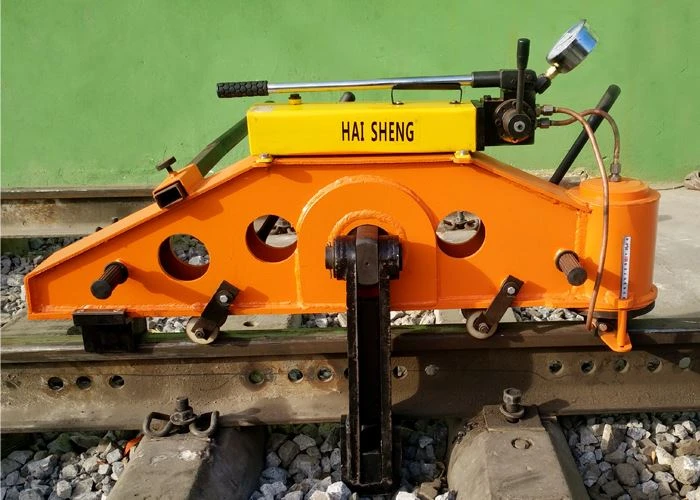
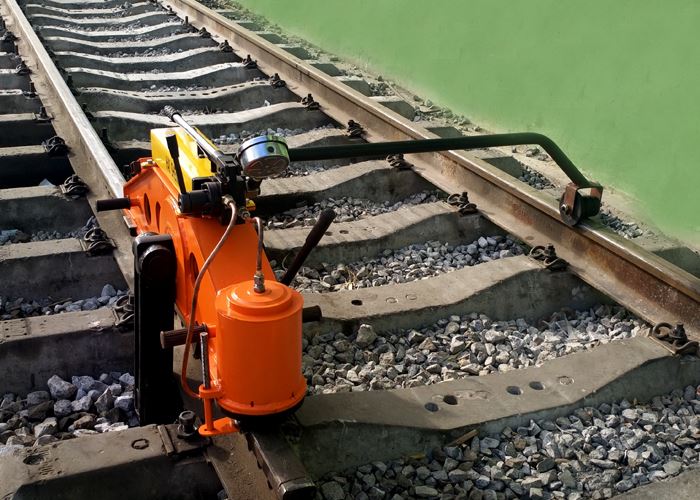
A Rail Bender (Rail Bending Machine Screw Jack Rail Bender) operates using a screw - jack mechanism. This type of bender typically consists of a frame, a screw - jack, and a set of dies. The rail is placed between the dies, and the screw - jack is turned to apply a bending force to the rail. The advantage of a screw - jack rail bender is its simplicity and relatively low cost. However, it may have limitations in terms of the maximum bending force it can apply.
A Rail Bender (rail bending machine screw jack rail bender), on the other hand, uses hydraulic pressure to generate the bending force. This type of bender can apply a much larger force compared to a screw - jack bender, making it suitable for bending thicker and more rigid rails. Hydraulic rail benders are also more precise and can achieve a higher degree of accuracy in the bending process.
Compatibility with Different Cross - Sections
The ability of a rail bender to bend rails with different cross - sections depends on several factors, including the design of the bender, the available bending force, and the adaptability of the dies.
Design of the Bender
Some rail benders are designed to be versatile and can handle a wide range of rail cross - sections. These machines often have adjustable components, such as the distance between the dies and the position of the bending point. This allows them to accommodate rails of different heights, widths, and thicknesses.
For example, a well - designed Rail Bender may have a modular structure that can be easily reconfigured to suit different rail profiles. This means that the same machine can be used for both flat - bottomed and bull - headed rails, as long as the appropriate dies are installed.
Available Bending Force
The bending force required to bend a rail depends on its cross - sectional properties, such as the moment of inertia and the yield strength. Rails with larger cross - sections generally require more force to bend. Therefore, a rail bender must have sufficient power to overcome the resistance of the rail during the bending process.
Hydraulic rail benders are typically more capable of handling larger cross - sections compared to screw - jack benders. However, even within the category of hydraulic benders, there are differences in the maximum bending force they can provide. It's important to choose a rail bender with a bending force that is appropriate for the specific rails you need to bend.
Adaptability of the Dies
The dies are an essential part of the rail bending process. They determine the shape and radius of the bend. For a rail bender to be able to bend rails with different cross - sections, the dies must be adaptable or interchangeable.
Some rail benders come with a set of standard dies that can be used for common rail profiles. However, for more specialized or non - standard cross - sections, custom - made dies may be required. It's important to work with a rail bender supplier who can provide the necessary dies or assist in the design and manufacturing of custom dies.
Advantages of Using a Single Rail Bender for Different Cross - Sections
Using a single rail bender for different cross - sections offers several advantages. Firstly, it reduces the need for multiple machines, which can save on capital investment and storage space. Secondly, it simplifies the training process for operators, as they only need to learn how to operate one type of machine. Finally, it can improve the efficiency of the rail bending process, as there is no need to switch between different machines when working on different rail profiles.
Limitations and Considerations
While it is possible to use a rail bender for different cross - sections, there are some limitations and considerations to keep in mind.
Firstly, as mentioned earlier, the bending force and the adaptability of the dies are crucial factors. If the rail bender does not have enough power or the dies are not suitable, it may not be able to achieve the desired bend quality.
Secondly, the accuracy of the bend may be affected when bending different cross - sections. Different rail profiles may have different mechanical properties, which can cause variations in the bending process. It's important to conduct test bends and make adjustments as necessary to ensure consistent and accurate results.
Finally, the wear and tear on the machine may be more significant when using it for different cross - sections. The dies, in particular, may experience more rapid wear due to the different contact pressures and friction forces associated with different rail profiles. Regular maintenance and inspection of the machine are essential to ensure its long - term performance.
Conclusion
In conclusion, a rail bender can be used for bending rails with different cross - sections, but it depends on several factors, including the design of the bender, the available bending force, and the adaptability of the dies. As a rail bender supplier, we offer a range of machines that are designed to be versatile and capable of handling different rail profiles. Whether you need a screw - jack rail bender for smaller cross - sections or a hydraulic vertical rail bender for larger and more challenging rails, we can provide the right solution for your needs.
If you are in the market for a rail bender and have questions about its compatibility with different cross - sections, or if you would like to discuss your specific requirements, please don't hesitate to contact us. We are here to assist you in making the best choice for your railway construction or maintenance project.
References
- Railway Engineering Handbook, various editions
- Technical manuals of rail bender manufacturers
- Research papers on rail bending technology