




How are rail vehicles manufactured?
 Oct 01, 2025|
 Rail vehicles are marvels of modern engineering, serving diverse purposes in transportation, industrial operations, and more. As a leading rail vehicle supplier, I'm excited to take you through the intricate process of how these remarkable machines are manufactured.
Design and Planning
The manufacturing journey of rail vehicles begins long before any physical work starts. It all starts with a detailed design phase. Our team of experienced engineers and designers collaborate closely to understand the specific requirements of our clients. Whether it's a high - speed passenger train for a national railway network or a specialized industrial rail trolley for a mining operation, every detail matters.
We conduct in - depth market research to identify the latest trends, safety standards, and technological advancements. This helps us create designs that are not only functional but also efficient and sustainable. Computer - Aided Design (CAD) software plays a crucial role in this stage. It allows us to create 3D models of the rail vehicles, enabling us to visualize the final product and make necessary adjustments before moving to the production phase.
During the design process, we also consider factors such as the vehicle's weight distribution, aerodynamics, and compatibility with existing railway infrastructure. For example, if the rail vehicle is intended for a narrow - gauge railway, the design must be optimized to fit within the limited space while still providing sufficient capacity and performance.
Material Selection
Once the design is finalized, the next step is to select the appropriate materials. The choice of materials has a significant impact on the vehicle's performance, durability, and cost. For the structural components of the rail vehicle, such as the chassis and body frame, we often use high - strength steel or aluminum alloys.
High - strength steel offers excellent strength and rigidity, making it suitable for withstanding the heavy loads and stresses encountered during operation. Aluminum alloys, on the other hand, are lightweight, which helps to reduce the overall weight of the vehicle and improve energy efficiency. They also have good corrosion resistance, which is essential for rail vehicles that operate in harsh environments.
In addition to the structural materials, we also select materials for other components such as the wheels, brakes, and electrical systems. For the wheels, we use high - quality steel that can withstand the high pressures and friction generated during rolling. The brake systems are made from materials that provide reliable stopping power, such as cast iron or composite materials.
Manufacturing the Chassis and Body
The chassis is the backbone of the rail vehicle, providing support for all the other components. It is typically fabricated by cutting, bending, and welding steel or aluminum plates. Our manufacturing facilities are equipped with advanced machinery and tools to ensure precise and accurate fabrication.
First, the steel or aluminum plates are cut to the required size and shape using laser cutting or plasma cutting machines. These cutting methods provide high precision and clean edges, minimizing the need for additional finishing work. Next, the plates are bent into the desired shape using press brakes. The bending process requires careful control to ensure that the angles and dimensions are accurate.
Once the individual components of the chassis are fabricated, they are welded together using automated welding robots. Welding is a critical process that requires strict quality control to ensure the integrity of the joints. Non - destructive testing methods, such as ultrasonic testing and X - ray inspection, are used to detect any defects in the welds.
After the chassis is completed, the body of the rail vehicle is attached to it. The body can be made from a variety of materials, including fiberglass, composite materials, or metal panels. The body is designed to provide a comfortable and safe environment for passengers or operators, as well as to protect the internal components from the elements.
Installing the Mechanical and Electrical Systems
The mechanical and electrical systems are the heart and soul of the rail vehicle, providing power, control, and functionality. The mechanical systems include the propulsion system, suspension system, and braking system.
The propulsion system is responsible for moving the rail vehicle. Depending on the type of vehicle, it can be powered by diesel engines, electric motors, or a combination of both. Diesel - powered rail vehicles are commonly used in freight transportation and some regional passenger services. Electric - powered rail vehicles, on the other hand, are more environmentally friendly and are often used in urban transit systems and high - speed trains.
The suspension system is designed to provide a smooth and comfortable ride by absorbing shocks and vibrations. It typically consists of springs, dampers, and other components that work together to keep the vehicle stable and level. The braking system is essential for ensuring the safety of the rail vehicle. It can be either a mechanical or an electro - magnetic braking system, depending on the application.
The electrical system of the rail vehicle includes the power distribution system, control system, and communication system. The power distribution system supplies electricity to all the electrical components of the vehicle, such as the lights, air conditioning, and propulsion system. The control system allows the operator to control the speed, direction, and other functions of the vehicle. The communication system enables the vehicle to communicate with other trains, railway control centers, and passengers.
Testing and Quality Assurance
Before the rail vehicle is delivered to the customer, it undergoes a series of rigorous tests and quality assurance checks. These tests are designed to ensure that the vehicle meets all the design specifications and safety standards.
The first test is the static test, which involves checking the vehicle's dimensions, weight, and balance. The vehicle is placed on a test stand, and various measurements are taken to ensure that it meets the required tolerances. Next, the vehicle undergoes a dynamic test, which involves running the vehicle on a test track. During the dynamic test, the vehicle's speed, acceleration, braking, and handling are tested under different operating conditions.
In addition to the performance tests, the vehicle also undergoes a series of safety tests, such as fire safety tests, crash tests, and electromagnetic compatibility tests. These tests are designed to ensure that the vehicle is safe for passengers, operators, and the environment.
Customization and Special Features
At our company, we understand that every customer has unique requirements. That's why we offer a wide range of customization options for our rail vehicles. Whether it's adding special features, modifying the design, or integrating new technologies, we can work with our customers to create a rail vehicle that meets their specific needs.
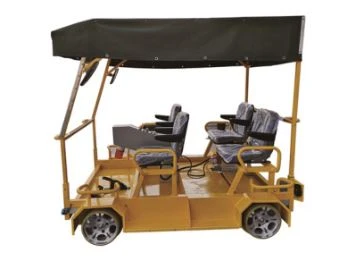
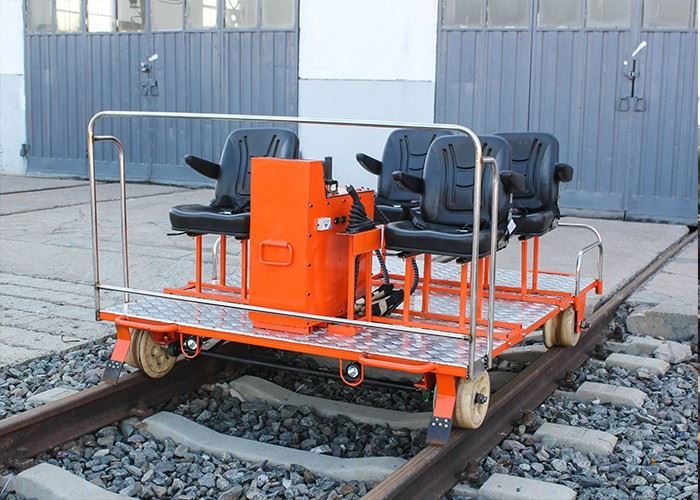
For example, we offer Customsized Railway Transportation Tools Lithium Battery Rail Trolley that can be customized with different battery capacities, payloads, and control systems. Our 500kg insulated alloy Rail Trolley By Manual is another example of a customizable product that can be tailored to the specific requirements of industrial applications. And our Transporting Tool Lithium Battery Rail Trolley 4 seats special designed Inspection vehicle is designed for special inspection tasks and can be customized with additional equipment and features.
Conclusion
Manufacturing rail vehicles is a complex and challenging process that requires a high level of expertise, advanced technology, and strict quality control. At our company, we are committed to providing our customers with the highest quality rail vehicles that meet their specific needs.
If you are interested in purchasing rail vehicles or have any questions about our products and services, we encourage you to contact us for a detailed discussion. Our team of experts is ready to assist you in finding the best solution for your transportation needs.
References
- "Rail Vehicle Engineering" by John F. W. Gale.
- "High - Speed Rail Technology" by Hiroyuki Ishikawa.
- Industry standards and guidelines from relevant railway organizations.