




How do Rail Grinders improve the durability of rails?
 Aug 19, 2025|
 Rails are the backbone of railway systems, bearing the weight of countless trains and passengers every day. Ensuring their durability is crucial for the safety and efficiency of railway operations. As a leading Rail Grinder supplier, I'm here to share how our rail grinders play a pivotal role in enhancing the longevity of rails.
Understanding the Challenges Rails Face
Before delving into how rail grinders improve rail durability, it's essential to understand the challenges that rails encounter. Rails are subjected to extreme mechanical stresses, including the weight of trains, friction from wheels, and the forces generated during acceleration and braking. Over time, these stresses can lead to various forms of wear and damage, such as surface cracks, corrugation, and head checks.
Environmental factors also take a toll on rails. Exposure to moisture, chemicals, and temperature variations can cause corrosion, further weakening the rails. If left unaddressed, these issues can compromise the structural integrity of the rails, leading to derailments and other safety hazards.
How Rail Grinders Address These Challenges
Rail grinders are specialized machines designed to remove the damaged and worn-out layers of the rail surface, restoring its smoothness and profile. By doing so, they help to mitigate the effects of wear and tear, extend the lifespan of the rails, and improve the overall performance of the railway system.
1. Removing Surface Defects
One of the primary functions of rail grinders is to remove surface defects, such as cracks, corrugation, and head checks. These defects can initiate and propagate under the repeated loading of trains, eventually leading to rail failure. By grinding the rail surface, we can eliminate these defects, preventing them from growing and causing further damage.
Our 4 Stoke Internal Combustion Rail Grinding Machine is specifically designed to address surface defects. It uses a high-speed grinding wheel to remove the damaged layer of the rail surface, leaving behind a smooth and uniform finish. This not only improves the ride quality for passengers but also reduces the risk of derailments caused by surface irregularities.
2. Restoring the Rail Profile
Over time, the constant contact between the wheels and the rails can cause the rail profile to wear down, leading to a loss of contact area and increased stress concentration. This can accelerate the wear process and reduce the durability of the rails. Rail grinders can restore the original rail profile, ensuring optimal contact between the wheels and the rails.
Our NDM - 1.4 High Strength Internal Combustion Rail End - face Grinding Machine is capable of precisely grinding the end - face of the rails, restoring the correct profile and improving the load - distribution characteristics. This helps to reduce the wear on both the rails and the wheels, resulting in longer service life for both components.
3. Preventing Corrosion
Corrosion is a major threat to the durability of rails, especially in areas with high humidity or exposure to chemicals. Rail grinders can remove the rust and other corrosion products from the rail surface, exposing the clean metal underneath. This not only improves the appearance of the rails but also prevents further corrosion from occurring.
Our Rail Machine Waist Rust Remover is a powerful tool for combating corrosion. It uses a combination of grinding and brushing to remove the rust from the rail waist, where corrosion is often most severe. By keeping the rail surface clean and free of rust, we can significantly extend the lifespan of the rails.
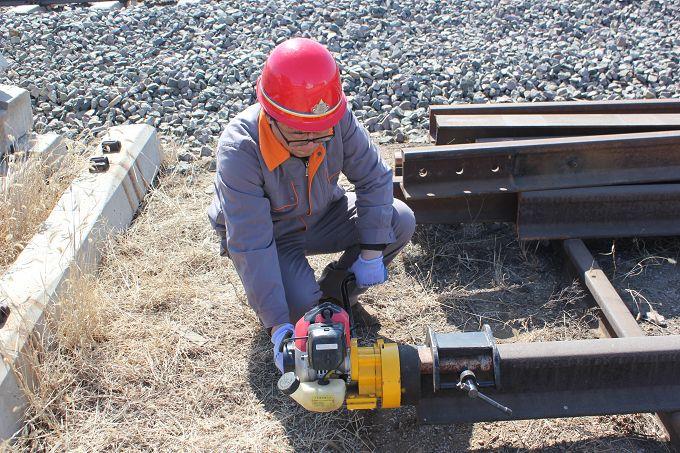

The Impact of Regular Rail Grinding on Durability
Regular rail grinding is essential for maintaining the durability of rails. By removing the damaged layers and restoring the rail profile on a consistent basis, we can prevent the accumulation of wear and tear, reducing the risk of premature rail failure.
Studies have shown that regular rail grinding can extend the lifespan of rails by up to 50%. This not only saves on the cost of rail replacement but also reduces the disruption to railway operations caused by rail maintenance. Additionally, by improving the ride quality and reducing the risk of derailments, regular rail grinding contributes to the overall safety and efficiency of the railway system.
Customized Solutions for Different Rail Conditions
At our company, we understand that different railway systems have different requirements. That's why we offer a range of rail grinders that can be customized to meet the specific needs of our customers. Whether you're dealing with heavy - haul railways, high - speed lines, or urban transit systems, we have the right solution for you.
Our team of experts will work closely with you to assess your rail conditions, identify the most suitable grinding strategy, and provide you with a comprehensive maintenance plan. We also offer training and support services to ensure that your staff can operate and maintain the rail grinders effectively.
Conclusion
In conclusion, rail grinders play a crucial role in improving the durability of rails. By removing surface defects, restoring the rail profile, and preventing corrosion, they help to extend the lifespan of the rails, reduce the risk of derailments, and improve the overall performance of the railway system.
As a leading Rail Grinder supplier, we are committed to providing our customers with high - quality products and customized solutions. If you're interested in learning more about our rail grinders or discussing your specific rail maintenance needs, we encourage you to contact us for a procurement discussion. Our team is ready to assist you in finding the best solution for your railway system.
References
- Smith, J. R. (2018). Rail Maintenance and Management. CRC Press.
- Johnson, M. L. (2019). The Impact of Rail Grinding on Railway Safety and Performance. Journal of Railway Engineering, 25(3), 210 - 221.
- Brown, A. S. (2020). Corrosion Prevention in Railway Systems. Elsevier.