




How do rail vehicles communicate with the control center?
 Oct 17, 2025|
 In the modern railway transportation system, the seamless communication between rail vehicles and the control center is crucial for ensuring operational safety, efficiency, and reliability. As a leading Rail Vehicle supplier, we have in - depth knowledge and rich experience in this area. In this blog, I will share with you how our rail vehicles communicate with the control center.
1. The Significance of Communication between Rail Vehicles and the Control Center
Effective communication between rail vehicles and the control center serves multiple essential functions. Firstly, it is fundamental for safety. The control center can receive real - time information about the vehicle's position, speed, and the status of key components such as brakes and traction systems. In case of any abnormal situations, like a sudden drop in speed or a malfunction in the braking system, the control center can issue immediate instructions to the vehicle to take appropriate measures, such as emergency braking or changing routes.
Secondly, communication enables efficient operation. By having access to data about all rail vehicles in the network, the control center can optimize train schedules, manage traffic flow, and reduce waiting times at stations. This not only improves the overall punctuality of the railway system but also enhances the utilization rate of railway resources.
2. Communication Technologies Used in Our Rail Vehicles
2.1. Wireless Communication
Wireless communication is the backbone of the interaction between our rail vehicles and the control center. We mainly use two types of wireless technologies: GSM - R (Global System for Mobile Communications - Railway) and LTE - R (Long - Term Evolution for Railway).
GSM - R is a dedicated mobile communication system for railways. It provides voice and data communication services, including train dispatching, emergency calls, and the transmission of train control information. Our rail vehicles are equipped with GSM - R terminals that can establish a stable connection with the base stations along the railway line. This allows the control center to communicate directly with the train drivers and receive real - time data from the on - board systems.
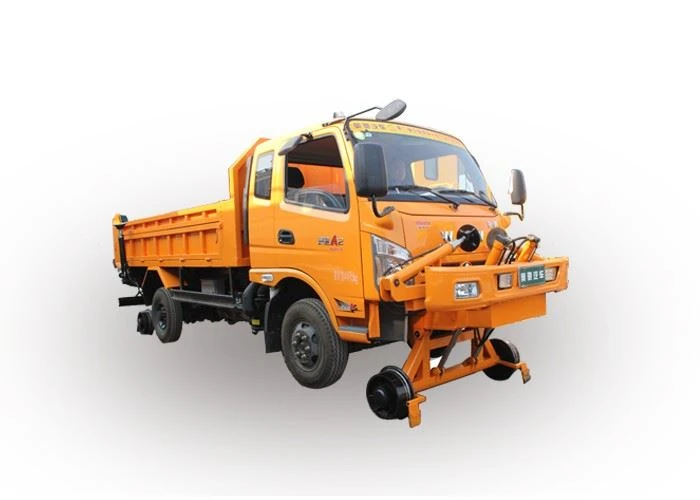
LTE - R, on the other hand, offers higher data transfer rates and lower latency compared to GSM - R. It is capable of supporting more advanced applications such as high - definition video surveillance on trains and the transmission of large - scale sensor data. Our latest models of GYC - Ⅱ Rail Road Vehicle are equipped with LTE - R modules, which ensure seamless and high - speed communication with the control center.
2.2. On - Board Sensors and Data Acquisition Systems
In addition to wireless communication, our rail vehicles are equipped with a large number of on - board sensors and data acquisition systems. These sensors monitor various parameters of the vehicle, such as speed, acceleration, temperature, and vibration. For example, wheel - axle sensors can detect the rotation speed of the wheels, which is used to calculate the vehicle's speed. Temperature sensors are installed on critical components like motors and brakes to monitor their operating temperatures and detect potential overheating issues.
The data collected by these sensors is processed by the on - board data acquisition system. This system then packages the data and sends it to the control center via the wireless communication channels. The control center can analyze this data to assess the vehicle's health status and make informed decisions regarding maintenance and operation.
3. Communication Protocols
To ensure the correct and efficient transmission of data between rail vehicles and the control center, we use standardized communication protocols. One of the most important protocols is the ETCS (European Train Control System) protocol. ETCS is a set of specifications for train control and communication systems in Europe. It defines the interfaces, messages, and procedures for communication between trains and the control center.
Our rail vehicles are designed to comply with the ETCS standards. This allows for seamless integration with existing railway networks and ensures interoperability with other trains and control systems. By using the ETCS protocol, the control center can accurately receive information about the train's position, speed, and movement authority, and issue corresponding control commands to the train.
4. Data Security in Communication
Data security is of utmost importance in the communication between rail vehicles and the control center. The information transmitted contains sensitive data such as train schedules, passenger information, and vehicle operation status. Any security breach could lead to serious consequences, including safety hazards and operational disruptions.
To protect the data, we implement multiple layers of security measures. Firstly, we use encryption algorithms to encrypt the data before it is transmitted over the wireless network. This ensures that even if the data is intercepted, it cannot be deciphered without the correct decryption key. Secondly, we have strict access control mechanisms in place. Only authorized personnel in the control center can access and manage the data received from the rail vehicles.
5. Customized Communication Solutions for Different Rail Vehicles
As a Rail Vehicle supplier, we understand that different types of rail vehicles have different communication requirements. That's why we offer customized communication solutions for our customers.
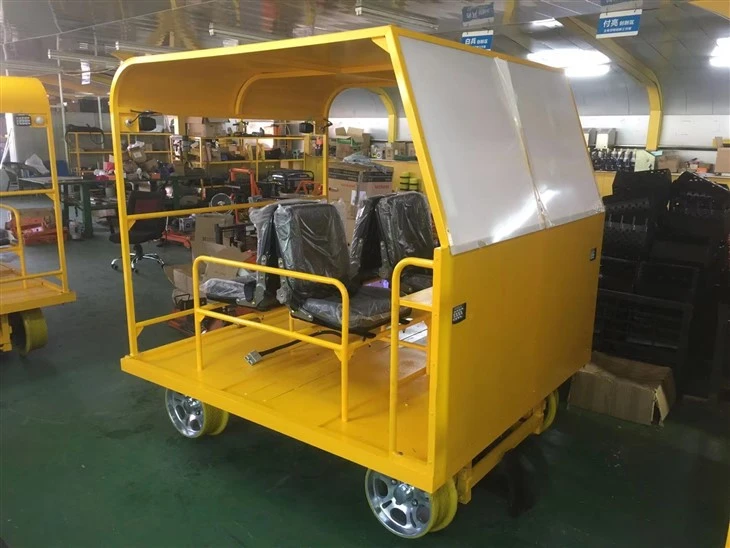
For example, our Customized Battery Rail Track Trolley is often used in industrial sites or short - distance transportation. These trolleys may have less complex communication requirements compared to high - speed trains. We can customize the communication system to focus on basic functions such as position monitoring and simple control commands.
On the other hand, our Customized Rail Trolley can be used in various applications, from mining to urban transportation. Depending on the specific application, we can configure the communication system to support different levels of data transmission and control functions, such as real - time video monitoring for security - critical applications.
6. Conclusion and Invitation for Purchase
In conclusion, the communication between our rail vehicles and the control center is a complex and sophisticated process that combines advanced wireless communication technologies, on - board sensors, standardized protocols, and strict security measures. Our commitment to providing high - quality and customized communication solutions ensures that our rail vehicles can operate safely and efficiently in various railway environments.
If you are interested in our rail vehicles and the advanced communication technologies we use, we invite you to contact us for procurement and further discussions. Our team of experts is ready to provide you with detailed information and support to meet your specific needs.
References
- European Union Agency for Railways. (2023). European Train Control System (ETCS) Specifications.
- International Union of Railways. (2022). GSM - R: A Global Standard for Railway Communication.
- 3GPP. (2021). Technical Specifications for LTE - R.