




How do railway vehicles ensure proper traction on the track?
 Aug 25, 2025|
 Ensuring proper traction on the track is a critical aspect of railway vehicle operation, and as a railway vehicle supplier, we understand the importance of this fundamental principle. Traction, in the context of railway vehicles, refers to the force that enables the wheels of the vehicle to grip the track and move forward. This force is essential for the efficient and safe operation of trains, trams, and other railway vehicles. In this blog, we will explore the various mechanisms and technologies that railway vehicles use to ensure proper traction on the track.
Friction and Adhesion: The Basics of Traction
At the heart of traction is the concept of friction and adhesion. Friction is the force that resists the relative motion between two surfaces in contact, while adhesion is the molecular attraction between the surfaces. In the case of railway vehicles, the friction and adhesion between the wheels and the track are what allow the vehicle to move forward.
The amount of traction that a railway vehicle can generate depends on several factors, including the weight of the vehicle, the condition of the wheels and the track, and the coefficient of friction between the two surfaces. The coefficient of friction is a measure of the resistance to sliding between the wheels and the track, and it can vary depending on the materials used, the surface conditions, and the presence of contaminants such as water, oil, or leaves.
To maximize traction, railway vehicles are designed to distribute their weight evenly across the wheels. This helps to increase the contact area between the wheels and the track, which in turn increases the friction and adhesion. Additionally, the wheels of railway vehicles are typically made of high-strength steel, which provides a hard and durable surface that can withstand the forces of traction and wear.
Traction Control Systems
In addition to the basic principles of friction and adhesion, modern railway vehicles are equipped with traction control systems (TCS) to optimize traction and improve safety. Traction control systems are designed to monitor the speed and slip of the wheels and adjust the power output of the motors accordingly.
When a wheel begins to slip, the TCS detects the change in speed and reduces the power to that wheel. This helps to prevent the wheel from spinning freely and losing traction. At the same time, the TCS may also increase the power to the other wheels to maintain the overall traction of the vehicle.
Traction control systems can be particularly useful in adverse weather conditions, such as rain, snow, or ice, when the coefficient of friction between the wheels and the track is reduced. By adjusting the power output of the motors, the TCS can help to ensure that the vehicle maintains traction and continues to move safely.
Wheel and Track Maintenance
Proper wheel and track maintenance is also essential for ensuring proper traction on the track. Over time, the wheels of railway vehicles can wear down, which can reduce the contact area between the wheels and the track and decrease traction. To prevent this, wheels are regularly inspected and re-profiled to maintain their shape and surface condition.
Similarly, the track itself must be maintained to ensure a smooth and even surface. Track maintenance includes activities such as track grinding, which helps to remove irregularities and improve the contact between the wheels and the track, and track lubrication, which can reduce friction and wear.
In addition to regular maintenance, it is also important to monitor the condition of the wheels and the track using advanced technologies such as ultrasonic testing and laser profiling. These technologies can detect defects and wear early on, allowing for timely repairs and maintenance to be carried out.
Advanced Traction Technologies
In recent years, there have been several advancements in traction technologies that have further improved the performance and efficiency of railway vehicles. One such technology is the use of electric traction motors, which offer several advantages over traditional diesel engines.
Electric traction motors are more efficient, quieter, and produce fewer emissions than diesel engines. They also offer better control over the power output, which allows for more precise traction control. Additionally, electric traction motors can be regeneratively braked, which means that they can convert the kinetic energy of the vehicle into electrical energy and store it for later use.
Another advanced traction technology is the use of magnetic levitation (maglev) systems. Maglev trains use powerful magnets to levitate the train above the track, eliminating the need for wheels and reducing friction to almost zero. This allows maglev trains to travel at very high speeds with minimal energy consumption and noise.
Our Products and Solutions
As a railway vehicle supplier, we offer a range of products and solutions that are designed to ensure proper traction on the track. Our 500kg insulated alloy Rail Trolley By Manual is a lightweight and durable trolley that is ideal for manual operation on railway tracks. It is made of high-strength insulated alloy, which provides excellent traction and resistance to wear.
Our Railway Track Transport Trolley Carrying Rail Track Tools Track Tools Carrier is a heavy-duty trolley that is designed to transport rail track tools and equipment. It is equipped with large wheels and a robust frame, which provides excellent traction and stability on the track.
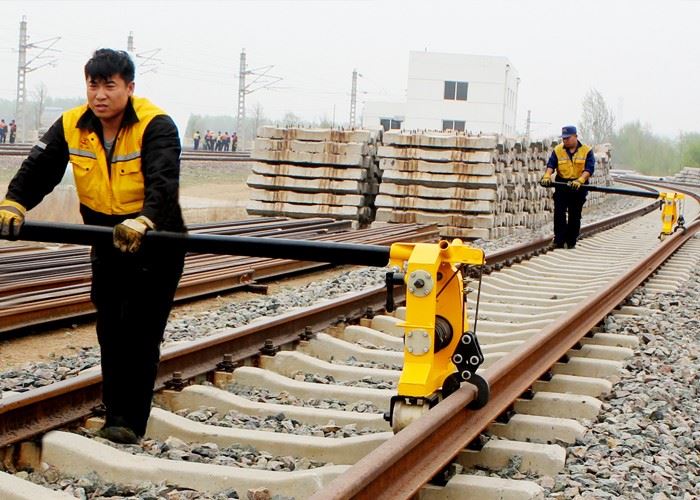
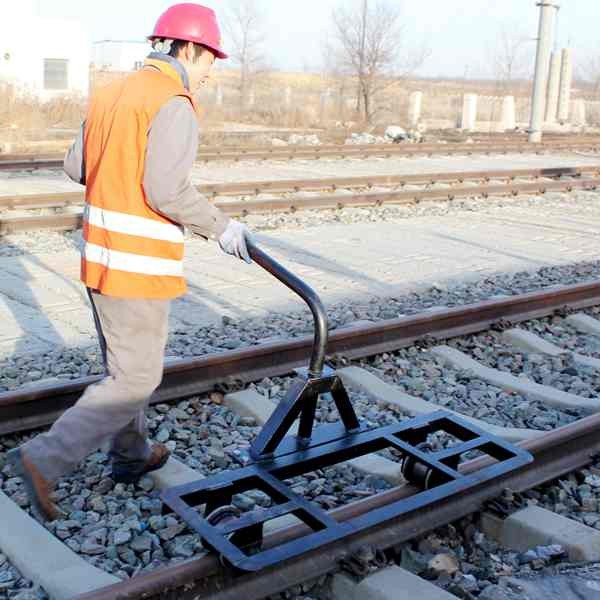
We also offer a Rail Transporting Device that is designed to transport long lengths of rail. This device is equipped with a special traction system that ensures smooth and efficient transportation of the rail on the track.
Contact Us for Procurement and洽谈
If you are interested in our railway vehicle products and solutions, we invite you to contact us for procurement and further discussions. Our team of experts is dedicated to providing high-quality products and excellent customer service. We can work with you to understand your specific requirements and recommend the best solutions for your needs.
References
- Barkan, C. P. (2012). Railway Engineering: An Introduction. Wiley.
- Hay, W. W. (1982). Railroad Engineering. Wiley.
- Wickens, A. H. (2009). Railway Vehicle Dynamics: A Computational Approach. CRC Press.