




How does a rail bender work?
 Jul 28, 2025|
 Hey there! As a supplier of rail benders, I'm super excited to share with you how these nifty machines work. Rail benders are essential tools in the railway industry, used for bending rails to fit specific track layouts and curves. Whether you're a railway enthusiast or a professional in the field, understanding how a rail bender operates can give you a better appreciation of the technology behind railway construction and maintenance.
The Basics of a Rail Bender
First off, let's talk about what a rail bender is. Simply put, it's a machine designed to bend rails into various shapes and angles. There are different types of rail benders, including hydraulic and screw jack models. Each type has its own unique way of applying force to the rail to achieve the desired bend.
Hydraulic Rail Benders
One of the most common types of rail benders is the hydraulic rail bender. These machines use hydraulic power to generate the force needed to bend the rail. The basic components of a hydraulic rail bender include a hydraulic pump, a cylinder, and a set of bending dies.
The hydraulic pump is the heart of the system. It's responsible for creating the pressure that drives the cylinder. When you activate the pump, it forces hydraulic fluid into the cylinder, causing the piston inside the cylinder to move. This movement creates a pushing or pulling force, depending on the design of the machine.
The bending dies are the parts of the machine that come into direct contact with the rail. They are shaped to match the profile of the rail and are designed to apply the force evenly across the rail. As the cylinder moves, it pushes or pulls the rail against the bending dies, gradually bending the rail to the desired angle.

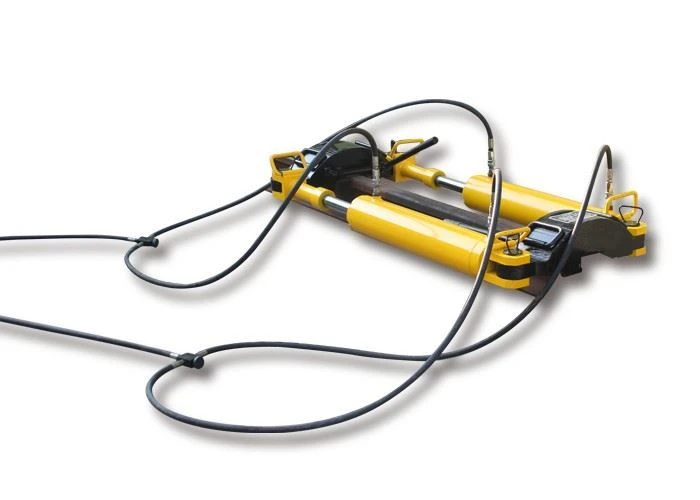
One of the advantages of hydraulic rail benders is their ability to generate high levels of force. This makes them suitable for bending thick and heavy rails. For example, our High stretching force rail tensor 900KN is capable of applying a massive 900KN of force, allowing it to bend even the toughest rails with ease.
Screw Jack Rail Benders
Another type of rail bender is the screw jack rail bender. These machines use a screw jack mechanism to apply force to the rail. The basic components of a screw jack rail bender include a screw jack, a handle, and a set of bending dies.
The screw jack is a simple yet effective device that converts rotational motion into linear motion. When you turn the handle, it rotates the screw inside the jack, causing the nut on the screw to move up or down. This movement creates a pushing or pulling force, which is then transferred to the rail through the bending dies.
Screw jack rail benders are generally less powerful than hydraulic rail benders, but they are also more compact and portable. They are often used for smaller-scale railway projects or for on-site repairs. Our Rail Bender (Rail Bending Machine Screw Jack Rail Bender) is a great example of a screw jack rail bender that offers a good balance of power and portability.
The Bending Process
Now that we've covered the different types of rail benders, let's take a closer look at the bending process itself. The first step in the bending process is to prepare the rail. This involves cleaning the rail and removing any dirt, rust, or debris that could affect the bending operation.
Once the rail is prepared, it is placed between the bending dies of the rail bender. The dies are then adjusted to the desired bending angle and the machine is activated. As the machine applies force to the rail, the rail begins to bend gradually.
It's important to note that the bending process should be done slowly and carefully to avoid damaging the rail. If the force is applied too quickly or unevenly, the rail could crack or break. That's why it's crucial to use a high-quality rail bender and to follow the manufacturer's instructions carefully.
Safety Considerations
When working with rail benders, safety should always be your top priority. These machines can be dangerous if not used properly, so it's important to take the necessary precautions.
First and foremost, make sure you wear the appropriate safety gear, including safety glasses, gloves, and steel-toed boots. This will protect you from any flying debris or potential injuries.
Secondly, make sure the rail bender is properly maintained and inspected before each use. Check for any signs of wear or damage and make sure all the components are in good working condition.
Finally, make sure you follow the manufacturer's instructions carefully. This includes using the correct bending dies, applying the force gradually, and avoiding overloading the machine.
Applications of Rail Benders
Rail benders are used in a wide range of applications in the railway industry. Some of the most common applications include:
- Track Construction: Rail benders are used to bend rails to fit specific track layouts and curves. This is essential for creating smooth and safe railway tracks.
- Track Maintenance: Rail benders are also used for track maintenance, such as straightening bent rails or correcting track alignment.
- Railway Repairs: In the event of a railway accident or damage to the track, rail benders can be used to repair the damaged rails quickly and efficiently.
Why Choose Our Rail Benders
As a leading supplier of rail benders, we take pride in offering high-quality products that are reliable, efficient, and easy to use. Our rail benders are designed and manufactured to the highest standards, using the latest technology and materials.
We offer a wide range of rail benders to suit different needs and budgets. Whether you're looking for a hydraulic rail bender for large-scale projects or a screw jack rail bender for smaller jobs, we have the right solution for you.
In addition to our high-quality products, we also offer excellent customer service. Our team of experts is always on hand to provide you with technical support, advice, and training. We also offer fast and reliable delivery, so you can get your rail bender when you need it.
Contact Us for Purchasing
If you're interested in purchasing a rail bender, we'd love to hear from you. Our team of sales representatives is ready to assist you with your purchase and answer any questions you may have. Whether you need more information about our products, a quote, or help with choosing the right rail bender for your project, we're here to help.
Don't hesitate to reach out to us and start the conversation. We're confident that our rail benders will meet your needs and exceed your expectations. Let's work together to make your railway projects a success!
References
- Railway Engineering Handbook
- Hydraulic Machinery Manual
- Screw Jack Technology Guide