




How does a Railway Driller compare with other types of industrial drills?
 Aug 28, 2025|
 When it comes to industrial drills, there is a wide range of options available in the market, each designed to meet specific needs and requirements. As a supplier of railway drills, I have witnessed firsthand the unique capabilities and advantages that railway drills offer compared to other types of industrial drills. In this blog post, I will delve into the key differences between railway drills and other industrial drills, highlighting the features that make railway drills stand out in the industry.
Design and Functionality
One of the primary distinctions between railway drills and other industrial drills lies in their design and functionality. Railway drills are specifically engineered to meet the demanding requirements of railway construction, maintenance, and repair. They are built to withstand harsh working conditions, including extreme temperatures, vibrations, and heavy loads. In contrast, other industrial drills may be designed for more general-purpose applications, such as construction, manufacturing, or mining.
Railway drills are typically equipped with specialized features that enable them to perform tasks efficiently and accurately. For example, they often have a high torque motor that provides the power needed to drill through hard materials, such as steel and concrete. They may also have a variable speed control that allows the operator to adjust the drilling speed according to the material being drilled. Additionally, railway drills may be designed with a built-in cooling system to prevent overheating during extended use.
Precision and Accuracy
Another significant advantage of railway drills is their precision and accuracy. In railway construction and maintenance, precision is crucial to ensure the safety and reliability of the tracks. Railway drills are designed to drill holes with a high degree of accuracy, ensuring that the holes are the correct size and depth. This precision is achieved through the use of advanced drilling technologies, such as laser-guided systems and computer numerical control (CNC) technology.
In contrast, other industrial drills may not offer the same level of precision and accuracy. They may be more suitable for general-purpose drilling applications, where a high degree of precision is not required. For example, a construction drill may be used to drill holes in concrete walls or floors, where the exact size and depth of the holes may not be critical.
Mobility and Portability
Railway drills are often designed to be mobile and portable, making them ideal for use in remote locations or on construction sites. They may be mounted on a trolley or a trailer, allowing them to be easily transported from one location to another. Additionally, railway drills may be designed to be lightweight and compact, making them easy to handle and operate.
In contrast, other industrial drills may be larger and heavier, making them less portable and more difficult to move around. They may be designed to be stationary, requiring a fixed location for operation. For example, a large industrial drill used in a manufacturing plant may be permanently installed on a workbench or a production line.
Safety Features
Safety is a top priority in any industrial setting, and railway drills are no exception. Railway drills are typically equipped with a range of safety features to protect the operator and the surrounding environment. For example, they may have a safety guard that covers the drilling bit to prevent accidental contact. They may also have a safety switch that stops the drill immediately if the operator releases the trigger.
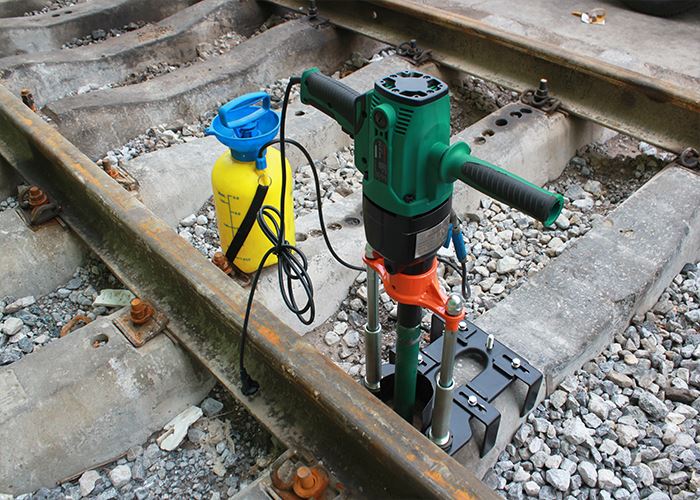

In contrast, other industrial drills may not have the same level of safety features. They may be designed for use in less hazardous environments, where the risk of injury is lower. For example, a small handheld drill used in a home workshop may not have a safety guard or a safety switch.
Examples of Railway Drills
To illustrate the unique features and advantages of railway drills, let's take a look at some examples of railway drills that we offer as a supplier.
- LQ-45 High Efficient Electric Concrete Sleeper Bolt Drilling And Pulling Machine: This railway drill is designed for drilling and pulling bolts in concrete sleepers. It is equipped with a high torque motor and a variable speed control, allowing it to drill through hard materials quickly and efficiently. It also has a built-in cooling system to prevent overheating during extended use.
- Portable Electric Rail Tamper: This railway drill is designed for tamping the ballast under the railway tracks. It is lightweight and portable, making it easy to handle and operate. It is also equipped with a high torque motor and a variable speed control, allowing it to tamp the ballast with precision and accuracy.
- DJQ-I Single-side Rail Chamfering Device: This railway drill is designed for chamfering the edges of railway rails. It is equipped with a high precision grinding wheel and a variable speed control, allowing it to chamfer the rails with a high degree of accuracy. It also has a built-in dust collection system to prevent dust from spreading during use.
Conclusion
In conclusion, railway drills offer several unique advantages compared to other types of industrial drills. They are designed to meet the specific needs and requirements of railway construction, maintenance, and repair, offering precision, accuracy, mobility, and safety. If you are in the market for an industrial drill for railway applications, I encourage you to consider a railway drill. Our company offers a wide range of railway drills that are designed to meet the highest standards of quality and performance. If you have any questions or would like to learn more about our products, please feel free to contact us to discuss your procurement needs.