




How does a railway tamper interact with the signaling system on the track?
 Aug 21, 2025|
 Hey there! As a supplier of railway tampers, I often get asked about how these machines interact with the signaling system on the track. It's a super important topic, so I thought I'd share some insights in this blog.
First off, let's talk about what a railway tamper is. A railway tamper is a machine used to pack the track ballast under railway tracks to make sure the tracks are stable and in the right position. We offer a variety of tamper machines, like the Diesel Hydraulic Rail Tamping Machine, the YD - 22 Hydraulic Rail Tamping Machine, and the YCD - 32 Hydraulic Switch Tamping Machine with Diesel Engine. These machines play a crucial role in maintaining the safety and efficiency of railway operations.
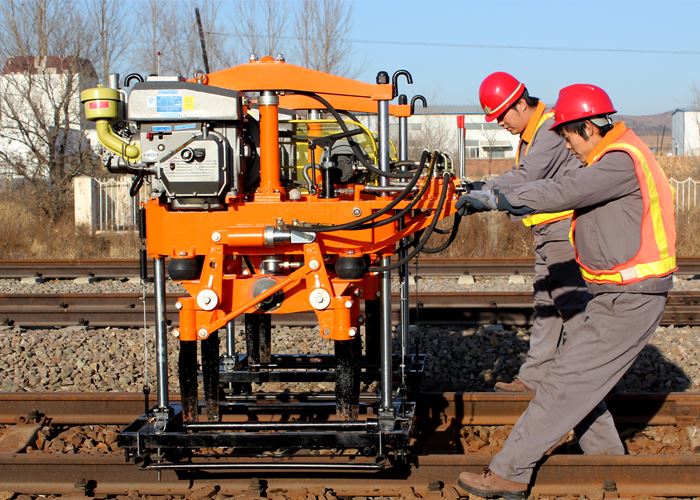
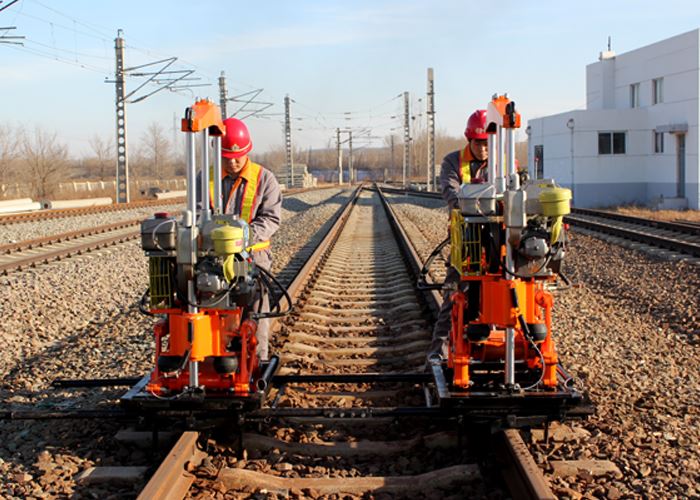
Now, onto the interaction with the signaling system. The signaling system on the track is like the traffic lights of the railway. It tells trains when to go, when to slow down, and when to stop. It's a complex network of signals, sensors, and control systems that work together to ensure safe train movements.
When a railway tamper is working on the track, it needs to communicate with the signaling system in several ways. One of the most important aspects is safety. The signaling system needs to know that there's a tamper on the track so that it can prevent trains from accidentally colliding with it. This is usually done through a process called track occupancy detection.
Track occupancy detection is a method used by the signaling system to determine if a section of the track is occupied. There are different ways to do this, but one common method is using track circuits. Track circuits work by sending an electrical current through the rails. If a train or a tamper is on the track, it completes the circuit and changes the electrical properties, which the signaling system can detect.
When our railway tampers are equipped with the right technology, they can interact with the track circuits just like a train. This means that the signaling system can recognize the tamper as an object on the track and adjust the signals accordingly. For example, if a tamper is working on a particular section of the track, the signaling system can set the signals in that area to a stop or caution state to prevent trains from entering.
Another way railway tampers interact with the signaling system is through communication protocols. Modern railway systems often use digital communication protocols to exchange information between different components. Our tampers can be integrated with these protocols to send and receive data from the signaling system.
For instance, the tamper can send information about its position, speed, and the status of its operations to the signaling system. This allows the signaling system to have real - time information about the tamper's activities and make more accurate decisions. On the other hand, the tamper can also receive instructions from the signaling system, such as when it's safe to start or stop working.
But it's not always smooth sailing. There can be some challenges in the interaction between railway tampers and the signaling system. One of the main challenges is interference. The electrical and mechanical operations of the tamper can sometimes cause interference with the signaling system. For example, the vibrations from the tamper's tamping action can affect the accuracy of the track circuits or the communication signals.
To overcome these challenges, we at our company have been working hard on developing advanced technologies. We've designed our tampers with special shielding and filtering mechanisms to reduce electrical interference. We also conduct rigorous testing to make sure that our machines can work in harmony with the signaling system without causing any disruptions.
Moreover, training is also a key factor. The operators of our railway tampers need to be well - trained on how to interact with the signaling system. They need to understand the safety procedures and the communication protocols. We provide comprehensive training programs for our customers to ensure that their operators are fully equipped to handle these interactions.
In addition to safety, the interaction between railway tampers and the signaling system also has an impact on efficiency. By having seamless communication, the tamper can work more efficiently. For example, if the tamper can receive real - time information about train schedules from the signaling system, it can plan its operations better and minimize the time when the track is out of service.
Let's take a look at a real - world scenario. Suppose a railway maintenance team is using one of our YD - 22 Hydraulic Rail Tamping Machines to work on a busy section of the track. The tamper is connected to the signaling system through a digital communication protocol. The signaling system sends information about the upcoming train schedules to the tamper. Based on this information, the tamper operator can plan the tamping operations in such a way that the track is only blocked for the minimum amount of time.
As soon as the tamper finishes a particular tamping job, it sends a signal to the signaling system indicating that the section of the track is now ready for train traffic. The signaling system then changes the signals to allow trains to pass through. This kind of coordinated operation not only ensures safety but also improves the overall efficiency of the railway network.
In conclusion, the interaction between railway tampers and the signaling system is a complex but essential part of railway operations. Our company is committed to providing high - quality railway tampers that can interact seamlessly with the signaling system. We understand the importance of safety and efficiency in railway maintenance, and we're constantly working on improving our products and technologies.
If you're in the market for a reliable railway tamper that can work well with your signaling system, we'd love to hear from you. Whether you need a small - scale tamping machine for local tracks or a large - scale machine for major railway networks, we've got you covered. Reach out to us for more information and let's start a conversation about how we can meet your railway maintenance needs.
References
- Railway Signaling and Communications Handbook, 3rd Edition, by George Drury
- Modern Railway Track, 2nd Edition, by Roger Waygood and John Bull