




How does a track tamper handle track joints during tamping?
 Aug 20, 2025|
 As a seasoned supplier of track tampers, I've witnessed firsthand the critical role these machines play in maintaining the integrity and safety of railway tracks. One of the most challenging aspects of tamping operations is handling track joints. These joints are essential for allowing the tracks to expand and contract with temperature changes, but they also require special attention during tamping to ensure proper alignment and stability. In this blog post, I'll share some insights into how our track tampers handle track joints during tamping, and why it's so important to get it right.
Understanding Track Joints
Before we dive into the tamping process, let's take a moment to understand what track joints are and why they're important. Track joints are the connections between two sections of rail. They're typically made up of a fishplate, which is a flat metal bar that's bolted to the ends of the rails, and a set of bolts and nuts that hold the fishplate in place. The fishplate provides a smooth transition between the two rails, allowing trains to pass over the joint without experiencing a significant jolt.
Track joints are designed to allow the rails to expand and contract with temperature changes. As the temperature rises, the rails expand, and as it falls, they contract. If the rails weren't allowed to expand and contract, they could buckle or break under the stress, which could lead to derailments and other serious safety issues.
The Challenges of Tamping Track Joints
Tamping track joints presents several challenges that aren't present when tamping the rest of the track. One of the biggest challenges is ensuring that the joint is properly aligned. If the joint isn't aligned correctly, it can cause the train to experience a jolt as it passes over the joint, which can be uncomfortable for passengers and can also cause damage to the train and the track.
Another challenge is ensuring that the ballast is properly compacted around the joint. The ballast is the layer of crushed stone or gravel that supports the rails and provides drainage. If the ballast isn't properly compacted around the joint, it can cause the joint to shift or become loose over time, which can also lead to safety issues.
Finally, tamping track joints requires a high level of precision. The tamping tools need to be positioned precisely to ensure that the ballast is compacted evenly around the joint. If the tamping tools are positioned too close to the joint, they can damage the fishplate or the bolts and nuts, which can compromise the integrity of the joint. If they're positioned too far away, the ballast won't be compacted enough, which can also lead to problems.
How Our Track Tampers Handle Track Joints
At our company, we've developed a range of track tampers that are specifically designed to handle track joints. Our track tampers are equipped with advanced technology and features that allow them to tamp track joints with a high level of precision and efficiency.
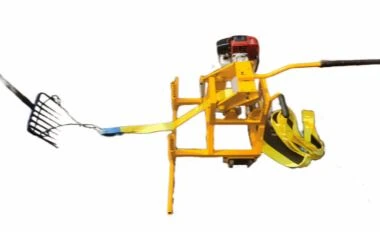
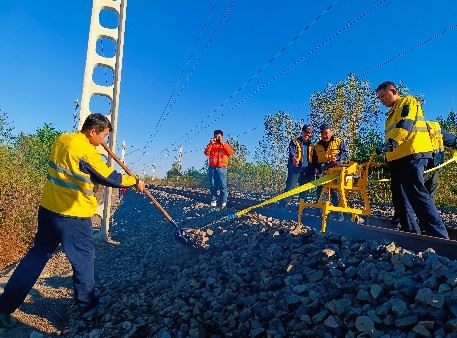
One of the key features of our track tampers is their adjustable tamping tools. The tamping tools can be adjusted to different angles and depths, allowing them to be positioned precisely around the joint. This ensures that the ballast is compacted evenly around the joint, without damaging the fishplate or the bolts and nuts.
Another important feature of our track tampers is their advanced control systems. The control systems allow the operator to monitor and adjust the tamping process in real-time, ensuring that the joint is being tamped correctly. The control systems also provide feedback to the operator, allowing them to make adjustments as needed to ensure that the tamping process is as efficient and effective as possible.
In addition to our adjustable tamping tools and advanced control systems, our track tampers are also equipped with a range of safety features. These safety features include emergency stop buttons, safety guards, and warning lights, which help to ensure that the operator and other workers are safe while the track tamper is in operation.
The Importance of Properly Tamping Track Joints
Properly tamping track joints is essential for ensuring the safety and reliability of railway tracks. When track joints aren't tamped correctly, they can cause a range of problems, including:
- Uneven track alignment: If the joint isn't aligned correctly, it can cause the train to experience a jolt as it passes over the joint, which can be uncomfortable for passengers and can also cause damage to the train and the track.
- Loose or shifting joints: If the ballast isn't properly compacted around the joint, it can cause the joint to shift or become loose over time, which can lead to safety issues.
- Increased wear and tear: When the train passes over a poorly tamped joint, it can cause increased wear and tear on the train and the track, which can lead to costly repairs and maintenance.
By properly tamping track joints, we can help to ensure that the railway tracks are safe, reliable, and efficient. This not only benefits the railway operators and passengers but also helps to support economic growth and development by ensuring that goods and people can be transported safely and efficiently.
Conclusion
In conclusion, handling track joints during tamping is a critical aspect of railway track maintenance. It requires a high level of precision and expertise to ensure that the joints are properly aligned and the ballast is properly compacted. At our company, we're committed to providing our customers with the highest quality track tampers that are specifically designed to handle track joints. Our track tampers are equipped with advanced technology and features that allow them to tamp track joints with a high level of precision and efficiency, while also ensuring the safety of the operator and other workers.
If you're in the market for a track tamper, we invite you to contact us to learn more about our products and services. We'd be happy to answer any questions you may have and to provide you with a free quote. You can also check out our Internal Combustion Slope Protection Shaping Machine, Railroad Tamper For Sale, and YD-22III Automatic Remote Control Hydraulic Rail Tamping Machine on our website.