




How does a rail tamper interact with the track's signaling system?
 Aug 21, 2025|
 A rail tamper is a crucial piece of equipment in railway maintenance, playing a pivotal role in ensuring the stability and safety of railway tracks. As a leading rail tamper supplier, we understand the significance of how a rail tamper interacts with the track's signaling system. This interaction is not only essential for the proper functioning of the tamper itself but also for maintaining the overall safety and efficiency of the railway network.
The Basics of a Rail Tamper and Signaling System
Before delving into the interaction between a rail tamper and the signaling system, it's important to understand the basic functions of each component. A rail tamper, such as our YD - 22Ⅲ Intelligent Rail Tamping Machine Unit, is designed to compact the ballast beneath the railway tracks. By doing so, it helps to maintain the correct alignment and level of the tracks, which is crucial for the smooth passage of trains.
On the other hand, the track's signaling system is responsible for providing information to train operators about the status of the track ahead. It includes various components such as signals, track circuits, and control systems. The signaling system ensures that trains can operate safely by indicating whether a section of the track is clear, occupied, or under maintenance.
Interaction Mechanisms
1. Communication Protocols
Modern rail tampers are equipped with advanced communication systems that allow them to interact with the track's signaling system. These communication protocols ensure that the tamper can receive real - time information about the track status and that the signaling system can be informed about the presence and operation of the tamper.
For example, when a rail tamper like our Hydraulic Ballast Tamping Machine YD - 22 For Railway enters a section of the track, it sends a signal to the signaling system indicating its presence. This signal is typically sent through a wireless communication link or a dedicated cable connection. The signaling system then updates its status to show that the section of the track is under maintenance, and it can adjust the signals accordingly to prevent trains from entering the area.
2. Safety Interlocks
To ensure the safety of both the tamper operators and train passengers, safety interlocks are implemented between the rail tamper and the signaling system. These interlocks prevent the tamper from operating in certain conditions and ensure that the signaling system responds appropriately to the tamper's actions.
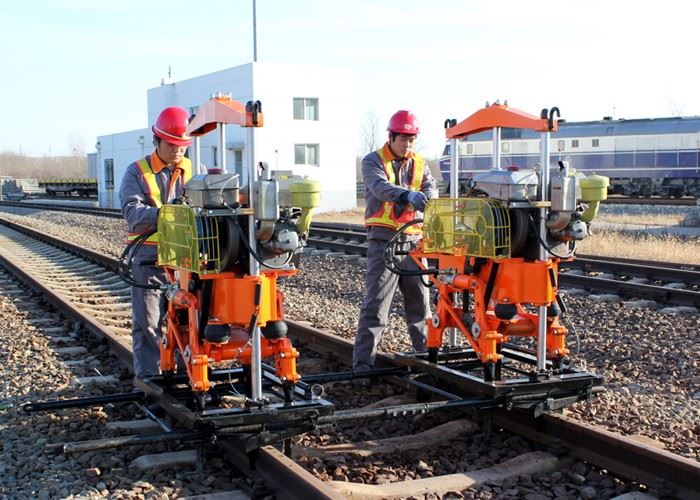
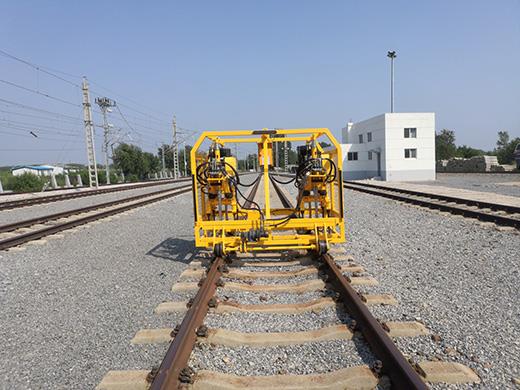
For instance, if the signaling system detects that a train is approaching the section of the track where the tamper is operating, it can send a signal to the tamper to stop its operation immediately. At the same time, the signaling system will display appropriate warning signals to the train operator, indicating that there is maintenance work in progress.
3. Data Sharing
The rail tamper and the signaling system also share data to optimize the maintenance process. The tamper can collect data about the condition of the track, such as the levelness, alignment, and ballast compaction. This data can be transmitted to the signaling system, which can then use it to make more informed decisions about train scheduling and track maintenance.
Conversely, the signaling system can provide the tamper with information about the expected traffic flow on the track. This allows the tamper operators to plan their work more efficiently, minimizing the disruption to train services.
Impact on Track Safety
The proper interaction between a rail tamper and the signaling system has a significant impact on track safety. By ensuring that the tamper can operate safely and that trains are aware of its presence, the risk of accidents is greatly reduced.
When the signaling system accurately reflects the status of the track under maintenance, train operators can adjust their speed and braking accordingly. This helps to prevent collisions between trains and the tamper, as well as derailments that could be caused by uneven or unstable tracks.
Moreover, the data sharing between the tamper and the signaling system allows for proactive maintenance. By identifying potential track problems early, maintenance work can be carried out before they become serious safety hazards.
Impact on Maintenance Efficiency
In addition to safety, the interaction between the rail tamper and the signaling system also improves maintenance efficiency. The real - time communication between the two systems allows for better coordination of maintenance activities.
For example, if the signaling system knows that a tamper is going to be working on a particular section of the track, it can schedule trains to avoid that section during the maintenance period. This reduces the need for long - term track closures and minimizes the disruption to train services.
The data collected by the tamper can also be used to optimize the maintenance process. By analyzing the track condition data, maintenance crews can determine the most effective tamping techniques and frequencies, reducing the overall time and cost of maintenance.
Challenges and Solutions
1. Compatibility Issues
One of the main challenges in the interaction between a rail tamper and the signaling system is compatibility. Different railway networks may use different signaling systems, and not all rail tampers are designed to work with every type of system.
To address this issue, our company, as a rail tamper supplier, offers customizable communication interfaces for our Rail Tamper. These interfaces can be configured to work with a wide range of signaling systems, ensuring that our tampers can be used on different railway networks.
2. Signal Interference
Another challenge is signal interference. The wireless communication links used between the tamper and the signaling system can be affected by various factors such as electromagnetic interference, weather conditions, and physical obstacles.
To overcome this problem, we use advanced signal processing techniques and redundant communication channels. Our tampers are equipped with multiple antennas and communication modules, which can switch to alternative channels if the primary one is affected by interference.
Future Developments
As technology continues to evolve, the interaction between rail tampers and signaling systems is expected to become even more sophisticated. Future rail tampers may be equipped with artificial intelligence and machine learning algorithms, which can analyze the track data in real - time and make autonomous decisions about the tamping process.
The signaling system may also become more intelligent, using predictive analytics to anticipate track problems and schedule maintenance more effectively. This will further improve the safety and efficiency of railway operations.
Conclusion
As a rail tamper supplier, we recognize the importance of the interaction between our rail tampers and the track's signaling system. This interaction is crucial for ensuring the safety and efficiency of railway operations. Our products, such as the YD - 22Ⅲ Intelligent Rail Tamping Machine Unit, Hydraulic Ballast Tamping Machine YD - 22 For Railway, and Rail Tamper, are designed to work seamlessly with various signaling systems, providing our customers with reliable and efficient track maintenance solutions.
If you are interested in our rail tamper products and would like to discuss your specific requirements, we invite you to contact us for a detailed procurement consultation. Our team of experts is ready to assist you in finding the best rail tamper solution for your railway network.
References
- "Railway Signaling and Communications" by John D. Culley
- "Track Maintenance and Renewal" by John B. Kirkland
- Industry reports on railway maintenance technology and signaling systems.