




How does a track tamper interact with the sleepers on the tracks?
 Sep 24, 2025|
 Hey there, fellow rail enthusiasts! I'm stoked to be here as a supplier of track tampers, and today I wanna dive deep into the nitty - gritty of how a track tamper interacts with the sleepers on the tracks.
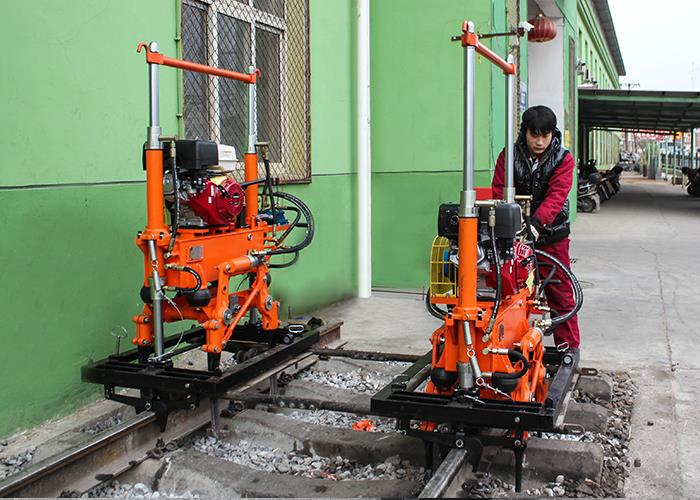
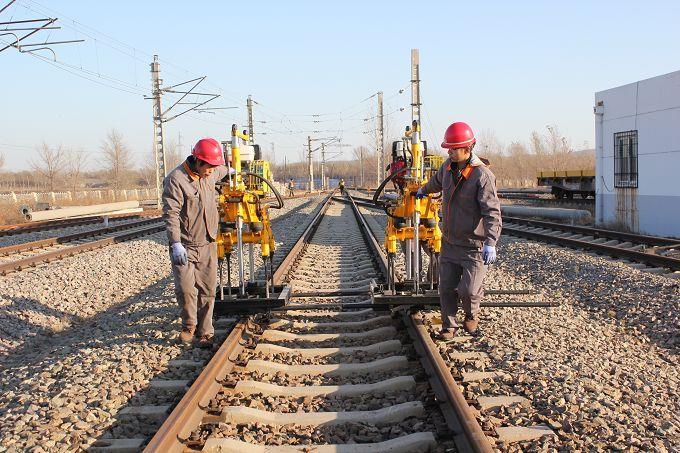
First off, let's talk about what a track tamper is. A track tamper is a machine that's super important for railway maintenance. It helps to keep the tracks in top - notch condition by properly packing the ballast under the sleepers. This is crucial because it ensures the stability and safety of the railway.
So, how does the interaction between a track tamper and the sleepers actually work? Well, it all starts with the tamping tools. These tools are the business end of the track tamper. They're designed to penetrate the ballast around the sleepers. When the tamping process begins, the tamping tools are lowered into the ballast. The way they're shaped and angled allows them to get right up close to the sleepers.
Once the tamping tools are in position, they start to vibrate. This vibration is key. It loosens up the ballast particles, making them more malleable. As the tools vibrate, they also squeeze together. This squeezing action forces the ballast to compact tightly around the sleepers. Think of it like you're packing soil around the base of a plant to make it stand up straight and firm. The compacted ballast provides a solid foundation for the sleepers, which in turn support the rails.
Now, let's get into the different types of forces at play during this interaction. There's the vertical force. The tamping tools exert a downward force as they penetrate the ballast. This force helps to push the ballast deeper under the sleepers, ensuring that there's enough support from below. At the same time, there are lateral forces. The squeezing action of the tamping tools creates lateral forces that push the ballast against the sides of the sleepers. This helps to hold the sleepers in place horizontally, preventing them from shifting sideways.
The amount of force applied by the track tamper is carefully calibrated. Too little force, and the ballast won't be compacted enough, leading to unstable tracks. Too much force, and you risk damaging the sleepers or the ballast itself. That's why modern track tampers are equipped with advanced control systems that can adjust the force based on the specific requirements of the track section.
Another important aspect of the interaction is the frequency of vibration. Different frequencies can have different effects on the ballast. A higher frequency vibration can cause the ballast particles to move more rapidly, which can be useful for quickly loosening up the ballast. However, it also needs to be balanced with the amount of force being applied. A lower frequency vibration might be used in situations where a more gentle compaction is required, for example, when dealing with older or more fragile sleepers.
Now, I'd like to introduce you to some of the amazing track tampers we offer. Check out our YD - 22II Best Selling Hydraulic Rail Tamping Machine. This bad boy is a top - seller for a reason. It's designed with precision to ensure optimal interaction with the sleepers. The hydraulic system provides smooth and powerful operation, allowing for efficient tamping.
Then there's our YCD - 32 Hydraulic Switch Tamping Machine with Diesel Engine. Switches are a critical part of the railway system, and this machine is specifically built to handle the unique requirements of switch areas. It can get in there and tamp the ballast around the sleepers in switches with great accuracy.
And if you're looking for something with a bit more high - tech flair, our YD - 22III Automatic Remote Control Hydraulic Rail Tamping Machine is the one for you. With remote control capabilities, it offers enhanced flexibility and ease of use. You can operate it from a distance, which is great for safety and convenience.
In addition to the mechanical aspects of the interaction, the material of the sleepers also plays a role. There are different types of sleepers, such as wooden, concrete, and steel. Each material has its own characteristics. Wooden sleepers are more flexible and can absorb some of the vibrations from the tamping process. Concrete sleepers are very strong and durable, but they require a more precise tamping process to avoid damage. Steel sleepers are often used in special applications, and the tamping process needs to be adjusted to account for their unique properties.
The condition of the ballast also affects the interaction. If the ballast is old and worn out, it might not compact as well. In such cases, the track tamper might need to apply more force or use a different vibration frequency. On the other hand, if the ballast is new and well - graded, the tamping process can be more efficient.
The speed at which the track tamper moves along the tracks is also an important factor. A slower speed allows for more thorough tamping, as the tamping tools have more time to interact with each section of the ballast around the sleepers. However, this might not be practical for large - scale projects. A faster speed can increase productivity, but it needs to be balanced with the quality of the tamping.
To sum it all up, the interaction between a track tamper and the sleepers on the tracks is a complex but fascinating process. It involves a combination of mechanical forces, vibration, and careful calibration. By understanding how this interaction works, we can ensure that the railway tracks are maintained in the best possible condition.
If you're in the market for a high - quality track tamper, don't hesitate to reach out. We're here to help you find the perfect machine for your railway maintenance needs. Whether you're working on a small local track or a large - scale railway network, we've got the right solution for you. Let's get those tracks in great shape together!
References
- Railway Maintenance Handbook: A comprehensive guide on railway infrastructure maintenance, covering track tampering and related topics.
- Journal of Railway Engineering: Articles on the latest research and developments in railway technology, including track tamper design and operation.