




What is the history of rail brake shoes development?
 Jun 02, 2025|
 What is the history of rail brake shoes development?
As a dedicated supplier of rail brake shoes, I've always been fascinated by the long - standing and intricate history of these essential railway components. The development of rail brake shoes is a journey that spans centuries, marked by continuous innovation and adaptation to the evolving needs of the railway industry.
Early Beginnings
The story of rail brake shoes dates back to the early days of rail transportation. In the 1800s, when the first steam - powered locomotives and wagons started to ply the tracks, braking systems were rudimentary at best. At that time, simple wooden blocks were used as brake shoes. These wooden blocks were pressed against the wheels of the train to create friction, which would slow down or stop the moving vehicle.
Wood had some advantages in the early days. It was readily available, relatively inexpensive, and easy to shape. However, it also had significant drawbacks. Wood would wear out quickly, especially under heavy use, and it was not very effective in wet or icy conditions. As trains became larger and faster, the limitations of wooden brake shoes became increasingly apparent.
The Advent of Cast Iron Brake Shoes
In the mid - 19th century, cast iron brake shoes began to replace wooden ones. Cast iron offered much greater durability compared to wood. It could withstand higher temperatures generated by the friction between the brake shoe and the wheel, and it provided more consistent braking performance.

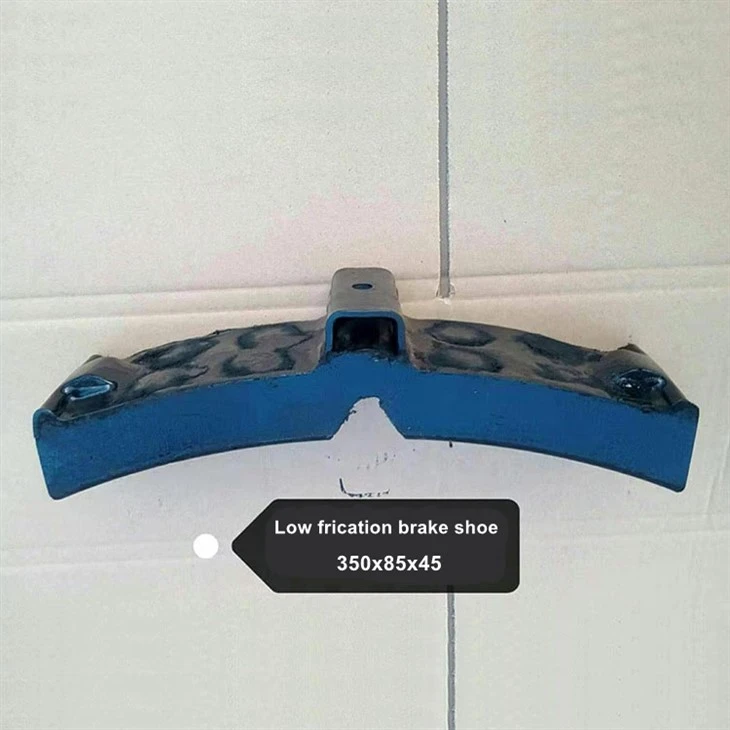
The use of cast iron brake shoes was a major step forward in railway safety. They were able to handle the increased speeds and heavier loads of the growing railway networks. However, cast iron also had its own set of problems. It was prone to cracking under stress, and it could cause excessive wear on the wheels. This led to the need for more frequent wheel replacements, which was costly for railway operators.
The Era of Composite Brake Shoes
As the 20th century dawned, the railway industry witnessed the development of composite brake shoes. These brake shoes were made by combining different materials to take advantage of their individual properties. For example, some composite brake shoes incorporated asbestos - based materials. Asbestos had excellent heat - resistant properties, which allowed the brake shoes to maintain their effectiveness even during high - speed braking.
Composite brake shoes also offered better control over the friction coefficient. By adjusting the composition of the materials, manufacturers could tailor the braking performance to suit different types of trains and operating conditions. This was a significant improvement over the previous generations of brake shoes.
However, in the latter part of the 20th century, the use of asbestos in brake shoes became a major concern due to its well - known health hazards. Asbestos fibers, when inhaled, can cause serious diseases such as asbestosis, lung cancer, and mesothelioma. As a result, the railway industry was forced to look for alternative materials.
Modern Non - Asbestos Brake Shoes
Today, non - asbestos brake shoes are the norm in the railway industry. These brake shoes are made from a variety of materials, including organic compounds, metals, and ceramics. Organic brake shoes are popular because they are relatively quiet, produce less dust, and offer good braking performance. They are often used in passenger trains where a comfortable ride is a priority.
Metallic brake shoes, on the other hand, are known for their high - temperature resistance and durability. They are commonly used in freight trains and high - speed trains, where heavy loads and high speeds require robust braking systems. Ceramic brake shoes are a more recent development. They offer excellent heat dissipation and low wear rates, making them ideal for high - performance applications.
The Impact of Technological Advancements
In addition to material improvements, technological advancements have also played a crucial role in the development of rail brake shoes. Computer - aided design (CAD) and computer - aided manufacturing (CAM) have allowed manufacturers to design and produce brake shoes with greater precision. This has led to better - fitting brake shoes, which in turn improves braking efficiency and reduces wear on both the brake shoes and the wheels.
Another important technological development is the use of sensors in modern brake systems. Sensors can monitor the temperature, wear, and pressure of the brake shoes in real - time. This information can be used to optimize the braking process and to predict when the brake shoes need to be replaced. This proactive approach to maintenance helps to prevent unexpected failures and improve overall railway safety.
The Role of Standardization
Standardization has been a key factor in the development of rail brake shoes. Different countries and railway operators often have their own requirements and specifications for brake shoes. However, international standards have been developed to ensure compatibility and safety across different railway networks.
For example, standards related to the railway track gauge can influence the design of brake shoes. A consistent track gauge allows for more uniform braking performance and reduces the need for custom - designed brake shoes for different regions.
Our Company's Contribution
As a supplier of Rail Brake Shoe, we are committed to staying at the forefront of this evolving industry. We invest heavily in research and development to ensure that our brake shoes meet the highest standards of quality and performance.
We offer a wide range of brake shoes to suit different types of trains and operating conditions. Whether it's a high - speed passenger train or a heavy - haul freight train, we have the right brake shoe solution. Our products are designed to be durable, efficient, and environmentally friendly.
We also work closely with our customers to understand their specific needs. We provide technical support and advice to help them choose the most suitable brake shoes for their trains. Our goal is to not only supply high - quality products but also to build long - term partnerships with our customers.
The Future of Rail Brake Shoes
Looking ahead, the future of rail brake shoes is likely to be shaped by several trends. One of the key trends is the increasing demand for energy - efficient braking systems. As the railway industry becomes more environmentally conscious, there will be a greater focus on developing brake shoes that can recover and reuse energy during the braking process.
Another trend is the integration of advanced materials and technologies. For example, the use of nanomaterials in brake shoes could offer even better performance in terms of wear resistance and heat dissipation. Additionally, the development of smart brake shoes that can communicate with the train's control system in real - time could further enhance railway safety and efficiency.
Contact Us for Procurement
If you are in the market for high - quality rail brake shoes, we invite you to contact us for procurement discussions. We have the expertise and the products to meet your specific requirements. Whether you are a railway operator, a maintenance provider, or a contractor, we can offer you the best solutions for your braking needs.
We understand that choosing the right brake shoes is crucial for the safety and efficiency of your trains. That's why we are dedicated to providing you with the most reliable and cost - effective products. Let's work together to ensure the smooth and safe operation of your railway systems.
References
- Hay, W. W. (1982). Railroad Engineering. John Wiley & Sons.
- International Union of Railways (UIC). Various technical reports on railway braking systems.
- Railway Age magazine. Articles on the history and development of rail brake shoes over the years.