




How are railway cars loaded and unloaded?
 Nov 27, 2025|
 Hey there! I'm a supplier of railway cars, and I've been in this industry for quite some time. One question I often get asked is, "How are railway cars loaded and unloaded?" Well, let's dive right into it.
Loading Railway Cars
Bulk Cargo
First off, let's talk about bulk cargo. This includes things like coal, grain, and ore. When it comes to loading bulk cargo into railway cars, there are a few common methods.
One of the most straightforward ways is through a conveyor system. These conveyor belts are like long, moving roads that carry the bulk material from a storage area or a processing plant directly into the railway car. The conveyor can be adjusted in height and angle to fit different types of cars and loading requirements. For example, in a coal mine, a conveyor might be set up to drop coal into the open-top hopper cars. The coal just flows down from the end of the conveyor and fills up the car.
Another method is using a chute. A chute is like a big, slanted tube. It's often used when the bulk material is stored in a silo or a large container. The material is released from the bottom of the silo and slides down the chute into the railway car. This is a common way to load grain into hopper cars. The grain flows smoothly through the chute and fills the car evenly.
Containerized Cargo
Containerized cargo is a whole different ballgame. Containers are those big, rectangular boxes you see on trucks and trains. They come in standard sizes, which makes them easy to handle.
To load containers onto railway cars, we usually use a crane. There are different types of cranes for this job. One is the gantry crane. It's like a big metal frame that straddles the railway track and the containers. The crane has a lifting mechanism that can pick up a container from the ground or from a truck and place it precisely on the railway car. The operator controls the crane from a cab, making sure the container is centered and secure on the car.
Another type of crane is the reach stacker. It's a more mobile option. The reach stacker can move around the yard, pick up containers, and stack them on top of each other or load them onto railway cars. It's really useful in smaller yards or when there are a lot of containers to move quickly.
Liquid Cargo
Loading liquid cargo, such as oil or chemicals, requires special equipment. We use pipelines and pumps. The liquid is stored in large tanks, and the pipeline connects the tank to the railway car. The pump is used to move the liquid from the tank through the pipeline and into the car.
There are also different types of connections between the pipeline and the car. Some cars have a special valve on the top or the side where the pipeline can be attached. Once the connection is made, the pump starts working, and the liquid flows into the car. Safety is a big concern when loading liquid cargo. There are often sensors and monitoring systems to make sure there are no leaks.
Unloading Railway Cars
Bulk Cargo
Unloading bulk cargo is just as important as loading it. For hopper cars, which are designed to carry bulk materials, the unloading process is usually pretty simple. Most hopper cars have doors at the bottom. When it's time to unload, the doors are opened, and the material just falls out. Gravity does most of the work here. The car can be positioned over a conveyor or a storage area, and the bulk material will flow out and be transported to its next destination.
For some bulk materials that might stick to the sides of the car, we might use vibration. There are vibration devices that can be attached to the car. When turned on, they shake the car, causing the material to loosen and fall out more easily.
Containerized Cargo
Unloading containers from railway cars is similar to loading them. We use cranes again. The gantry crane or the reach stacker is used to lift the containers off the car and place them on the ground or on a truck. The containers are then transported to their final destination, whether it's a warehouse or a shipping port.
Liquid Cargo
Unloading liquid cargo also involves pipelines and pumps. The pipeline is connected to the car, and the pump is used to transfer the liquid from the car to a storage tank. Just like when loading, safety is crucial. There are strict regulations and procedures to follow to prevent spills and ensure the proper handling of the liquid.
The Role of Our Railway Cars in Loading and Unloading
As a railway car supplier, we play a big role in making the loading and unloading process as efficient as possible. Our railway cars are designed with features that make it easy to load and unload different types of cargo.
For example, our hopper cars have well-designed doors that open and close smoothly. The shape of the car is optimized to allow the bulk material to flow out easily. We also use high-quality materials to make sure the cars can withstand the weight and pressure of the cargo.
Our container cars are built to hold containers securely. They have special locking mechanisms that keep the containers in place during transit. This ensures that the containers can be loaded and unloaded safely without any risk of them shifting or falling off.
When it comes to liquid cargo cars, we use advanced sealing technology to prevent leaks. The cars are also equipped with valves and connections that are easy to attach and detach during the loading and unloading process.
Related Equipment for Railway Operations
If you're interested in other equipment related to railway operations, we have some great options. Check out our Railway rail track laying equipment machine train track replacement machines track renewal machine. This equipment is essential for maintaining and upgrading railway tracks.
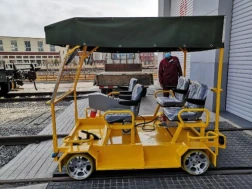
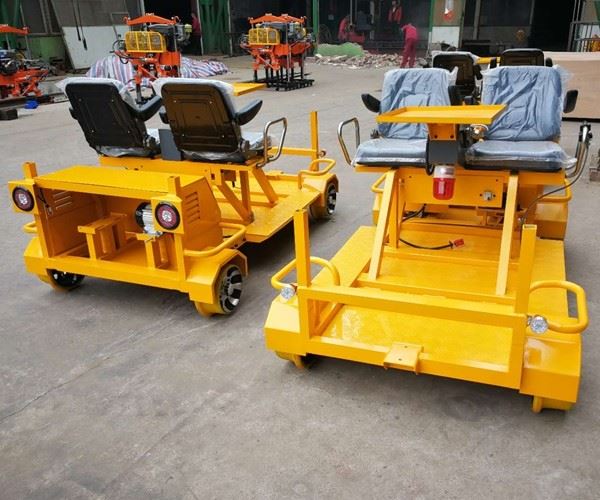
We also offer Customized Li-battery Aluminium Alloy Railway Track Trolley 2seat/4seat. These trolleys are a convenient way to move around on the railway track, whether it's for inspection or maintenance.
And for those who need to test the railway tracks, our DRT-1 Hand Push Dual Track Rail Tester is a great tool. It can quickly and accurately detect any issues with the tracks.
Let's Talk Business
If you're in the market for railway cars or any of the related equipment I mentioned, I'd love to have a chat with you. Whether you need a single car for a small operation or a whole fleet for a large-scale project, we can work together to find the right solution for you. Just reach out, and we can start discussing your needs and how we can meet them.
References
- "Railway Freight Transport Handbook" - A comprehensive guide on railway freight operations.
- Industry reports on railway car manufacturing and loading/unloading techniques.