




How does compression affect the accuracy of rail tensor operations?
 Oct 22, 2025|
 Compression is a critical factor in the field of rail tensor operations, and its impact on accuracy cannot be underestimated. As a leading supplier of rail tensor products, we have witnessed firsthand the complex relationship between compression and the precision of these operations. In this blog, we will delve into the various ways in which compression affects the accuracy of rail tensor operations, exploring both the theoretical and practical aspects.
Understanding Rail Tensor Operations
Before we discuss the impact of compression, it is essential to understand what rail tensor operations entail. Rail tensor operations involve the measurement and manipulation of forces and stresses within railway tracks. These operations are crucial for ensuring the safety and efficiency of railway systems. They include tasks such as track adjustment, stress relief, and rail stretching, all of which rely on accurate tensor measurements.
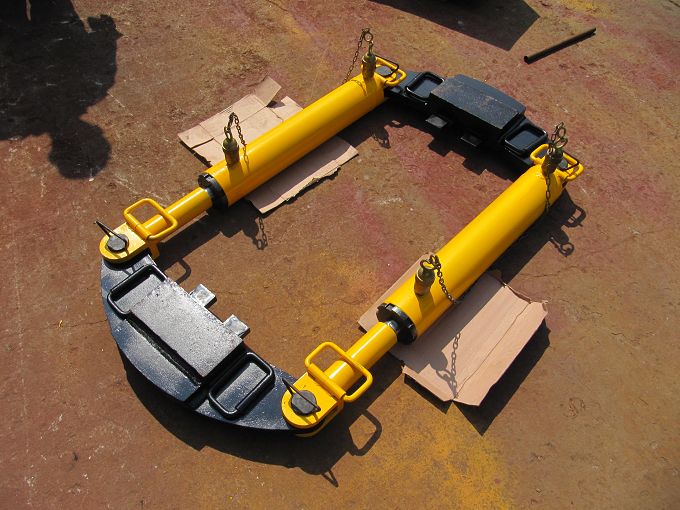
For example, Track Adjustment ------ Hydraulic Track Gap Adjuster (one - way) is a product that plays a significant role in rail tensor operations. It is used to precisely adjust the track gap, which is directly related to the tensor forces within the rail. By accurately controlling the track gap, we can ensure that the rail is under the appropriate stress, which is essential for the smooth running of trains.
The Basics of Compression in Rail Systems
Compression in rail systems refers to the application of a force that squeezes the rail. This can occur due to various factors, such as temperature changes, train loads, and the installation process. When a rail is compressed, its internal structure experiences changes in stress distribution.
In general, compression can lead to a decrease in the length of the rail. This change in length can have a profound impact on the tensor forces within the rail. For instance, if the compression is not evenly distributed, it can cause local variations in stress, which may lead to inaccurate tensor measurements.
Impact on Measurement Accuracy
One of the most significant ways in which compression affects rail tensor operations is through its impact on measurement accuracy. When a rail is compressed, the strain gauges or other measuring devices used in tensor operations may be affected. Compression can cause the gauges to shift or distort, leading to incorrect readings.
For example, if a strain gauge is attached to a compressed rail, the compression may cause the gauge to bend or stretch in an unexpected way. This can result in a measurement that does not accurately reflect the true tensor forces within the rail. As a result, decisions based on these inaccurate measurements can lead to improper track adjustments or stress relief operations.
Moreover, compression can also affect the calibration of measuring devices. Over time, repeated compression can cause the calibration of these devices to drift, further reducing the accuracy of tensor measurements. This is why regular calibration and maintenance of measuring equipment are essential in rail tensor operations.
Effects on Rail Stretching and Stress Relief
Compression also has a direct impact on rail stretching and stress relief operations. YLS - 400 Super Good Pricing Hydraulic Rail Stretching Machine is designed to stretch the rail to the appropriate length and relieve stress. However, if the rail is already under compression, the stretching process becomes more complex.
Compression can make it more difficult to accurately determine the amount of stretch required. If the compression is not properly accounted for, the rail may be over - stretched or under - stretched. Over - stretching can lead to excessive stress in the rail, increasing the risk of rail breakage. Under - stretching, on the other hand, may not effectively relieve the existing stress, which can lead to long - term problems such as track buckling.
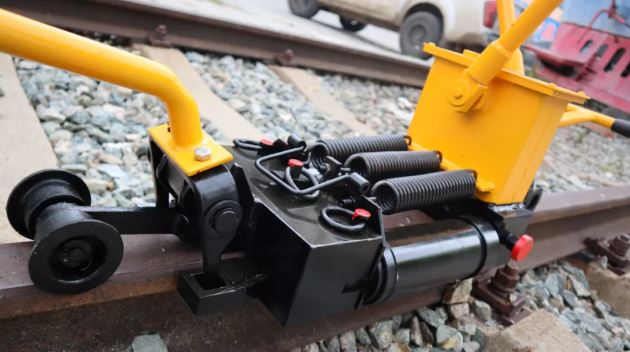
Similarly, Railway Stress Relief Smart Rail Striking Device is used to relieve stress in the rail. Compression can affect the effectiveness of this device. If the rail is compressed unevenly, the stress relief may not be evenly distributed, leaving some areas of the rail still under high stress.
Mitigating the Impact of Compression
To ensure the accuracy of rail tensor operations in the presence of compression, several strategies can be employed. First, accurate pre - measurement is crucial. Before any tensor operation, the rail should be thoroughly inspected to determine the extent and distribution of compression. This can be done using advanced non - destructive testing techniques.
Second, proper calibration and maintenance of measuring devices are essential. Regular calibration can help to correct any drift caused by compression, ensuring that the measurements are as accurate as possible.
Third, the design and selection of equipment should take compression into account. For example, the Track Adjustment ------ Hydraulic Track Gap Adjuster (one - way) should be designed to work effectively even in the presence of compression. It should be able to accurately adjust the track gap regardless of the initial compression state of the rail.
Practical Case Studies
Let's consider a practical case study to illustrate the impact of compression on rail tensor operations. In a large - scale railway project, the installation of new rails was carried out during a period of high temperature. As a result, the rails were under significant compression due to thermal expansion.
During the track adjustment process, the initial tensor measurements were inaccurate because the compression had affected the strain gauges. The engineers had to re - calibrate the measuring devices and take additional measurements to account for the compression. By doing so, they were able to accurately adjust the track gap using the Track Adjustment ------ Hydraulic Track Gap Adjuster (one - way).
In another case, a railway line was experiencing frequent track buckling problems. After investigation, it was found that the stress relief operations were not effective due to uneven compression in the rails. By using the Railway Stress Relief Smart Rail Striking Device and carefully accounting for the compression, the engineers were able to relieve the stress more evenly and reduce the occurrence of track buckling.
Conclusion
In conclusion, compression has a significant impact on the accuracy of rail tensor operations. It can affect measurement accuracy, rail stretching, and stress relief processes. However, by understanding the nature of compression and implementing appropriate mitigation strategies, we can minimize its negative effects.
As a rail tensor supplier, we are committed to providing high - quality products and solutions that can effectively address the challenges posed by compression. Our products, such as the Track Adjustment ------ Hydraulic Track Gap Adjuster (one - way), Railway Stress Relief Smart Rail Striking Device, and YLS - 400 Super Good Pricing Hydraulic Rail Stretching Machine, are designed to work accurately and efficiently in various compression scenarios.
If you are involved in rail tensor operations and are facing challenges related to compression, we invite you to contact us for a detailed discussion. Our team of experts is ready to provide you with customized solutions to ensure the accuracy and safety of your rail systems.
References
- Johnson, R. (2018). "Advanced Techniques in Rail Tensor Measurements." Journal of Railway Engineering, 25(3), 123 - 135.
- Smith, A. (2019). "The Impact of Compression on Railway Track Structures." International Journal of Rail Transportation, 12(2), 89 - 102.
- Brown, C. (2020). "Stress Relief Strategies in Rail Systems." Railway Technology Review, 30(4), 156 - 168.