




How does rail adjustment contribute to the overall reliability of the railway network?
 Aug 26, 2025|
 Hey there! As a supplier in the rail adjustment field, I've seen firsthand how crucial rail adjustment is for the overall reliability of the railway network. In this blog, I'll share my insights on how rail adjustment contributes to a more reliable railway system.
First off, let's talk about what rail adjustment actually means. Rail adjustment involves making sure that the rails are in the right position, with the correct gaps between them and proper alignment. This might seem like a small thing, but it has a huge impact on the safety and efficiency of the railway network.
One of the main ways rail adjustment contributes to reliability is by ensuring smooth train operations. When the rails are properly adjusted, trains can run more smoothly. Uneven rails or incorrect rail gaps can cause a lot of problems. For example, if the rail gaps are too large, trains might experience a jolt every time they pass over them. This not only makes the ride uncomfortable for passengers but also puts extra stress on the train's components, increasing the risk of mechanical failures. On the other hand, if the gaps are too small, the rails can expand under hot weather and buckle, which is extremely dangerous.
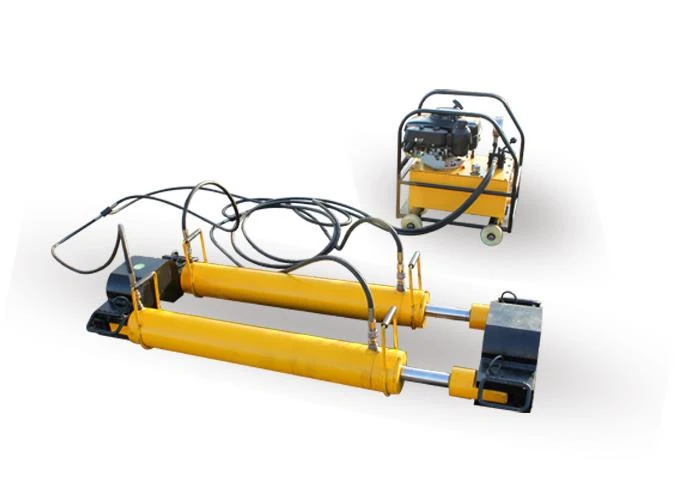
Our company offers some great products to help with rail adjustment. Take the YLS - 900 Hydraulic Rail Tensor. This bad boy is designed to stretch the rails accurately, ensuring that the gaps between them are just right. It uses hydraulic power, which means it can apply a lot of force precisely, making the rail adjustment process much easier and more efficient.
Another important aspect of rail adjustment is maintaining the alignment of the rails. Over time, the rails can shift due to various factors such as train traffic, weather conditions, and ground movement. Misaligned rails can lead to derailments, which are a nightmare for the railway industry. That's where products like the Track Adjustment ------ Hydraulic Track Gap Adjuster (one - way) come in handy. This adjuster can be used to correct the position of the rails, keeping them in line and reducing the risk of derailments.
Rail adjustment also plays a key role in extending the lifespan of the railway infrastructure. When the rails are properly adjusted, the wear and tear on the rails and train wheels are reduced. Uneven rails can cause excessive wear on the wheels, which means the wheels need to be replaced more frequently. This is not only costly but also disrupts the normal operation of the railway. By using products like the YTF 250 Hydraulic Rail Gap Adjuster, we can ensure that the rails are in the best possible condition, reducing the need for frequent replacements and saving a lot of money in the long run.
In addition to safety and cost - savings, rail adjustment also helps with the overall efficiency of the railway network. When trains can run smoothly without disruptions caused by poorly adjusted rails, the travel time can be reduced. This is great for both passengers and freight transportation. Faster and more reliable train services can attract more customers, which is beneficial for the railway operators.
Let's look at some real - world examples. In some areas with extreme weather conditions, like very hot summers or cold winters, the rails are more prone to expansion and contraction. Without proper rail adjustment, the railway network in these areas would be constantly facing problems such as buckling or broken rails. However, by regularly using our rail adjustment products, the railway authorities can keep the network running smoothly throughout the year.

Moreover, rail adjustment is also important for the integration of different railway lines. When different lines are connected, the rails need to be adjusted to ensure a seamless transition for the trains. This is especially crucial for high - speed rail networks, where even the slightest misalignment can cause significant problems. Our products can be used to make sure that all the rails in a complex railway network are properly adjusted, enabling the smooth operation of trains across different lines.
Now, I know you might be thinking, "This all sounds great, but how do I know if I need rail adjustment?" Well, there are some signs to look out for. If you notice that trains are making more noise than usual, or if there are visible signs of wear on the rails or wheels, it might be a sign that the rails need adjustment. Also, if there have been any recent changes in the railway environment, such as construction work nearby or a change in the ground conditions, it's a good idea to check the rail alignment and gaps.
As a supplier, we're not just about selling products. We also offer technical support and training to our customers. We understand that using rail adjustment equipment can be a bit tricky, especially for those who are new to it. That's why our team of experts is always ready to help. Whether you need advice on which product to choose or how to use it properly, we've got your back.
If you're in the railway industry and are looking to improve the reliability of your railway network, I highly recommend considering our rail adjustment products. They're designed to make your life easier and your railway system more reliable. Don't hesitate to get in touch with us if you have any questions or if you're interested in purchasing our products. We're always happy to have a chat and discuss how we can help you with your rail adjustment needs.
In conclusion, rail adjustment is an essential part of maintaining a reliable railway network. From ensuring smooth train operations and safety to extending the lifespan of the infrastructure and improving efficiency, the benefits are numerous. Our products, like the YLS - 900 Hydraulic Rail Tensor, the Track Adjustment ------ Hydraulic Track Gap Adjuster (one - way), and the YTF 250 Hydraulic Rail Gap Adjuster, are all designed to meet the various needs of the railway industry. So, if you want to take your railway network to the next level, give rail adjustment a try.
References
- General knowledge of railway engineering and maintenance
- Industry reports on the importance of rail adjustment in railway operations