




What is the influence of rail bender on railway track alignment?
 Oct 24, 2025|
 The railway network serves as the backbone of global transportation, facilitating the efficient movement of goods and people across vast distances. Ensuring the precise alignment of railway tracks is crucial for the safety, reliability, and performance of railway systems. Rail benders play a pivotal role in achieving and maintaining the desired track alignment. As a leading rail bender supplier, we understand the significance of these machines and their far - reaching influence on railway track alignment.
1. The Basics of Railway Track Alignment
Before delving into the influence of rail benders, it is essential to understand what railway track alignment entails. Track alignment refers to the geometric configuration of the railway tracks, including the horizontal and vertical curves, straight sections, and the elevation of the tracks. Proper alignment is vital for several reasons. Firstly, it ensures a smooth ride for trains, reducing wear and tear on the rolling stock and enhancing passenger comfort. Secondly, it minimizes the risk of derailments by providing a stable path for the wheels. Thirdly, it optimizes the energy efficiency of trains, as a well - aligned track reduces the resistance encountered during movement.
2. How Rail Benders Work
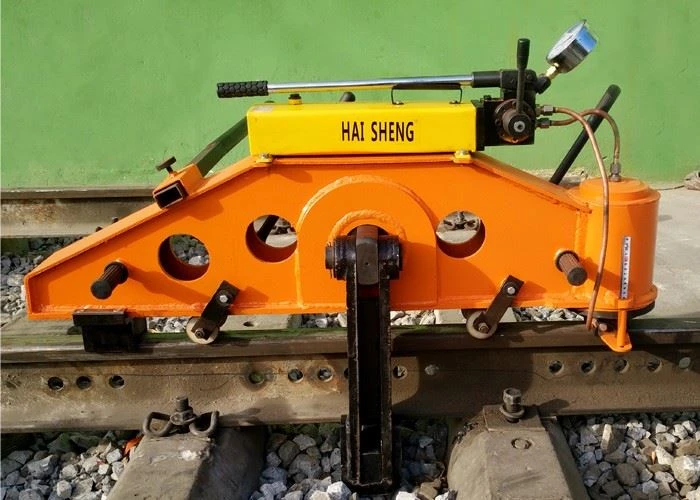
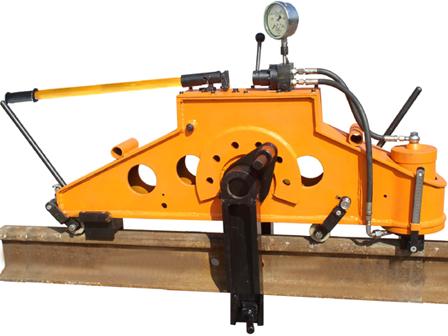
Rail benders are specialized machines designed to bend railway rails to the required curvature. There are different types of rail benders, including hydraulic rail benders and mechanical rail benders. Hydraulic rail benders, such as our High stretching force rail tensor 900KN, use hydraulic pressure to apply a controlled force to the rail, gradually bending it to the desired angle. Mechanical rail benders, on the other hand, rely on mechanical leverage to achieve the bending effect.
The bending process typically involves clamping the rail firmly in place and then applying a force at a specific point along the rail. The amount of force and the location of its application are carefully calculated based on the desired curvature and the properties of the rail, such as its material and cross - sectional shape.
3. Influence on Horizontal Alignment
3.1 Curvature Creation
One of the primary functions of rail benders is to create horizontal curves in railway tracks. In areas where the railway needs to navigate around obstacles, such as mountains, buildings, or other infrastructure, curves are essential. Rail benders allow for the precise creation of these curves, ensuring that the radius of curvature is within the safe limits for train operation. For example, in urban areas where space is limited, tight curves may be required. Our High working efficiency 1100KN Vertical Rail Bender straightening device can be used to create these precise curves, enabling the railway to fit into the available space while maintaining safety and performance.
3.2 Curve Adjustment and Realignment
Over time, railway tracks may experience shifts and deformations due to factors such as ground settlement, temperature changes, and the passage of heavy trains. These changes can affect the horizontal alignment of the tracks, leading to uneven wear on the wheels and an increased risk of derailments. Rail benders can be used to adjust and realign the curves, restoring the proper track geometry. By carefully bending the rails, the alignment can be brought back within the acceptable tolerance levels, ensuring the continued safe operation of the railway.
4. Influence on Vertical Alignment
4.1 Grade Adjustment
Vertical alignment of railway tracks includes the management of grades, which are the slopes of the tracks. Proper grade adjustment is crucial for the efficient operation of trains, as it affects the traction requirements and the braking distance. Rail benders can be used in combination with other track - laying equipment to adjust the vertical position of the rails, creating smooth transitions between different grades. For instance, when a railway approaches a hill, the rails can be bent slightly to create a more gradual incline, reducing the strain on the locomotives.
4.2 Sag and Hog Correction
Sag and hog are common vertical deformations in railway tracks. Sag occurs when the middle of a rail section droops, while hog refers to the upward curvature at the ends of a rail. These deformations can cause uneven loading on the wheels and lead to premature wear of the track components. Rail benders can be used to correct sag and hog by applying the appropriate bending force to the affected sections of the rail, restoring the flatness and proper vertical alignment of the track.
5. Impact on Track Maintenance and Long - term Performance
5.1 Reducing Wear and Tear
Proper track alignment achieved through the use of rail benders significantly reduces wear and tear on both the rails and the train wheels. When the tracks are correctly aligned, the wheels roll smoothly along the rails, minimizing the lateral forces and friction. This results in longer service life for the rails and reduced maintenance costs for the railway operators. Our Rail Bender is designed to provide precise bending, ensuring that the tracks are aligned to the highest standards, which in turn helps to extend the lifespan of the railway infrastructure.
5.2 Enhancing Safety
Safe operation of railways is of utmost importance. Rail benders contribute to safety by ensuring that the track alignment is within the safe limits. A well - aligned track reduces the risk of derailments, which can have catastrophic consequences. By using high - quality rail benders to maintain and adjust the track alignment, railway operators can provide a safer environment for passengers and freight.
6. Factors Affecting the Influence of Rail Benders on Track Alignment
6.1 Rail Material and Properties
The material and properties of the rail, such as its hardness, ductility, and cross - sectional shape, can significantly affect the bending process and the resulting track alignment. Different types of rails may require different bending techniques and forces. For example, high - strength rails may need more powerful rail benders to achieve the desired curvature. As a supplier, we offer a range of rail benders that can be customized to handle different types of rails, ensuring optimal performance in various applications.
6.2 Environmental Conditions
Environmental conditions, such as temperature and humidity, can also impact the bending process and the long - term stability of the track alignment. Extreme temperatures can cause the rails to expand or contract, which may affect the alignment. Rail benders need to be used in conjunction with proper track - maintenance strategies to account for these environmental factors. For instance, in cold climates, special precautions may be needed to prevent the rails from becoming brittle during the bending process.
7. Conclusion and Call to Action
In conclusion, rail benders have a profound influence on railway track alignment, playing a crucial role in the creation, adjustment, and maintenance of both horizontal and vertical track geometry. They contribute to the safety, efficiency, and longevity of railway systems. As a trusted rail bender supplier, we are committed to providing high - quality, reliable, and innovative rail bending solutions.
If you are involved in railway construction, maintenance, or any related projects, and you are looking for top - notch rail benders, we invite you to contact us for a detailed discussion. Our team of experts is ready to assist you in selecting the most suitable rail bender for your specific needs and to provide you with comprehensive technical support. Let's work together to ensure the precise alignment of your railway tracks and the success of your projects.
References
- Hay, W. W. (1982). Railroad Engineering. Wiley.
- Fry, A. T. (2009). Railway Track Technology. Routledge.
- Wickens, C. D., & Hollands, J. G. (2000). Engineering Psychology and Human Performance. Prentice Hall.