




Can a rail bender be used for bending rails in a high - temperature environment?
 Oct 06, 2025|
 Hey there! As a supplier of rail benders, I often get asked all sorts of questions about our products. One question that's been popping up a lot lately is, "Can a rail bender be used for bending rails in a high - temperature environment?" Well, let's dig into this topic and find out.
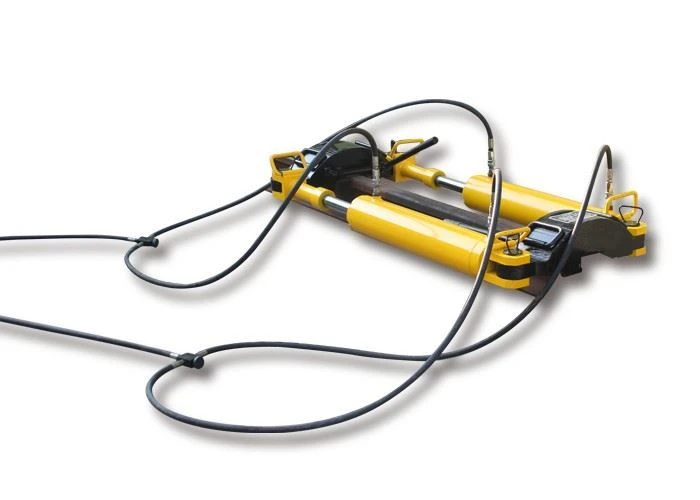
First off, let's understand what a rail bender is. A rail bender is a machine designed to bend rails to a specific curvature. It's a crucial tool in the railway construction and maintenance industry. We offer a variety of rail benders, like the Rail Bender (Rail Bending Machine Screw Jack Rail Bender), which is known for its reliability and efficiency.
Now, when it comes to high - temperature environments, things get a bit tricky. Rails in high - temperature conditions expand. The heat causes the metal to expand, and this expansion can affect the bending process. You might think that the heat would make the rails more malleable, and to some extent, that's true. But there are also some downsides.

One of the main issues is the change in the mechanical properties of the rail. At high temperatures, the yield strength of the rail decreases. This means that the rail is more likely to deform under lower forces than it would at normal temperatures. While this might seem like an advantage for bending, it can actually lead to over - bending or uneven bending. The rail may not hold its shape properly after the bending process, which can be a huge problem for railway applications.
Another concern is the impact on the rail bender itself. Our Rail Bender is built to withstand a certain range of operating conditions. High temperatures can put extra stress on the machine's components. The hydraulic systems, for example, rely on fluids that can be affected by heat. The viscosity of the hydraulic fluid can change at high temperatures, which can lead to reduced performance and potential damage to the system.
The electrical components of the rail bender are also at risk. High temperatures can cause the insulation of wires to degrade, leading to short circuits or other electrical problems. This not only affects the functionality of the machine but also poses a safety hazard.
However, it's not all doom and gloom. If proper precautions are taken, it is possible to use a rail bender in a high - temperature environment. First, we need to carefully monitor the temperature of the rail and the machine. There are temperature sensors that can be installed on the rail bender to keep track of the operating temperature. If the temperature gets too high, the machine can be shut down temporarily to prevent damage.
We also need to adjust the bending parameters according to the temperature. Since the yield strength of the rail decreases at high temperatures, we need to reduce the bending force applied by the rail bender. This requires some experimentation and experience to get it right.
For the hydraulic system, we can use high - temperature - resistant hydraulic fluids. These fluids are designed to maintain their viscosity and performance even at elevated temperatures. This helps to ensure that the hydraulic system operates smoothly and efficiently.
When it comes to the electrical components, proper insulation and cooling systems can be installed. For example, heat sinks can be added to dissipate the heat generated by the electrical components. This helps to keep the components within their safe operating temperature range.
Our High stretching force rail tensor 900KN is a powerful tool that can be adapted for high - temperature operations. It has a robust design and can be equipped with additional features to handle the challenges of high - temperature environments.
In conclusion, while using a rail bender in a high - temperature environment is possible, it requires careful planning and proper precautions. We, as a rail bender supplier, are committed to providing our customers with the best solutions. If you're facing the need to bend rails in a high - temperature environment, don't hesitate to reach out to us. We can work together to come up with a customized plan that meets your specific requirements. Whether it's adjusting the machine settings, using special fluids, or adding extra cooling systems, we've got the expertise to make it work.
So, if you're in the market for a rail bender or need advice on using one in a high - temperature environment, feel free to contact us. We're here to help you get the job done right.
References
- "Railway Engineering Handbook" - Covers general principles of railway construction and the behavior of rails under different conditions.
- "Materials Science for Engineers" - Discusses the mechanical properties of metals at different temperatures.