




Can a Rail Cutter be used for different rail sizes?
 May 23, 2025|
 Can a Rail Cutter be used for different rail sizes?
As a seasoned supplier of rail cutters, I often encounter inquiries from clients regarding the versatility of our products across different rail sizes. This question is not only crucial for railway maintenance and construction projects but also significantly impacts the efficiency and cost - effectiveness of operations. In this blog, I will delve into the technical aspects, practical considerations, and limitations of using a rail cutter for various rail sizes.
Technical Capabilities of Rail Cutters
Rail cutters are designed with specific cutting mechanisms that can be adjusted to accommodate different rail profiles and sizes. The key components of a rail cutter, such as the cutting blade, motor power, and hydraulic system, play vital roles in determining its adaptability.
The cutting blade is one of the most important factors. High - quality rail cutters are equipped with blades that can be sharpened and replaced easily. Some advanced blades are designed to have a wider cutting range, which means they can handle different rail widths and heights. For example, a well - designed blade can cut through both light - duty rails used in industrial sites and heavy - duty rails for high - speed railways.
Motor power is another critical aspect. A more powerful motor can provide the necessary torque to cut through thicker and harder rails. Our rail cutters are available with a range of motor powers, allowing customers to choose the most suitable one based on the rail sizes they commonly deal with. If you are mainly working on smaller rails, a lower - power motor may suffice, which also helps to save energy. However, for larger and more robust rails, a high - power motor is essential to ensure a clean and efficient cut.
The hydraulic system in some rail cutters is also adjustable. It can be fine - tuned to apply the right amount of pressure during the cutting process, regardless of the rail size. This ensures that the cutting force is evenly distributed, preventing damage to the rail and the cutter itself.
Practical Considerations
When using a rail cutter for different rail sizes, there are several practical considerations that need to be taken into account.
Firstly, the setup time is an important factor. Switching between different rail sizes may require some adjustments to the cutter, such as changing the blade, adjusting the cutting depth, and aligning the cutter with the rail. Our rail cutters are designed to minimize the setup time. For instance, some models have quick - release mechanisms for blade replacement, which can significantly reduce the time spent on changing between different rail cutting tasks.
Secondly, the accuracy of the cut is crucial. Different rail sizes may have different tolerances, and the rail cutter needs to be able to achieve the required accuracy. Our rail cutters are equipped with precision - control systems that can ensure accurate cuts for various rail sizes. This is especially important for railway construction projects where precise rail connections are necessary for the safety and stability of the railway.
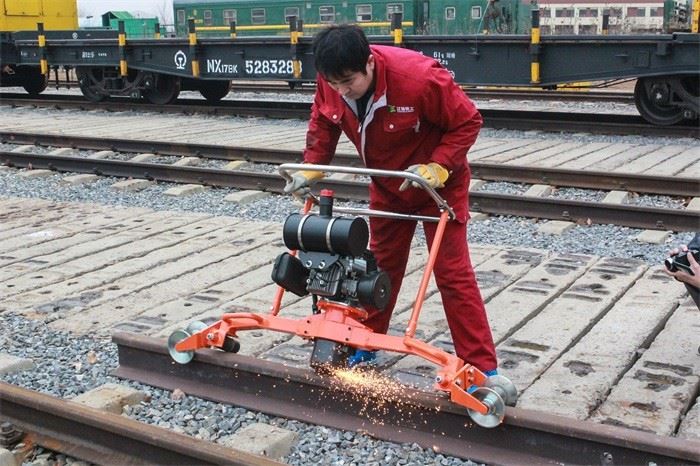
Another practical consideration is the portability of the rail cutter. If you need to use the cutter in different locations for different rail sizes, a portable rail cutter is a better choice. Our company offers a range of portable rail cutters that are lightweight and easy to transport, making them suitable for on - site maintenance and construction projects.
Limitations
Despite the many advantages and technical capabilities of our rail cutters, there are still some limitations when it comes to using them for different rail sizes.
One of the main limitations is the maximum and minimum cutting capacity of the rail cutter. Each rail cutter model has a specified range of rail sizes that it can handle. For example, a small - sized rail cutter may not be able to cut through extremely thick and large - scale rails. On the other hand, a large - scale rail cutter may not be as precise when cutting very small rails.
The material of the rail also affects the cutting performance. Different rail materials, such as carbon steel, alloy steel, and stainless steel, have different hardness and toughness. Some rail cutters may be more suitable for cutting certain types of rail materials, and using them on incompatible materials may result in poor cutting quality or even damage to the cutter.
Our Product Range
As a rail cutter supplier, we offer a comprehensive range of products that can meet the needs of different rail sizes. Our Rail Profile Grinding Machine is a versatile tool that can not only cut rails but also grind the rail profiles. It is suitable for a wide range of rail sizes and can be adjusted according to the specific requirements of the project.
The NGM - 4.4II 4kw heavy duty Rail Profile Grinding Machine Rail Welded Joined Grinder is a high - performance product that is designed for heavy - duty rail cutting and grinding tasks. It has a powerful motor and a robust cutting mechanism, making it capable of handling large - sized rails with ease.
Our Internal Combustion Tilting Rail Grinding Machine Rail Grinder is a portable and efficient solution for on - site rail cutting and grinding. It can be tilted to different angles, allowing for precise cutting of different rail profiles and sizes.
Conclusion
In conclusion, while there are some limitations, a well - designed rail cutter can be used for different rail sizes. Our company's rail cutters are engineered with advanced technology and adjustable components to provide maximum versatility. Whether you are dealing with small - scale industrial rails or large - scale railway tracks, we have the right solution for you.
If you are interested in our rail cutters and would like to discuss your specific requirements, we invite you to contact us for procurement and negotiation. Our team of experts is ready to provide you with detailed information and support to help you make the best decision for your railway projects.
References
- Railway Engineering Handbook, 3rd Edition
- Technical Manuals of Rail Cutting Equipment