




Can rail adjustment improve train speed?
 Dec 11, 2025|
 Can rail adjustment improve train speed? That's a question I've been asked a bunch of times since I've been in the rail adjustment supply business. And let me tell you, it's a topic that's super interesting and has a huge impact on the railway industry.
First off, let's talk about what rail adjustment actually is. Rail adjustment involves a bunch of processes and tools that are used to make sure the rails are in the best possible condition. This includes stretching the rails, adjusting the gaps between them, and dealing with any stress issues. And we've got some top - notch tools for this job. For example, the YLS 900I Hydraulic Rail Tensor is an amazing piece of equipment. It can stretch the rails precisely, ensuring they are in the right position and under the appropriate tension. Another great product is the YLS - 400 Super Good Pricing Hydraulic Rail Stretching Machine. As the name suggests, it offers a great balance between performance and cost. And then there's the Hydraulic Rail Stressor, which helps to manage the stress in the rails, preventing potential problems down the line.
Now, let's get to the main question: can rail adjustment improve train speed? Well, the answer is a big yes! Here's how.
One of the key factors that affect train speed is the smoothness of the track. When the rails are not properly adjusted, there can be uneven surfaces, gaps that are too wide or too narrow, and stress - related issues. These problems can cause the train to jolt and shake as it moves along the track. This not only makes the ride uncomfortable for passengers but also limits the speed at which the train can safely travel.
For instance, if there are large gaps between the rails, the wheels of the train will have to make sudden jumps as they cross these gaps. This creates a lot of impact and vibration, which can damage the train and the track over time. To avoid this, the train has to slow down. But when we use our rail adjustment tools to make the gaps consistent and within the optimal range, the train can move more smoothly. The wheels roll over the rails without those sudden jolts, allowing the train to maintain a higher speed.
Another aspect is the tension in the rails. Rails expand and contract with changes in temperature. If the rails are not properly tensioned, they can buckle in hot weather or develop large gaps in cold weather. Buckled rails are extremely dangerous as they can derail a train. So, trains have to slow down when there's a risk of encountering buckled rails. By using equipment like the YLS 900I Hydraulic Rail Tensor to adjust the tension in the rails, we can prevent buckling and ensure that the track remains safe for high - speed travel.
Moreover, proper rail adjustment helps in reducing wear and tear on both the train and the track. When the train moves smoothly on well - adjusted rails, the wheels and the braking systems experience less stress. This means that the train can operate more efficiently, and maintenance costs are reduced. With lower maintenance requirements, railway operators are more likely to invest in speed - enhancing technologies and allow trains to travel at higher speeds.
Let's take a look at some real - world examples. In high - speed rail networks around the world, a great deal of attention is paid to rail adjustment. Countries like Japan and China, which are known for their high - speed trains, have strict standards for rail maintenance and adjustment. They use advanced technologies and equipment to ensure that the rails are in perfect condition. As a result, their trains can reach speeds of up to 300 - 350 kilometers per hour. In contrast, in some regions where rail adjustment is not given due importance, the maximum speed of trains is much lower.
However, it's important to note that rail adjustment is just one part of the equation. There are other factors that also affect train speed, such as the design of the train, the power of the locomotive, and the signaling systems. But rail adjustment plays a crucial role in creating a safe and smooth track environment that allows trains to reach their maximum potential speed.
In addition to improving train speed, rail adjustment also has other benefits. It enhances the safety of the railway system. A well - adjusted track reduces the risk of derailments, which can be catastrophic. It also improves the overall reliability of the railway network. Trains are less likely to experience delays due to track - related issues, which is great for both passengers and freight transportation.
As a rail adjustment supplier, I've seen firsthand the impact that our products can have on the railway industry. We work closely with railway operators, maintenance teams, and construction companies to provide them with the best rail adjustment solutions. Our goal is to make the railway tracks as safe, smooth, and efficient as possible.
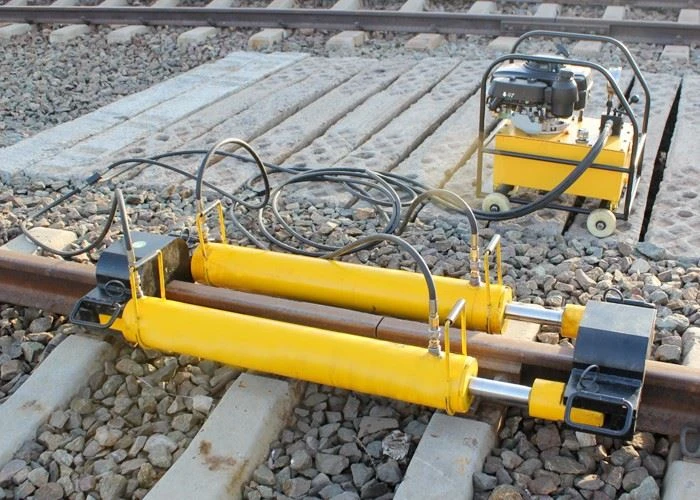

If you're involved in the railway industry and are looking to improve the speed and safety of your trains, I highly recommend considering proper rail adjustment. Our range of products, including the YLS 900I Hydraulic Rail Tensor, YLS - 400 Super Good Pricing Hydraulic Rail Stretching Machine, and Hydraulic Rail Stressor, can help you achieve that.
We're always ready to have a chat about your specific needs and how our products can fit into your operations. Whether you're building a new railway line or maintaining an existing one, we've got the expertise and the tools to assist you. So, don't hesitate to reach out if you're interested in learning more about our rail adjustment solutions. Let's work together to make the railway industry even better.
References:
- Railway Engineering textbooks
- Industry reports on high - speed rail development
- Case studies on rail maintenance and its impact on train performance