




How do Rail Grinders work in curved rail sections?
 Dec 10, 2025|
 Rail grinding is a crucial maintenance operation for railway tracks, especially in curved rail sections. As a leading rail grinder supplier, I've witnessed firsthand the importance of understanding how rail grinders work in these complex areas. In this blog, I'll delve into the intricacies of rail grinding in curved rail sections, exploring the technology, challenges, and solutions involved.
The Basics of Rail Grinding in Curved Sections
Curved rail sections present unique challenges compared to straight tracks. The forces acting on the rails are more complex due to the centrifugal force experienced by trains as they navigate the curves. This leads to uneven wear patterns on the rail surface, including lateral wear, gauge face wear, and corrugation. Rail grinders are designed to address these issues by removing the worn material and restoring the optimal profile of the rail.
The primary goal of rail grinding in curved sections is to improve the contact between the train wheels and the rails. By maintaining a proper rail profile, we can reduce friction, noise, and vibration, which in turn enhances the safety and comfort of train travel. Additionally, regular grinding helps to prevent the development of cracks and other defects that could compromise the integrity of the tracks.
How Rail Grinders Operate in Curved Rail Sections
1. Profile Measurement and Planning
Before starting the grinding process, it's essential to conduct a detailed profile measurement of the curved rail section. This involves using advanced surveying equipment to determine the current shape and condition of the rails. The data collected is then analyzed to create a grinding plan that specifies the amount of material to be removed and the desired final profile.
The grinding plan takes into account various factors, such as the radius of the curve, the speed of the trains, and the type of rolling stock. By tailoring the plan to the specific requirements of the curved section, we can ensure that the grinding process is both effective and efficient.
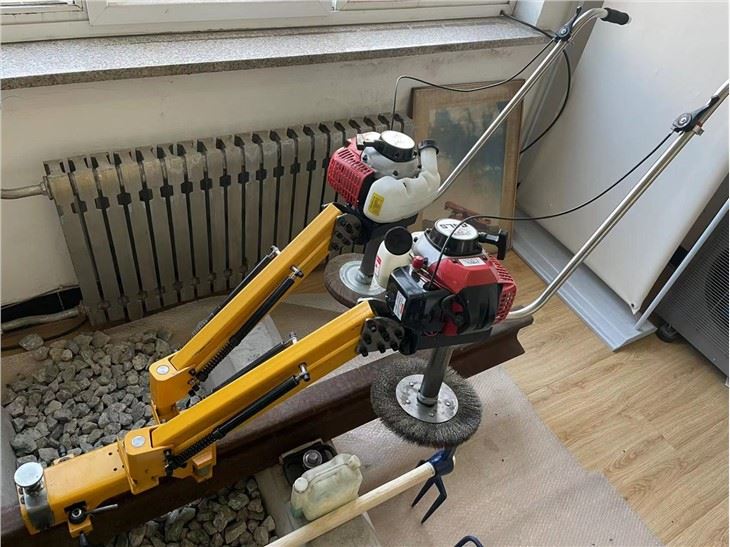
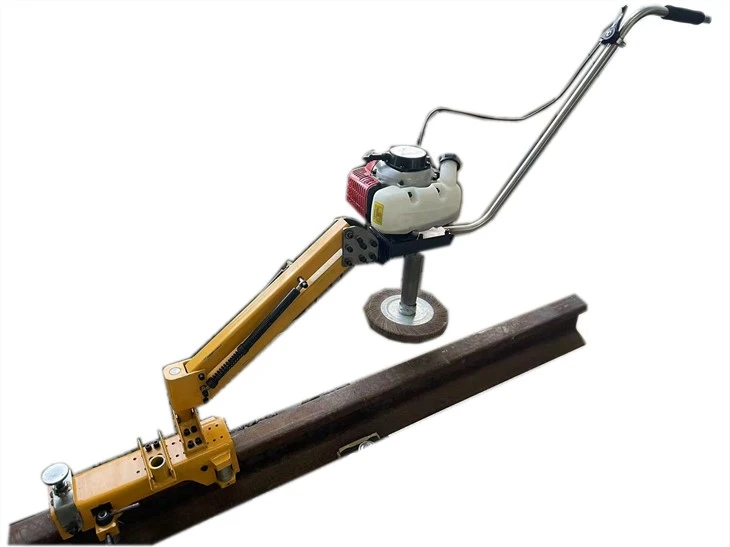
2. Grinding Techniques
There are several grinding techniques that can be used in curved rail sections, each with its own advantages and limitations. The most common methods include:
- Single - Pass Grinding: This technique involves using a single grinding wheel to remove the worn material in one pass. It is a relatively simple and cost - effective method, but it may not be suitable for complex rail profiles or severe wear conditions.
- Multi - Pass Grinding: In multi - pass grinding, multiple passes are made over the rail surface using different grinding wheels or settings. This allows for more precise control over the material removal process and can achieve a better final profile. However, it is a more time - consuming and expensive method.
- Contour Grinding: Contour grinding is a specialized technique that uses a grinding wheel with a shaped profile to match the desired rail shape. This method is particularly effective for curved rail sections as it can accurately reproduce the complex curves and angles of the rails.
3. Adaptive Control Systems
Many modern rail grinders are equipped with adaptive control systems that can adjust the grinding parameters in real - time based on the conditions of the rails. These systems use sensors to monitor factors such as the grinding force, temperature, and rail profile, and then automatically adjust the speed, pressure, and position of the grinding wheels to ensure optimal performance.
In curved rail sections, adaptive control systems are especially valuable as they can compensate for the variations in rail curvature and wear patterns. For example, if the sensor detects a sudden change in the rail profile due to a local defect, the system can immediately adjust the grinding parameters to address the issue.
Challenges in Rail Grinding of Curved Rail Sections
1. Curvature and Alignment
One of the main challenges in rail grinding of curved sections is dealing with the curvature and alignment of the rails. The grinding equipment must be able to follow the curved path accurately without causing any damage to the rails or the grinding wheels. This requires precise steering and positioning systems, as well as skilled operators.
2. Uneven Wear Patterns
As mentioned earlier, curved rail sections often experience uneven wear patterns due to the centrifugal forces acting on the trains. These uneven wear patterns can be difficult to address with standard grinding techniques, as different parts of the rail may require different amounts of material removal.
3. Accessibility
In some cases, curved rail sections may be located in areas with limited accessibility, such as tunnels or bridges. This can make it challenging to deploy the grinding equipment and may require special handling and transportation arrangements.
Our Rail Grinder Solutions
As a rail grinder supplier, we offer a range of high - quality rail grinders that are specifically designed to meet the challenges of rail grinding in curved rail sections. Some of our popular products include:
- NDM - 1.4 High Strength Internal Combustion Rail End - face Grinding Machine: This machine is suitable for end - face grinding of rails in curved sections. It features a high - strength internal combustion engine that provides reliable power, and its compact design allows for easy operation in tight spaces.
- NCM - 4II Switch Grinding And Deburring Machine: Ideal for grinding and deburring switches in curved rail sections, this machine offers precise control and high - quality grinding results. It is equipped with advanced grinding technology that can handle complex rail geometries.
- GYM - 1.2 Zero Gravity Lithium Battery Rail Waist Grinding Machine: This innovative machine uses a lithium - battery power source, providing a clean and efficient solution for rail waist grinding in curved sections. Its zero - gravity design allows for easy maneuverability and reduces operator fatigue.
Contact Us for Procurement and Consultation
If you are in need of rail grinders for your railway maintenance projects, especially for curved rail sections, we are here to help. Our team of experts can provide you with detailed information about our products, offer customized solutions based on your specific requirements, and assist you in the procurement process.
We understand the importance of reliable and efficient rail grinding equipment in ensuring the safety and performance of your railway tracks. Whether you are a railway operator, a maintenance contractor, or an engineering firm, we are committed to providing you with the best products and services. Contact us today to start the conversation about your rail grinding needs.
References
- Johnson, R. (2018). Rail Grinding Technology: Principles and Applications. Railway Engineering Journal, 45(2), 78 - 92.
- Smith, A. (2019). Challenges and Solutions in Rail Maintenance of Curved Rail Sections. International Journal of Railway Technology, 22(3), 112 - 125.
- Brown, C. (2020). Adaptive Control Systems in Rail Grinding: A Review. Journal of Railway Equipment and Technology, 30(1), 45 - 56.