




How are rail vehicles used in marshy areas?
 May 27, 2025|
 As a seasoned supplier of rail vehicles, I've witnessed firsthand the unique challenges and innovative solutions that come with using these vehicles in marshy areas. Marshlands, characterized by their soft, water - saturated ground, present a set of difficulties that require specialized rail vehicle designs and operational strategies.
Challenges in Marshy Areas
Marshy areas pose several significant challenges for rail vehicle operations. Firstly, the soft ground lacks the necessary load - bearing capacity. Traditional rail tracks laid on such ground are prone to sinking, which can lead to track misalignment and derailment risks. The high water content in the marsh also accelerates the corrosion of rail tracks and vehicle components. Waterlogged soil can cause the foundation of the tracks to become unstable over time, and the constant exposure to moisture can damage the electrical and mechanical systems of the rail vehicles.
Secondly, the marshy environment is often home to a variety of wildlife and plant species. Rail vehicle operations need to be carefully planned to minimize the impact on the local ecosystem. Any disruption to the natural habitat can have far - reaching ecological consequences.
Specialized Rail Vehicle Designs
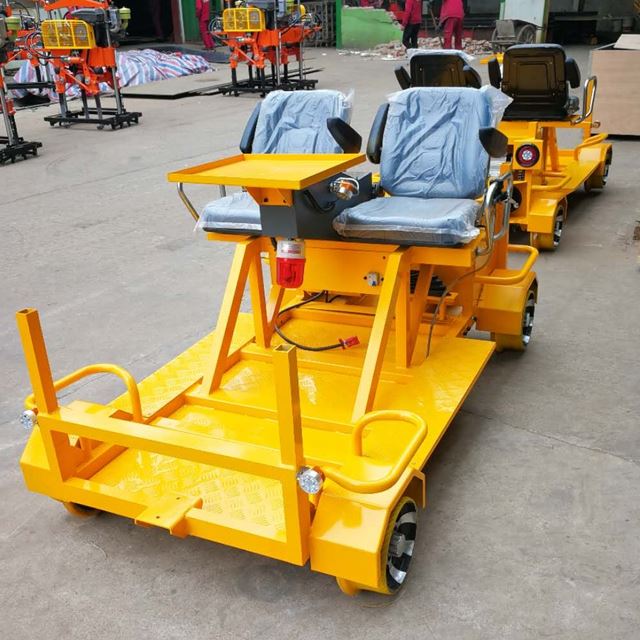
To overcome these challenges, we have developed a range of specialized rail vehicles. One such solution is the Customized Rail Trolley. This trolley is designed with a lightweight yet sturdy frame that distributes the vehicle's weight evenly across the tracks. By reducing the pressure on the tracks, it helps prevent them from sinking into the soft marshy ground. The wheels of the customized rail trolley are made of a corrosion - resistant material, which can withstand the high - moisture environment.
Another innovative product is the QPC - ⅠRAIL LIFTING CRANE special designed lorry crane completed with wagons. In marshy areas, the installation and maintenance of rail tracks can be extremely difficult due to the unstable ground. This lifting crane is equipped with advanced stabilization systems that allow it to operate safely on soft ground. It can be used to lift heavy track components during installation or to carry out emergency repairs, ensuring the smooth operation of the rail network.
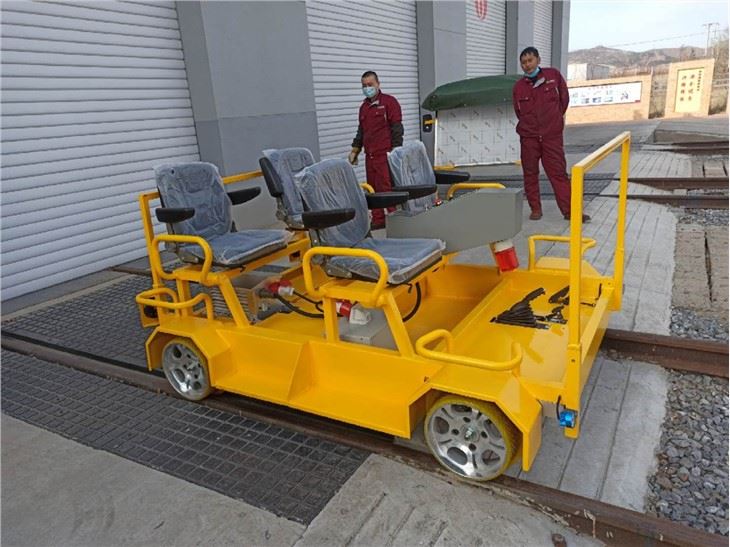
The Transporting Tool Lithium Battery Rail Trolley 4 seats special designed Inspection vehicle is also well - suited for marshy areas. Powered by a lithium - battery system, it offers a clean and efficient mode of transportation for inspection teams. The trolley's compact design allows it to navigate through narrow and winding rail tracks in the marsh, enabling quick and thorough inspections of the rail infrastructure.
Operational Strategies
In addition to specialized vehicle designs, specific operational strategies are essential for using rail vehicles in marshy areas. Regular track inspections are crucial. Since the marshy ground can cause track movement and damage, frequent checks are needed to identify any potential problems early. Inspection teams can use the lithium - battery rail trolley to cover large distances quickly and efficiently.
Track maintenance also needs to be carried out more frequently in marshy areas. This includes tasks such as track realignment, replacement of corroded components, and reinforcement of the track foundation. The lifting crane can be used to facilitate these maintenance operations, making the process more efficient and less labor - intensive.
To minimize the environmental impact, rail vehicle operations should be scheduled to avoid disturbing wildlife during sensitive periods, such as breeding seasons. Additionally, the vehicles should be designed to reduce noise and vibration, which can have a negative impact on the local ecosystem.
Safety Considerations
Safety is of utmost importance when using rail vehicles in marshy areas. The risk of derailment due to track instability is a major concern. To mitigate this risk, our rail vehicles are equipped with advanced safety systems, such as anti - derailment devices and automatic braking systems. These systems can detect potential problems and take appropriate action to prevent accidents.
The high - moisture environment also increases the risk of electrical malfunctions. All electrical components in our rail vehicles are designed to be waterproof and resistant to corrosion. Regular electrical inspections are carried out to ensure the safety and reliability of the vehicles.
Future Developments
Looking ahead, we are constantly researching and developing new technologies to improve the performance of rail vehicles in marshy areas. One area of focus is the development of more advanced materials that are even more resistant to corrosion and can better withstand the soft ground conditions. We are also exploring the use of autonomous rail vehicles, which can be programmed to operate more precisely and safely in challenging environments.
Conclusion
In conclusion, using rail vehicles in marshy areas requires a combination of specialized vehicle designs, operational strategies, and safety considerations. Our company, as a leading rail vehicle supplier, is committed to providing high - quality solutions that can overcome the unique challenges of marshy environments. Whether it's for track installation, maintenance, or transportation, our range of specialized rail vehicles, such as the Customized Rail Trolley, QPC - ⅠRAIL LIFTING CRANE special designed lorry crane completed with wagons, and Transporting Tool Lithium Battery Rail Trolley 4 seats special designed Inspection vehicle, are designed to meet the diverse needs of our customers in marshy areas.
If you are interested in our products and would like to discuss your specific requirements for rail vehicle applications in marshy areas, we encourage you to contact us for procurement and further business discussions. We look forward to working with you to find the best rail vehicle solutions for your projects.
References
- Smith, J. (2018). Rail Transportation in Challenging Terrains. Journal of Railway Engineering, 25(3), 123 - 135.
- Johnson, A. (2019). Environmental Impact of Rail Operations in Wetlands. Environmental Science Review, 15(2), 89 - 102.
- Brown, C. (2020). Advanced Materials for Rail Vehicles in Harsh Environments. Materials Science Journal, 30(4), 201 - 215.