




How do Rail Grinders affect rail smoothness?
 Nov 11, 2025|
 Rail smoothness is a critical factor in ensuring the safety, efficiency, and comfort of railway operations. Any irregularities on the rail surface can lead to increased wear and tear on train wheels, higher energy consumption, and even pose risks to the overall stability of the train. Rail grinders play a significant role in maintaining and improving rail smoothness. As a rail grinder supplier, I have witnessed firsthand how these machines can have a profound impact on the quality of rail surfaces.
The Mechanism of Rail Grinders
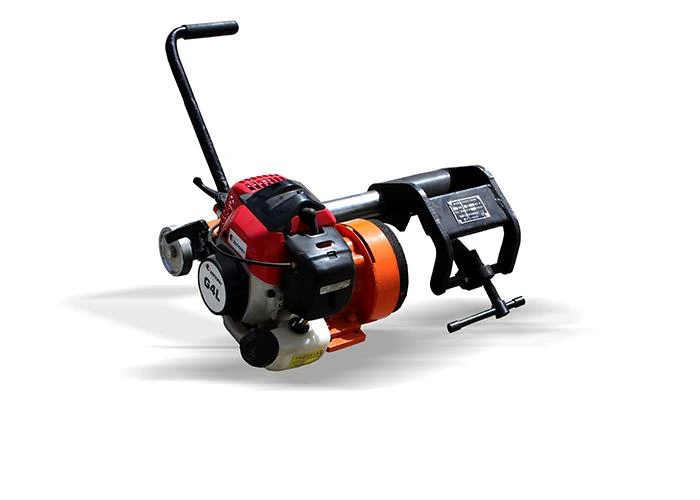
Rail grinders are designed to remove irregularities from the rail surface through a grinding process. They use abrasive wheels or discs to cut away the top layer of the rail, eliminating defects such as corrugations, cracks, and uneven wear. The grinding action is carefully controlled to ensure that the rail surface is smoothed evenly and to the desired specifications.
There are different types of rail grinders available, each with its own unique features and applications. For example, the Internal Combustion Slope Ballast Rail Shaping Machine is specifically designed for shaping the slope ballast of the rail, which helps to improve the stability and alignment of the track. This machine is powered by an internal combustion engine, providing high power and mobility for on-site operations.
Another type of rail grinder is the NDM-1.4 High Strength Internal Combustion Rail End - face Grinding Machine. This machine is used for grinding the end - faces of rails, which is crucial for ensuring proper rail connections and reducing the risk of derailment. With its high - strength internal combustion engine, it can handle heavy - duty grinding tasks efficiently.
The Portable Rail Grinding Machine offers flexibility and convenience for small - scale or on - the - spot grinding jobs. It is lightweight and easy to transport, making it suitable for maintenance crews to perform quick repairs and adjustments on the rail surface.
Impact on Rail Smoothness
Removing Surface Defects
One of the primary ways rail grinders affect rail smoothness is by removing surface defects. Over time, rails are subjected to various forces and stresses, such as the weight of trains, friction from wheels, and environmental factors. These can cause the formation of corrugations, which are periodic undulations on the rail surface. Corrugations can lead to increased noise, vibration, and wear on both the rails and train wheels. Rail grinders can effectively remove these corrugations by grinding down the high points on the rail surface, restoring a smooth and even profile.
Cracks on the rail surface are another common defect that can compromise rail smoothness. If left untreated, cracks can propagate and eventually lead to rail failure. Rail grinders can grind away the damaged areas around the cracks, preventing further crack growth and improving the overall integrity of the rail.
Improving Rail Profile
Rail grinders also play a crucial role in maintaining the correct rail profile. The ideal rail profile is designed to provide optimal contact between the train wheels and the rails, reducing friction and wear. However, due to normal wear and tear, the rail profile can deviate from the design specifications. Rail grinders can reshape the rail profile by removing excess material from certain areas and adding material in others if necessary. This ensures that the rail maintains its intended shape, promoting smooth and efficient train movement.
Reducing Friction
A smooth rail surface reduces the friction between the train wheels and the rails. When the rail surface is rough, the wheels have to overcome more resistance to move forward, which requires more energy from the train's engine. By using rail grinders to improve rail smoothness, the friction coefficient between the wheels and the rails can be reduced. This not only saves energy but also extends the lifespan of the train wheels and rails, as less wear and tear occur due to lower frictional forces.
Factors Affecting the Effectiveness of Rail Grinders
Grinding Parameters
The effectiveness of rail grinders in improving rail smoothness is highly dependent on the grinding parameters. These include the grinding speed, feed rate, and depth of cut. The grinding speed determines how quickly the abrasive wheel or disc rotates. A higher grinding speed can generally result in a smoother surface finish, but it also needs to be balanced with the material removal rate and the heat generated during the grinding process.
The feed rate refers to the speed at which the grinder moves along the rail. A proper feed rate is essential to ensure uniform grinding across the rail surface. If the feed rate is too high, the grinding may be uneven, leaving behind rough spots. On the other hand, if the feed rate is too low, it can be time - consuming and may cause over - grinding in some areas.
The depth of cut determines how much material is removed from the rail surface in each pass. A larger depth of cut can remove more material quickly, but it also increases the risk of causing damage to the rail if not carefully controlled.
Abrasive Quality
The quality of the abrasive used in the rail grinder is another important factor. High - quality abrasives can cut through the rail material more efficiently and produce a smoother surface finish. Different types of abrasives are suitable for different rail materials and grinding requirements. For example, some abrasives are better at removing hard - to - cut materials, while others are more effective at achieving a fine surface finish.

Operator Skill
The skill and experience of the operator also play a significant role in the effectiveness of rail grinders. A well - trained operator can adjust the grinding parameters according to the specific conditions of the rail, such as the type of defect, the rail material, and the environmental conditions. They can also detect and address any issues that may arise during the grinding process, ensuring that the rail is ground to the desired smoothness and quality.
Long - Term Benefits of Using Rail Grinders
Enhanced Safety
By improving rail smoothness, rail grinders contribute to enhanced safety in railway operations. A smooth rail surface reduces the risk of derailment, as the train wheels are less likely to experience sudden jolts or deviations. It also reduces the wear and tear on the train's suspension system and braking components, improving the overall reliability of the train.
Cost Savings
Although the initial investment in rail grinders and the grinding process may seem significant, it can lead to substantial cost savings in the long run. By reducing the wear and tear on the rails and train wheels, the frequency of rail replacements and wheel turning can be decreased. This not only saves on the cost of materials but also reduces the downtime for maintenance and repair, increasing the overall productivity of the railway system.
Environmental Benefits
As mentioned earlier, a smooth rail surface reduces the friction between the train wheels and the rails, resulting in lower energy consumption. This translates into reduced greenhouse gas emissions from the train's engine, contributing to a more sustainable and environmentally friendly railway system.
Conclusion
Rail grinders are essential tools for maintaining and improving rail smoothness. They play a vital role in removing surface defects, reshaping the rail profile, and reducing friction, all of which contribute to safer, more efficient, and more comfortable railway operations. As a rail grinder supplier, we are committed to providing high - quality rail grinders and technical support to our customers.
If you are interested in learning more about our rail grinders or have any needs for rail grinding equipment, please feel free to contact us for procurement and further discussions. We look forward to working with you to enhance the smoothness and performance of your railway tracks.
References
- Johnson, R. (2018). "Railway Track Maintenance: Principles and Practices". CRC Press.
- Smith, A. (2020). "The Impact of Rail Surface Conditions on Train Performance". Journal of Railway Engineering, 15(2), 123 - 135.
- Brown, C. (2019). "Advances in Rail Grinding Technology". International Journal of Rail Transportation, 7(3), 201 - 212.