




How does a rail drill work?
 Jan 08, 2026|
 Hey there! As a supplier of rail drills, I'm super stoked to share with you how these bad - boys work. Rail drills are like the unsung heroes of the railway construction and maintenance world. They play a crucial role in creating holes in rails for various purposes, such as attaching components or making repairs.
Let's start with the basics. A rail drill is a specialized tool designed to bore holes accurately and efficiently in railway tracks. These tracks are usually made of high - strength steel, so the drill has to be tough and powerful. There are different types of rail drills out there, including electric, pneumatic, and hydraulic ones, but they all share the same fundamental working principle.
The Core Components of a Rail Drill
First off, we've got the drill bit. This is the part that actually does the cutting. Drill bits for rail drills are made from super - hard materials like high - speed steel or carbide. They are designed with a specific shape to ensure smooth and precise cutting. The tip of the drill bit is sharpened to a fine point, which helps it penetrate the tough steel of the rail easily.
Next up is the power source. As I mentioned earlier, there are different types. Electric rail drills are pretty popular because they're easy to use and maintain. They're powered by an electrical motor, which converts electrical energy into mechanical energy to drive the drill bit. Pneumatic rail drills, on the other hand, use compressed air. The compressed air is fed into a pneumatic motor, which then spins the drill bit. Hydraulic rail drills rely on hydraulic pressure to operate. They're often used in heavy - duty applications because they can generate a lot of force.
Then there's the feed mechanism. This is what controls how the drill bit moves into the rail. It ensures that the drill bit advances at a steady and consistent rate. A good feed mechanism is essential for getting clean, accurate holes. Some rail drills have a manual feed mechanism, where the operator turns a handle to move the drill bit forward. Others have an automatic feed mechanism, which is more precise and can save a lot of time and effort.
The Working Process
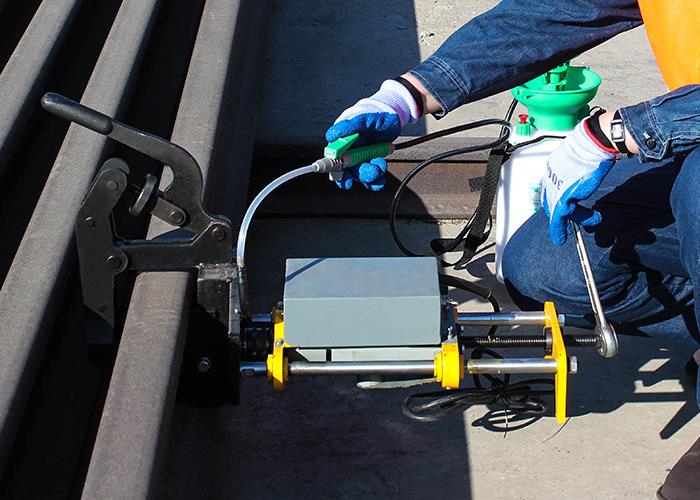
So, how does the whole thing come together? Well, first, the operator positions the rail drill on the rail. This is a critical step because the accuracy of the hole depends on how well the drill is positioned. The drill is usually secured to the rail using clamps or magnets to prevent it from moving during the drilling process.
Once the drill is in place, the operator turns on the power source. If it's an electric drill, they just flip a switch. For pneumatic drills, they open the valve to let the compressed air in, and for hydraulic drills, they activate the hydraulic system.
As the power source starts the drill bit spinning, the operator uses the feed mechanism to slowly advance the drill bit into the rail. The sharp tip of the drill bit starts to cut through the steel, creating chips. These chips are removed from the hole by a flushing system. Some rail drills have a built - in coolant system that sprays a coolant onto the drill bit and the hole. The coolant helps to reduce friction and heat, which can extend the life of the drill bit and improve the quality of the hole.
As the drill bit continues to penetrate the rail, it reaches the desired depth. The operator then stops the feed mechanism and turns off the power source. The drill bit is then retracted from the hole, and the job is done!
Advantages of Using Our Rail Drills
Now, as a supplier of rail drills, I can tell you that our products have some great advantages. First of all, they're built to last. We use high - quality materials and state - of - the - art manufacturing processes to ensure that our rail drills are durable and reliable. They can withstand the tough conditions of railway construction and maintenance sites.
Our rail drills are also very efficient. They can drill holes quickly and accurately, which can save a lot of time and money on the job. And because they're easy to operate, even inexperienced workers can use them with minimal training.
We also offer a wide range of rail drills to meet different needs. Whether you need a small, portable drill for light - duty work or a heavy - duty drill for large - scale projects, we've got you covered.
Related Products
If you're in the railway construction or maintenance business, you might also be interested in some of our other products. For example, we have the Lithium Battery High - frequency Tamping Machine. This machine is used to compact the ballast under the rails, which helps to keep the rails in place and ensures a smooth ride for trains.
Another great product is the SND - 23 Portable Petrol Engine Rail Tamper. It's a handy tool for tamping the ballast around the rails. It's portable and easy to use, making it perfect for small - scale projects or on - the - go repairs.
And if you're looking for a reliable electric rail drill, check out our ZG - 13 Electric Rail Drilling Machine. It's a high - performance drill that can handle even the toughest jobs.
Why Choose Us as Your Supplier
When it comes to choosing a rail drill supplier, there are a few things you should consider. First, you want a supplier that offers high - quality products. Our rail drills are tested and certified to meet the highest industry standards. We stand behind our products and offer a warranty to give you peace of mind.
Second, you want a supplier that provides excellent customer service. Our team is always ready to answer your questions and help you choose the right product for your needs. We can also offer technical support and training if you need it.
Finally, you want a supplier that offers competitive prices. We understand that cost is an important factor in any project, so we strive to offer our products at a reasonable price without compromising on quality.
Contact Us for Procurement
If you're interested in our rail drills or any of our other products, don't hesitate to get in touch. We're always happy to discuss your requirements and provide you with a quote. Whether you're a small contractor or a large railway company, we can work with you to find the best solutions for your projects. So, reach out to us today and let's start building better railways together!
References
- Railway Engineering Handbook, various authors
- Journal of Railway Technology and Maintenance, multiple issues
- Manufacturer's manuals for rail drills and related equipment