




How does a Rail Grinder work?
 Jun 18, 2025|
 Hey there! As a supplier of rail grinders, I'm super excited to dive into how these amazing machines work. Rail grinders play a crucial role in maintaining railway tracks, ensuring safety, and extending the lifespan of the rails. So, let's get right into it!
The Basics of Rail Grinding
First off, you might be wondering why we even need to grind rails in the first place. Well, over time, rails go through a lot of wear and tear. Trains constantly roll over them, causing friction, and this can lead to various issues like surface cracks, corrugation, and uneven wear. Rail grinding helps to address these problems by removing the damaged layer of the rail surface, restoring its smoothness and profile.
Do you know why you need to descale rails? Do You Know Why You Need To Descale Rails? This link provides more in - depth information on the importance of rail maintenance.
Components of a Rail Grinder
A rail grinder is made up of several key components, each with its own important function.
Grinding Wheels
The grinding wheels are the heart of the rail grinder. These wheels are made of abrasive materials that can effectively remove the top layer of the rail. The size, shape, and composition of the grinding wheels can vary depending on the specific application. For example, some wheels are designed for rough grinding to quickly remove large amounts of material, while others are used for fine finishing to achieve a smooth surface.
Power Source
Rail grinders can be powered in different ways. Some use internal combustion engines, which are great for mobile applications as they offer high power and flexibility. Others are electrically powered, which can be more environmentally friendly and suitable for use in enclosed spaces or areas where emissions are a concern.
Control System
The control system is what allows the operator to precisely control the grinding process. It can adjust the speed of the grinding wheels, the pressure applied to the rail, and the direction of the grinder. This ensures that the grinding is done accurately and according to the required specifications.
Frame and Chassis
The frame and chassis provide the structural support for the entire machine. They are designed to be sturdy and durable, able to withstand the vibrations and forces generated during the grinding process. The chassis also houses the other components and provides a stable base for the grinder to move along the rails.
How the Rail Grinder Works
Now that we know the main components, let's take a look at how a rail grinder actually operates.

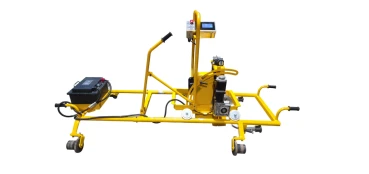
Setup
Before starting the grinding process, the operator needs to set up the rail grinder properly. This includes positioning the machine on the rails, checking the alignment of the grinding wheels, and adjusting the control settings according to the condition of the rails and the desired grinding results.
Grinding Process
Once the setup is complete, the grinding wheels are brought into contact with the rail surface. The power source drives the wheels to rotate at high speeds. As the wheels spin, they start to remove the material from the rail. The operator can control the feed rate of the grinder, which determines how quickly the machine moves along the rails. This allows for a consistent and even grinding across the entire length of the rail.
During the grinding, the control system monitors and adjusts various parameters. For example, if the pressure on the wheels is too high or too low, the system can make the necessary adjustments to ensure optimal grinding performance.
Finishing
After the initial grinding is done, a fine - finishing process may be carried out. This involves using different grinding wheels or techniques to achieve a smoother surface finish. This step is important as it helps to improve the ride quality of the trains and reduce noise.
Different Types of Rail Grinders
There are several types of rail grinders available, each suited for different applications.
Portable Rail Grinders
Portable rail grinders are small and lightweight, making them easy to transport and use in different locations. They are often used for small - scale maintenance jobs, such as grinding at switches and crossings. These grinders are usually powered by batteries or small internal combustion engines.
Track - Mounted Rail Grinders
Track - mounted rail grinders are larger and more powerful machines. They are designed to be permanently or semi - permanently mounted on the railway tracks. These grinders can cover long distances and are used for large - scale rail maintenance projects, such as grinding entire sections of a railway line.
Specialized Rail Grinders
There are also specialized rail grinders, such as the Lithium Turnout Milling And Grinding Machine. These machines are designed for specific tasks, like grinding turnouts or handling unique rail profiles.
Benefits of Using a Rail Grinder
Using a rail grinder offers numerous benefits.
Improved Safety
By removing surface defects and maintaining the proper rail profile, rail grinders help to improve the safety of railway operations. Smooth rails reduce the risk of derailments and improve the stability of trains.
Extended Rail Lifespan
Regular grinding can significantly extend the lifespan of the rails. By removing the damaged layer, it prevents further deterioration and corrosion, which can save a lot of money in the long run by reducing the need for frequent rail replacements.
Reduced Noise and Vibration
A smooth rail surface results in less noise and vibration when trains pass over. This not only improves the comfort for passengers but also reduces the wear and tear on the trains themselves.
Why Choose Our Rail Grinders
As a supplier of rail grinders, we offer high - quality machines that are designed to meet the diverse needs of our customers. Our rail grinders are built with the latest technology and use top - of - the - line components, ensuring reliable performance and long - term durability.
We have a wide range of models available, from portable grinders for small jobs to large track - mounted machines for major projects. Each machine is carefully tested and inspected before leaving our factory to ensure that it meets the highest standards.
If you're interested in our rail grinders, you can check out our Rail Grinding Machine For Sale. We're always here to provide you with more information and answer any questions you may have. Whether you're a railway maintenance company or a contractor, our rail grinders can be a great addition to your equipment fleet.
If you're looking to purchase a rail grinder or want to discuss your specific requirements, don't hesitate to get in touch. We're eager to work with you and help you find the perfect solution for your rail maintenance needs.
References
- Railway Engineering textbooks
- Industry reports on rail maintenance
- Technical documentation from rail grinder manufacturers