




How does temperature affect rail adjustment?
 May 15, 2025|
 Temperature is a critical factor that significantly influences rail adjustment. As a professional Rail Adjustment supplier, we have witnessed firsthand how temperature variations can pose challenges and opportunities in the railway maintenance and construction industry. In this blog, we will delve into the scientific principles behind how temperature affects rail adjustment and explore the solutions we offer to tackle these issues.
The Physics of Rail Expansion and Contraction
Rails are made primarily of steel, a material that expands when heated and contracts when cooled. This phenomenon is governed by the coefficient of thermal expansion, which is a measure of how much a material will change in length or volume for a given change in temperature. For steel, the coefficient of thermal expansion is approximately 12 x 10^-6 per degree Celsius. This means that for every degree Celsius increase in temperature, a steel rail will expand by 12 millionths of its original length.
Let's consider a simple example. Suppose we have a 100-meter-long rail at a temperature of 20 degrees Celsius. If the temperature rises to 40 degrees Celsius, an increase of 20 degrees, the rail will expand by:
ΔL = α * L * ΔT
Where:
- ΔL is the change in length
- α is the coefficient of thermal expansion (12 x 10^-6 /°C)
- L is the original length of the rail (100 meters)
- ΔT is the change in temperature (20°C)
ΔL = 12 x 10^-6 * 100 * 20 = 0.024 meters or 24 millimeters
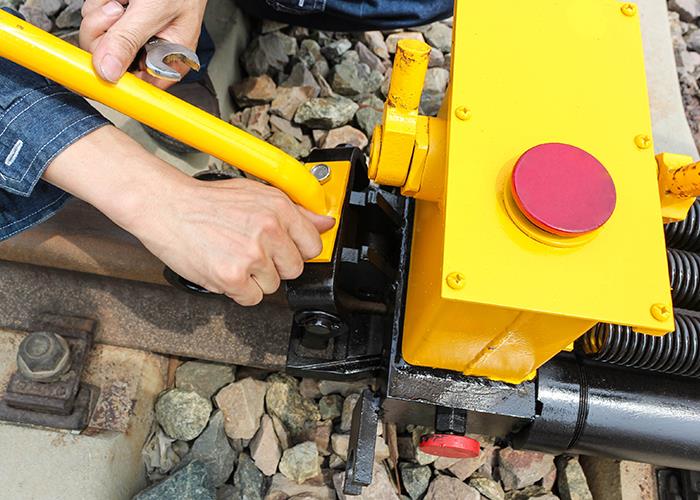
Conversely, if the temperature drops to 0 degrees Celsius, a decrease of 20 degrees, the rail will contract by the same amount. These changes in length may seem small, but over long stretches of railway track, they can accumulate and cause significant problems.
Problems Caused by Temperature-Induced Rail Movement
Rail Buckling
One of the most serious problems associated with rail expansion is rail buckling. When the temperature rises, the rails expand and if there is not enough room for this expansion, the rails can buckle out of their normal position. Rail buckling can occur suddenly and without warning, posing a major safety risk to trains and passengers. Buckled rails can derail trains, leading to accidents and disruptions to railway services.
Rail Breaks
On the other hand, when the temperature drops, the rails contract. If the contraction is restricted, high tensile stresses can build up in the rails. These stresses can cause the rails to break, especially if there are pre-existing defects or weaknesses in the rail material. Rail breaks can also lead to derailments and pose a significant threat to railway safety.
Gauge Variation
Temperature changes can also cause variations in the rail gauge, which is the distance between the inner faces of the two rails. Expansion and contraction of the rails can cause the gauge to widen or narrow, affecting the stability and safety of trains. A wider gauge can cause the wheels of the train to move laterally, while a narrower gauge can cause the wheels to bind, both of which can lead to derailments.
Rail Adjustment Solutions
To address the problems caused by temperature-induced rail movement, we offer a range of high-quality rail adjustment products. These products are designed to help maintain the proper length, alignment, and gauge of the rails, ensuring the safety and efficiency of railway operations.
YTF 400 II Good Quality Hydraulic Rail Gap Adjuster
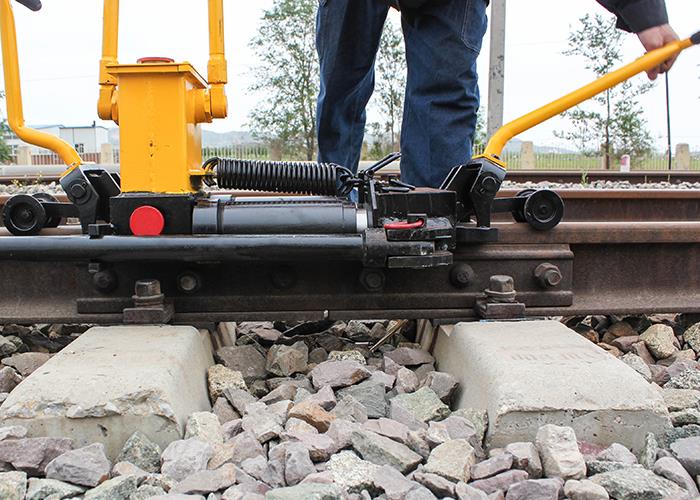
Our YTF 400 II Good Quality Hydraulic Rail Gap Adjuster is a powerful and reliable tool for adjusting the gap between rails. This hydraulic adjuster uses a high-pressure hydraulic system to apply a controlled force to the rails, allowing for precise adjustment of the rail gap. It is suitable for use in a variety of railway maintenance and construction applications, and can help prevent rail buckling and other temperature-related problems.
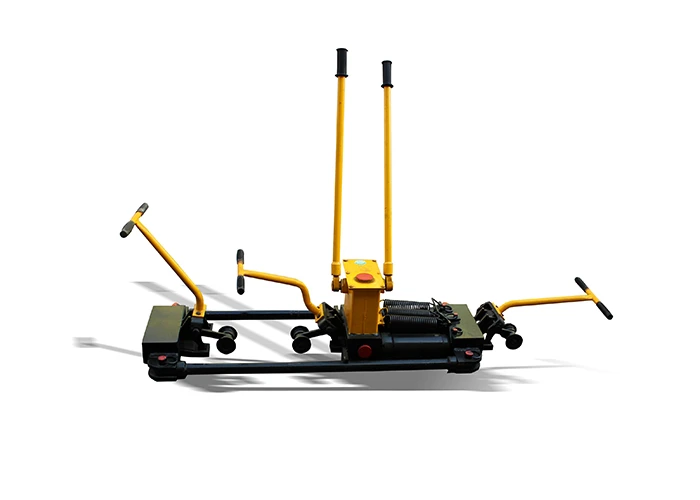
Track Adjustment ------ Hydraulic Track Gap Adjuster (one-way)
The Track Adjustment ------ Hydraulic Track Gap Adjuster (one-way) is another essential tool for rail adjustment. This one-way hydraulic adjuster is designed to quickly and easily adjust the track gap, ensuring the proper alignment of the rails. It is lightweight and portable, making it ideal for use in the field.
Rail Tensor (Rail Stressing Equipment Rail Puller Rail Stressor)
Our Rail Tensor (Rail Stressing Equipment Rail Puller Rail Stressor) is a specialized piece of equipment for stressing the rails. By applying a controlled tensile force to the rails, the rail tensor can help counteract the effects of temperature-induced expansion and contraction, reducing the risk of rail buckling and breaks. It is an essential tool for maintaining the integrity of the railway track.
Importance of Temperature Monitoring in Rail Adjustment
In addition to using the right rail adjustment tools, it is also important to monitor the temperature of the rails. By keeping track of the temperature, railway maintenance crews can anticipate the changes in rail length and take appropriate measures to adjust the rails before problems occur. Temperature monitoring can be done using a variety of methods, including thermocouples, infrared thermometers, and temperature sensors.
Conclusion
Temperature plays a crucial role in rail adjustment. The expansion and contraction of rails due to temperature changes can cause a range of problems, including rail buckling, breaks, and gauge variation. As a Rail Adjustment supplier, we are committed to providing high-quality products and solutions to help address these issues. Our YTF 400 II Good Quality Hydraulic Rail Gap Adjuster, Track Adjustment ------ Hydraulic Track Gap Adjuster (one-way), and Rail Tensor (Rail Stressing Equipment Rail Puller Rail Stressor) are all designed to help maintain the proper length, alignment, and gauge of the rails, ensuring the safety and efficiency of railway operations.
If you are in the railway industry and are looking for reliable rail adjustment solutions, we invite you to contact us for more information. Our team of experts is ready to assist you in finding the right products for your specific needs. Let's work together to ensure the safety and reliability of your railway tracks.
References
- "Thermal Expansion and Contraction of Railway Rails" - Railway Engineering Handbook
- "Railway Track Maintenance and Inspection" - Transportation Research Board