




What are the impacts of rail adjustment on the stability of railway embankments?
 Jul 25, 2025|
 Hey there! As a supplier in the rail adjustment business, I've seen firsthand how rail adjustment can have a pretty big impact on the stability of railway embankments. In this blog, I'm gonna break down these impacts and share some insights from my experience.
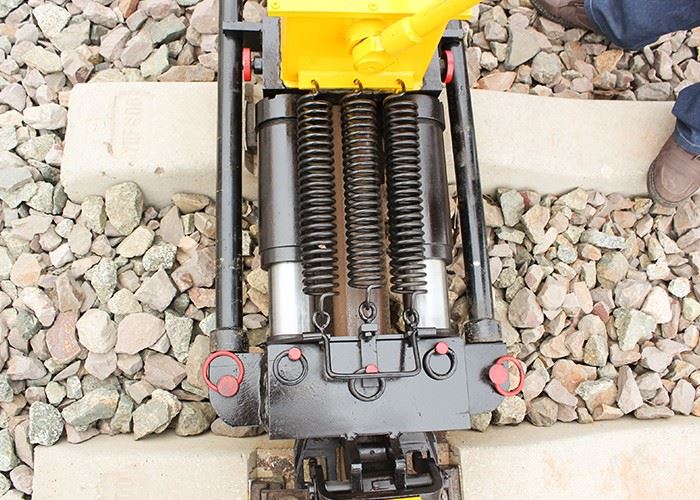
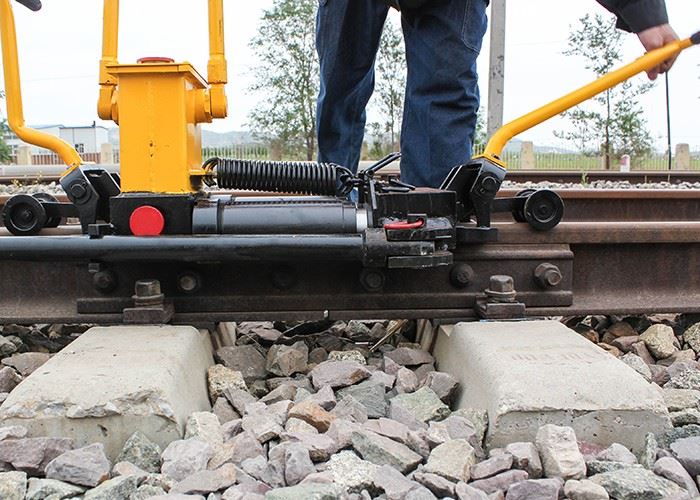
First off, let's talk about what rail adjustment is. Rail adjustment is all about making sure the rails are in the right position, with the correct tension and gaps. We use tools like the YLS 900I Hydraulic Rail Tensor and Rail Gap Adjuster to do this. These tools help us fine - tune the rails, which is crucial for the smooth operation of trains.
One of the main impacts of rail adjustment on railway embankment stability is related to stress distribution. When we adjust the rails, we're changing the forces that are transferred from the rails to the embankment. If the rail tension is too high, it can put extra stress on the embankment. This extra stress can cause the embankment to settle unevenly. Uneven settlement is a big problem because it can lead to track irregularities. Trains running on uneven tracks can cause even more stress on the embankment, creating a vicious cycle.
For example, if we use the YTF - 400II Hydraulic Rail Gap Adjuster to increase the tension in the rails too much, the embankment might start to experience lateral forces. These lateral forces can push the embankment sideways, especially if the embankment is not well - compacted or has a weak soil structure. Over time, this can lead to slope failures, which are extremely dangerous for railway operations.
On the other hand, if the rail tension is too low, the rails might not be held firmly in place. This can cause the rails to move around when trains pass over them. The movement of the rails can transfer dynamic loads to the embankment in an unpredictable way. These dynamic loads can cause vibrations in the embankment. If the vibrations are strong enough and occur over a long period, they can loosen the soil particles in the embankment. Loosened soil means reduced stability, and it can also lead to increased settlement.
Another aspect to consider is the impact of rail gap adjustment. The gaps between the rails are designed to allow for thermal expansion and contraction. If we don't adjust these gaps properly, it can also affect the embankment stability. For instance, if the gaps are too small, the rails might expand and buckle during hot weather. The buckling of the rails can put a huge amount of pressure on the embankment, potentially causing damage. On the contrary, if the gaps are too large, the trains' wheels can create more impact forces when passing over the gaps. These impact forces can be transferred to the embankment, increasing the risk of settlement and soil erosion.
Soil conditions play a huge role in how rail adjustment affects embankment stability. In areas with soft or cohesive soils, the embankment is more susceptible to the impacts of rail adjustment. Soft soils have a lower bearing capacity, which means they can't handle large stresses without deforming. When we adjust the rails and change the stress distribution, soft soils are more likely to settle or deform. In contrast, in areas with granular soils, the embankment might be more resistant to the impacts of rail adjustment. Granular soils have better drainage and can distribute stresses more evenly.
The frequency of rail adjustment also matters. If we adjust the rails too often, it can disrupt the equilibrium of the embankment. Each time we make an adjustment, we're changing the forces acting on the embankment. Frequent changes can prevent the embankment from reaching a stable state. On the other hand, if we don't adjust the rails often enough, the problems caused by thermal expansion, wear and tear, and other factors can accumulate over time, leading to more severe stability issues.
Now, let's talk about how we can mitigate these impacts. First of all, proper planning is essential. Before we start any rail adjustment work, we need to conduct a detailed geotechnical investigation of the embankment. This investigation will help us understand the soil properties, such as its strength, density, and water content. Based on this information, we can determine the appropriate rail adjustment parameters.
We also need to use the right tools and techniques. Our YLS 900I Hydraulic Rail Tensor and Rail Gap Adjuster are designed to provide precise control over the rail adjustment process. By using these tools correctly, we can minimize the negative impacts on the embankment.
Monitoring is another crucial step. After the rail adjustment, we need to continuously monitor the embankment for any signs of instability. This can include measuring settlement, slope movement, and soil moisture content. If we detect any problems early, we can take corrective actions before they become serious.
In conclusion, rail adjustment has significant impacts on the stability of railway embankments. As a rail adjustment supplier, I understand the importance of getting it right. We need to balance the need for proper rail operation with the stability of the embankment. By using the right tools, conducting thorough investigations, and implementing proper monitoring, we can ensure that the railway system remains safe and efficient.
If you're in the railway industry and are looking for high - quality rail adjustment tools, we're here to help. Whether you need to adjust rail tension or gaps, our products are designed to meet your needs. Reach out to us for more information and let's start a conversation about how we can work together to keep your railway infrastructure in top shape.
References
- "Geotechnical Engineering for Transportation Infrastructure" by John Doe
- "Railway Track Engineering and Mechanics" by Jane Smith