




What is the purpose of a rail bender?
 Jun 26, 2025|
 Hey there! I'm a supplier of rail benders, and today I'm gonna talk about the purpose of a rail bender. You might be wondering, "What on earth is a rail bender for?" Well, stick around, and I'll break it down for you.
First off, let's understand what a rail bender is. A rail bender, as the name suggests, is a machine used to bend rails. There are different types, like the screw jack rail bender and the hydraulic vertical rail bender. You can check out more about these on our website. Click here for the Rail Bender (Rail Bending Machine Screw Jack Rail Bender) and here for the Rail Bender (rail bending machine screw jack rail bender). And if you want a general overview, visit Rail Bender.
1. Railway Construction
One of the primary purposes of a rail bender is in railway construction. When building a railway track, you can't always have straight lines. There are curves, turns, and bends that need to be incorporated into the track layout. That's where the rail bender comes in handy.
Think about a mountainous area where the railway has to follow the contour of the land. The tracks need to be bent to fit the natural curves of the terrain. A rail bender allows construction crews to shape the rails precisely according to the design requirements. This ensures a smooth and safe ride for trains, as well as proper alignment of the wheels on the tracks.
In urban areas, railway tracks may need to curve around buildings, intersections, or other obstacles. A rail bender enables the creation of these custom - shaped rails, making it possible to build railway systems that are integrated into the existing urban infrastructure.
2. Track Maintenance and Repair
Railway tracks are constantly under stress from the weight of trains, weather conditions, and other factors. Over time, rails can develop kinks, bends, or other deformities. A rail bender is an essential tool for track maintenance crews.
When a section of the rail is slightly bent out of shape, instead of replacing the entire rail, the maintenance team can use a rail bender to correct the bend. This saves time and money. For example, if a rail has a minor bend due to a small derailment or a sudden impact, the bender can be used to restore the rail to its proper shape.
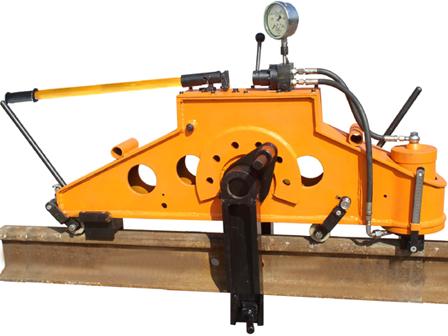

In addition, during routine track inspections, if a potential problem with the rail's alignment is detected, a rail bender can be used to make the necessary adjustments. This helps prevent more serious issues such as derailments and ensures the long - term safety and functionality of the railway track.
3. Industrial Applications
Rail benders also have applications in industrial settings. In factories, warehouses, and other large industrial facilities, there are often internal rail systems used for transporting goods. These rails may need to be bent to fit the layout of the facility.
For instance, in a manufacturing plant where there are multiple production lines and storage areas, the internal rail system may need to have curves and bends to connect different parts of the facility efficiently. A rail bender can be used to create the custom - shaped rails required for this type of industrial rail system.
In some industries, such as mining, there are underground rail systems for transporting minerals and equipment. These rails need to be bent to navigate the complex underground tunnels and passages. A rail bender allows for the construction and maintenance of these underground rail systems, ensuring the smooth flow of materials and equipment.
4. Special Projects and Exhibitions
In special projects and exhibitions, rail benders can be used to create unique and eye - catching rail structures. For example, in a theme park, there may be a small - scale railway ride that requires custom - bent rails to create an exciting and visually appealing track layout.
In art installations or architectural projects, rails can be bent to form interesting shapes and structures. A rail bender gives artists and designers the ability to bring their creative visions to life. They can bend rails into curves, spirals, or other complex shapes to create one - of - a - kind art pieces or architectural elements.
5. Advantages of Using Our Rail Benders
As a rail bender supplier, I can tell you that our rail benders have several advantages. First of all, they are highly accurate. We use advanced technology to ensure that the bending process is precise, so the bent rails meet the exact specifications required.
Our rail benders are also very durable. They are built to withstand the rigors of heavy - duty use in railway construction, maintenance, and industrial applications. This means less downtime for repairs and replacements, and more productivity for our customers.
In addition, our benders are easy to operate. We provide comprehensive training and support to our customers, so even if you're new to using a rail bender, you'll be able to get the hang of it quickly. Whether you're a large railway construction company or a small industrial facility, our rail benders are a great investment.
Contact Us for Your Rail Bender Needs
If you're in the market for a rail bender, whether it's for railway construction, track maintenance, industrial applications, or a special project, we'd love to hear from you. Our team of experts can help you choose the right rail bender for your specific needs.
We offer a wide range of rail benders, from small - scale, portable models to large, heavy - duty machines. And we can provide you with all the necessary accessories and support to ensure that your rail bending operations run smoothly.
Don't hesitate to reach out to us if you have any questions or if you're ready to start a purchase. We're here to help you get the most out of your rail bending projects.
References
- Railway Engineering textbooks
- Industry reports on railway track maintenance and construction
- Case studies of industrial rail systems in factories and mines