




What is the turning radius of Rail Car Series?
 Dec 05, 2025|
 The turning radius of a rail car series is a crucial parameter that significantly influences its operational efficiency, flexibility, and suitability for various railway networks. As a leading supplier of Rail Car Series, we understand the importance of this factor and are committed to providing high - quality rail cars with optimal turning radii.
Understanding the Concept of Turning Radius
The turning radius of a rail car refers to the minimum radius of a circular path that the rail car can follow while making a turn. It is determined by several factors, including the wheelbase of the car, the design of the bogies, and the overall length and width of the vehicle. A smaller turning radius allows the rail car to navigate sharp curves more easily, which is particularly important in urban railway systems, industrial railways, and heritage railways with limited space.
For instance, in a densely populated urban area, a rail car with a small turning radius can be routed through narrow streets and around tight corners, providing more convenient transportation for passengers. On the other hand, in an industrial setting, a rail car with a suitable turning radius can efficiently transport goods within a factory or a warehouse, even in areas with complex layouts.
Factors Affecting the Turning Radius
Wheelbase
The wheelbase, which is the distance between the centers of the front and rear axles of the rail car, has a direct impact on the turning radius. Generally, a shorter wheelbase results in a smaller turning radius. This is because a shorter wheelbase allows the car to pivot more easily around a central point when making a turn. For example, our DPC - 4 Battery Track Car is designed with a relatively short wheelbase, enabling it to achieve a small turning radius and operate effectively in confined spaces.
Bogie Design
The bogies, also known as trucks, are the wheeled structures that support the rail car body. The design of the bogies, including the type of suspension, the arrangement of the wheels, and the steering mechanism, can greatly affect the turning performance of the rail car. Modern bogies are often equipped with advanced steering systems that can automatically adjust the angle of the wheels when the car enters a curve, reducing the lateral forces on the wheels and rails and allowing for a smoother turn. Our Customsized Railway Transportation Tools Lithium Battery Rail Trolley features a state - of - the - art bogie design that enhances its turning ability and overall stability.
Vehicle Dimensions
The length and width of the rail car also play a role in determining the turning radius. Longer and wider cars generally require a larger turning radius to avoid hitting the tracks or other obstacles during a turn. When designing our rail car series, we carefully balance the vehicle dimensions to ensure that they meet the performance requirements while maintaining an acceptable turning radius.
Importance of Optimal Turning Radius in Different Applications
Urban Rail Transit
In urban rail transit systems such as subways, light rails, and trams, the turning radius is a critical factor in route planning and station design. A smaller turning radius allows for more flexible route alignment, which can reduce the construction cost and the impact on the urban environment. It also enables the trains to serve more areas, improving the accessibility and convenience of public transportation. Our rail cars are designed to meet the strict requirements of urban rail transit, with turning radii that are optimized for smooth operation in urban settings.

Industrial Railways
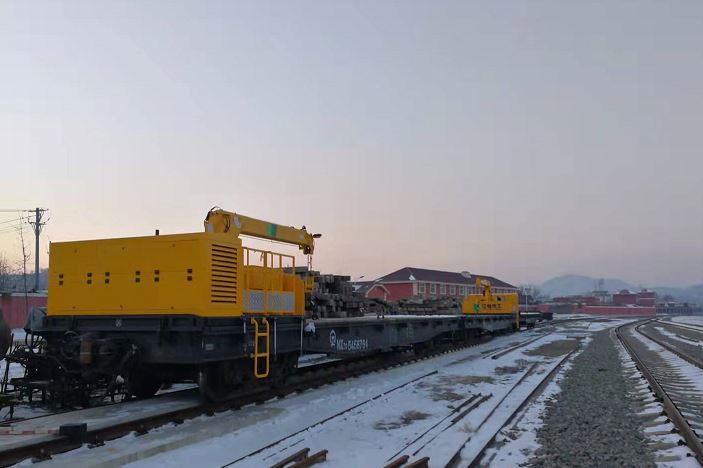
Industrial railways are used for transporting raw materials, finished products, and equipment within factories, mines, and ports. The turning radius of the rail cars in these systems affects the layout of the railway tracks and the efficiency of the material handling process. A rail car with a small turning radius can navigate through narrow aisles and around machinery, increasing the productivity of the industrial operation. Our QPC - ⅠRAIL LIFTING CRANE special designed lorry crane completed with wagons is specifically designed for industrial applications, with a turning radius that allows it to work effectively in confined industrial spaces.
Heritage Railways
Heritage railways are often located in areas with historical significance and limited space. These railways aim to preserve the traditional railway experience and attract tourists. The turning radius of the rail cars on heritage railways needs to be small enough to fit the existing tracks, which may have been built in the past with sharp curves. Our rail car series offers options with appropriate turning radii for heritage railway operations, ensuring that the historical charm of these railways is maintained while providing a safe and comfortable ride for passengers.
Measuring and Testing the Turning Radius
To ensure the accuracy of the turning radius specifications, we conduct rigorous testing and measurement procedures. During the design phase, we use advanced computer - aided design (CAD) software to simulate the turning performance of the rail cars and calculate the theoretical turning radius. Once the prototype is built, we perform on - track tests to measure the actual turning radius under different operating conditions. These tests involve driving the rail car through a series of curves with known radii and recording the data using sensors and measuring devices.
We also take into account the wear and tear of the wheels and rails over time, as this can affect the turning performance of the rail car. Regular maintenance and inspection are carried out to ensure that the turning radius remains within the specified range throughout the service life of the rail car.
Our Commitment to Providing Rail Cars with Optimal Turning Radii
As a supplier of Rail Car Series, we are dedicated to providing our customers with rail cars that offer excellent turning performance. We continuously invest in research and development to improve the design and technology of our rail cars, aiming to achieve smaller turning radii without compromising on other important performance indicators such as speed, load capacity, and safety.
Our engineering team works closely with our customers to understand their specific requirements and provide customized solutions. Whether it is a small - scale industrial railway or a large - scale urban transit system, we can offer rail cars with the appropriate turning radii to meet the needs of the project.
Conclusion
The turning radius of a rail car series is a vital aspect that affects its operational efficiency, flexibility, and suitability for different applications. By understanding the factors that influence the turning radius and implementing advanced design and testing methods, we are able to provide high - quality rail cars that offer optimal turning performance.
If you are interested in our Rail Car Series and would like to discuss your specific requirements for turning radius or other aspects of rail car performance, please feel free to contact us for a procurement discussion. We look forward to working with you to find the best rail car solutions for your project.
References
- [Author's Name]. (Year). "Principles of Rail Vehicle Design". Publisher.
- [Author's Name]. (Year). "Turning Performance of Rail Cars in Urban Transit Systems". Journal of Railway Engineering.
- [Author's Name]. (Year). "Industrial Railway Design and Operation". Industrial Transport Magazine.